Local SEO for Google Business Profile & Maps Rankings
Local SEO is how businesses become visible when people search for services near them—especially in the Google local pack and Google Maps. Your Google Business Profile is the centerpiece, but rankings also depend on website relevance, reviews, citations, and real-world prominence. This guide gives owners and agencies a practical, ethical system for improving Maps visibility without spam.
New to the topic? Read What is Local SEO? for definitions, then use this playbook.
The Pillars of Local SEO on Google
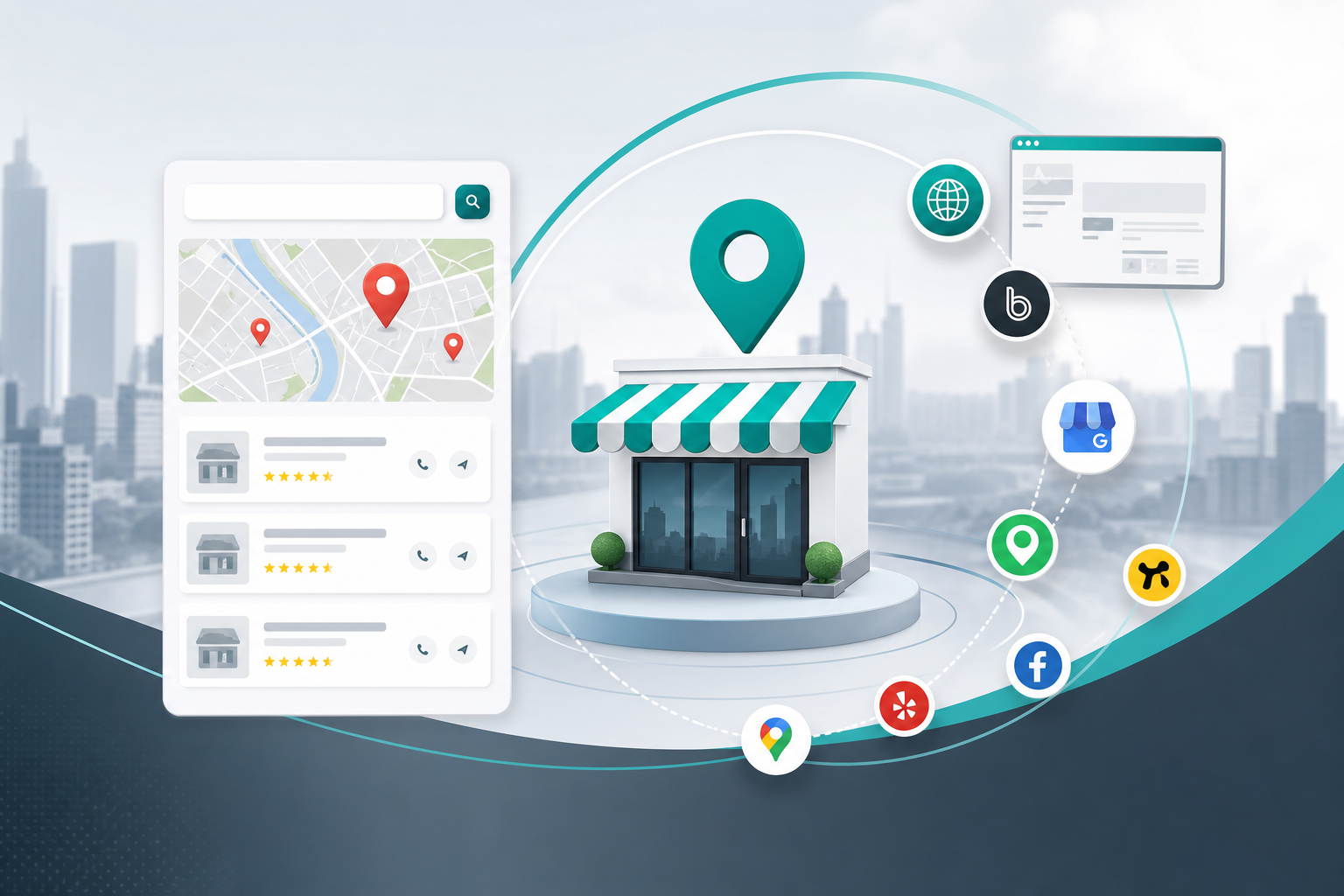
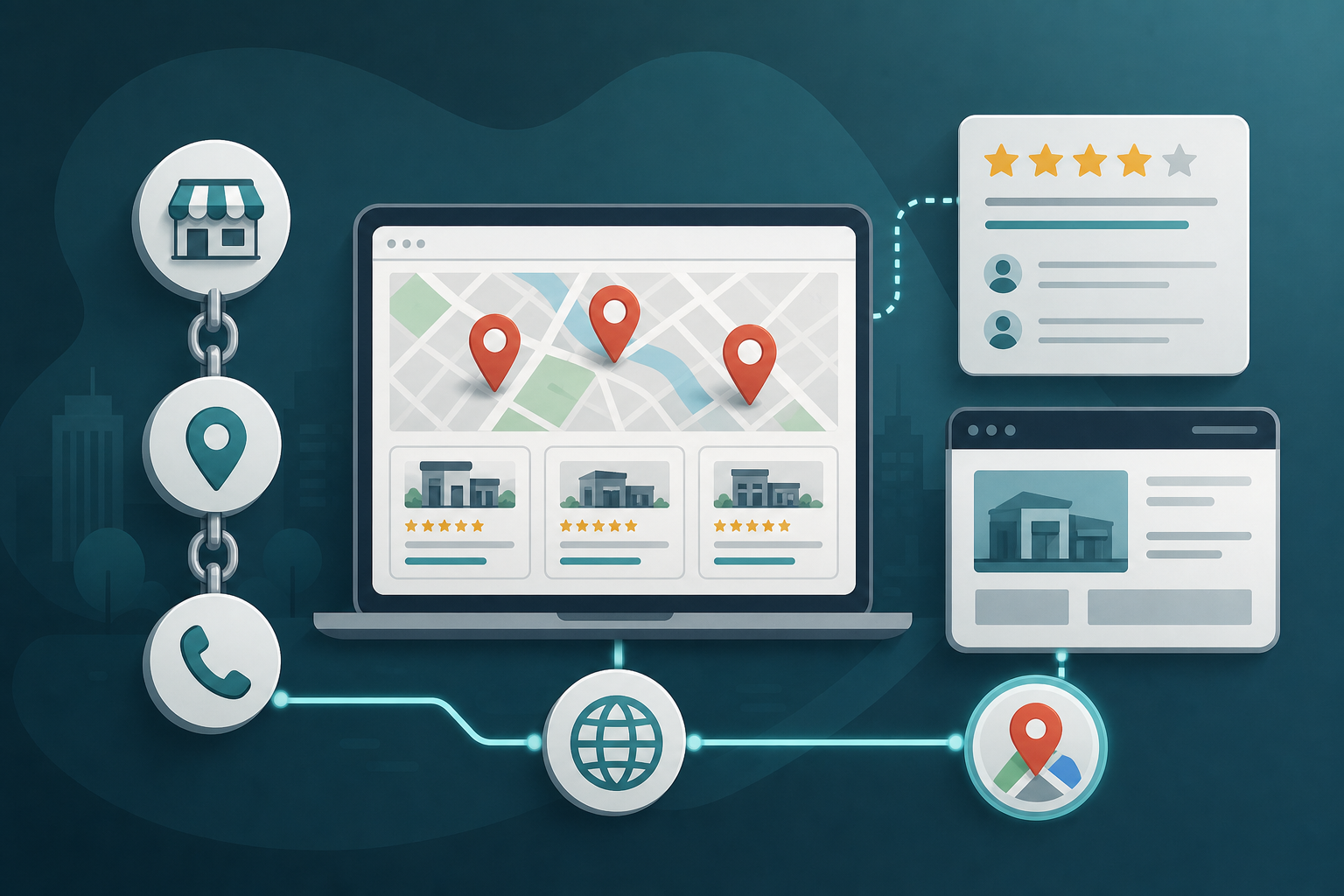
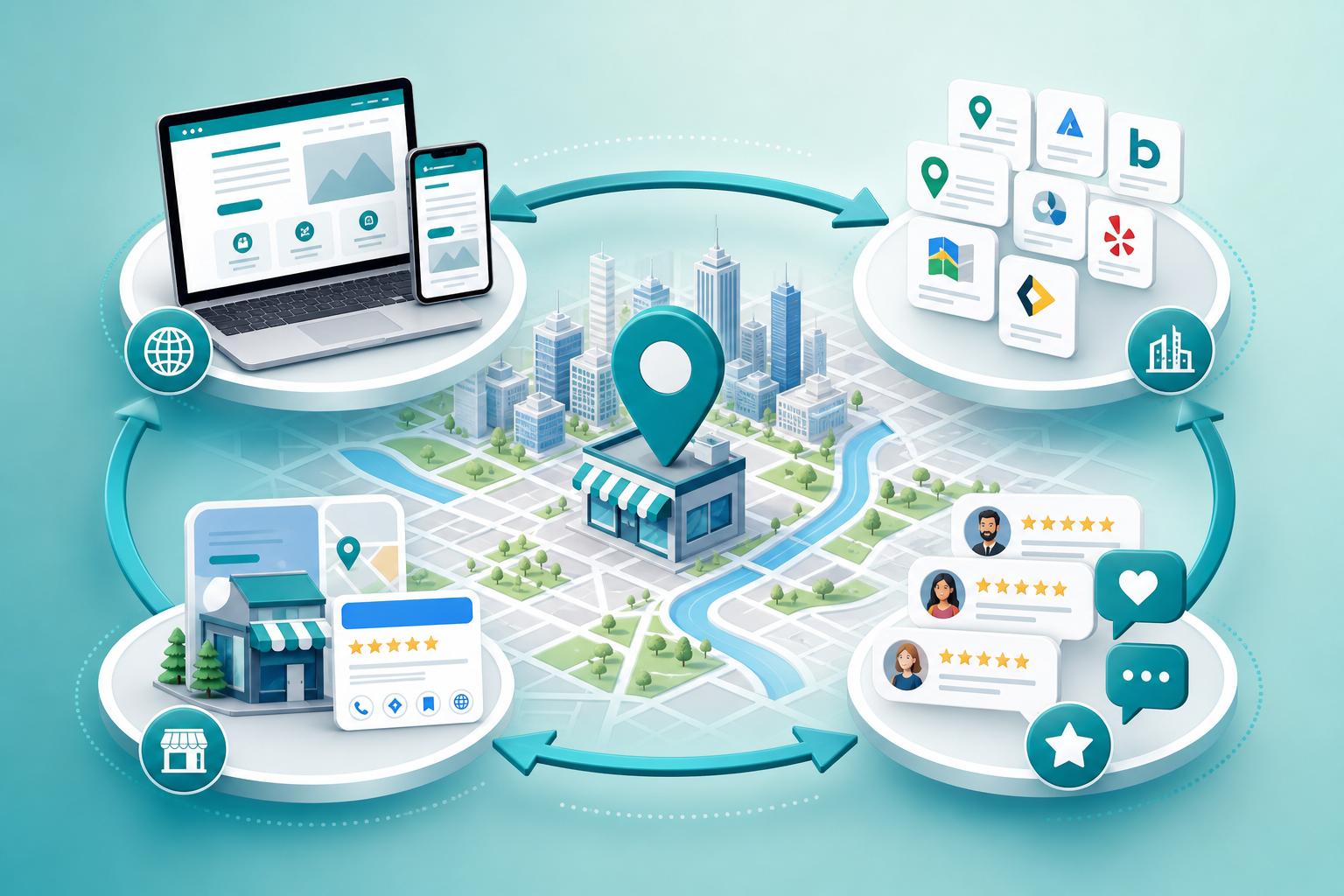
Google’s local results blend relevance, distance, and prominence. Relevance asks whether your Google Business Profile and website match the query. Distance weighs proximity between the searcher and your pin or service area. Prominence reflects how well-known and trusted your business appears through reviews, links, citations, and brand demand.
GMB optimization is necessary but not sufficient. A perfectly filled profile can still lose to competitors with stronger review velocity, better local landing pages, or more consistent citations. Local SEO is the discipline of improving all of those signals together while measuring neighborhood-level outcomes—not vanity ranks from a single office IP address.
Think in markets, not just keywords. A plumber may need different grid performance in two adjacent ZIP codes. A restaurant may care about dinner intent within a walkable radius. Define the geography you must win, then align profile, pages, and outreach to that map.
Separate branded, category, and problem-aware keywords in your tracking set. A business can dominate brand queries while losing high-intent category searches that actually fill the calendar—local SEO reporting should make that distinction obvious.
Use competitor observations ethically: note their categories, review themes, and landing-page strengths, then improve your own offer clarity. Copying spammy naming patterns is not competitive intelligence—it is inherited risk.
Treat Google Business Profile as Your Local Hub
Your GBP categories, services, and description should mirror the language customers use without stuffing. Hours, attributes, and photos reduce friction. Posts can highlight timely offers. Review responses demonstrate care. Together these elements help Google and users understand why your listing deserves a click.
Avoid tactics that inflate short-term metrics while harming trust: fake check-ins, purchased reviews, doorway pages, or duplicate listings aimed at every neighborhood keyword. Those approaches conflict with Google policies and create suspension risk that erases local SEO gains overnight.
Integrate Insights with external tracking. Calls and direction requests tell you what users do after seeing the listing. Grid-based rank tracking shows where you appear across a city. GBP Local Ranker is designed to help teams connect audits and Maps visibility so local SEO decisions are evidence-based.
Align sales capacity with visibility goals. Ranking for emergency or same-day terms without staffing to answer those calls creates bad reviews that then undermine the prominence you worked to build.
Revisit local SEO priorities every quarter when seasonality, new competitors, or service-line changes shift demand. A static keyword list from last year can hide where Google Maps opportunity actually moved.
Build Website Pages That Support Maps Clicks
Every important location should have a unique, useful landing page: accurate NAP, embedded map, locally relevant copy, services, FAQs, and clear calls to action. Thin city pages that only swap a place name rarely earn trust or rankings. Write for humans first—parking notes, service neighborhoods, team bios, and proof of work all help.
Technical basics still matter. Fast mobile pages, clear title tags, logical headings, and crawlable internal links help Google understand local relevance. Schema for LocalBusiness (when accurate) can reinforce identity. Keep the page’s phone and address identical to the Google Business Profile.
Content strategy should answer real local questions: costs, timelines, emergency availability, insurance, and what to expect on arrival. Those topics earn organic search traffic and support conversion when users arrive from Maps. Local SEO is incomplete if Maps traffic lands on a generic homepage that ignores the location context.
Use competitor observations ethically: note their categories, review themes, and landing-page strengths, then improve your own offer clarity. Copying spammy naming patterns is not competitive intelligence—it is inherited risk.
Separate branded, category, and problem-aware keywords in your tracking set. A business can dominate brand queries while losing high-intent category searches that actually fill the calendar—local SEO reporting should make that distinction obvious.
- One strong page per location beats dozens of thin geo-spam pages.
- Match NAP and primary services between GBP and the landing page.
- Use original photos and testimonials tied to that location.
- Track calls and form fills from local landing pages separately when possible.
Reviews, Citations, and Digital PR
Authentic reviews influence both ranking prominence and click decisions. Build a consistent ask process after successful jobs, make responding a daily habit, and learn from recurring complaints. Never buy reviews or run incentivized schemes that violate Google’s rules.
Citations on major data aggregators, industry directories, and local organizations should reinforce the same business identity. Clean duplicates and outdated NAP first; quantity without accuracy helps less than owners hope. Prioritize sources customers and partners actually use in your industry.
Earn links and brand mentions through sponsorships, community involvement, partnerships, and genuinely useful content. Local digital PR is slower than spam directories, but it builds durable prominence. Fake link networks are not a local SEO strategy—they are a risk strategy.
Revisit local SEO priorities every quarter when seasonality, new competitors, or service-line changes shift demand. A static keyword list from last year can hide where Google Maps opportunity actually moved.
Measure Local Rankings Like a Market, Not a Point
A single rank check from headquarters misleads. Customers search from homes, offices, and phones across neighborhoods. Grid scans sample multiple points around your market so you can see where you win, where you fade, and which competitors dominate each cell.
Choose a focused keyword set: core money terms, supporting service terms, and a few branded queries. Scan on a fixed cadence so trends are comparable. Annotate major changes—category updates, review spikes, website launches—so you can interpret movement later.
Report share of visibility, not just average position. Executives understand “we appear in the top three across 60% of the grid for emergency HVAC.” That language connects local SEO work to territory control and lead flow better than a vague “we rank #2 sometimes.”
Separate branded, category, and problem-aware keywords in your tracking set. A business can dominate brand queries while losing high-intent category searches that actually fill the calendar—local SEO reporting should make that distinction obvious.
Install a Monthly Local SEO Operating System
Winning teams run a simple monthly loop: audit Google Business Profile accuracy, publish helpful posts and photos, respond to all reviews, improve one local page section, clean a batch of citations, and review grid results for priority keywords. Small compounding improvements beat occasional heroic campaigns.
Agencies should productize this loop with checklists, SLAs, and white-label reporting. Clients need to see what changed and what will change next. Opaque “we did SEO” updates erode trust even when rankings move.
Stay ethical as competition intensifies. Markets get noisier; policies get stricter. The sustainable advantage is operational excellence—accurate profiles, better customer experiences, stronger local pages, and honest measurement—not a secret loophole.
Align sales capacity with visibility goals. Ranking for emergency or same-day terms without staffing to answer those calls creates bad reviews that then undermine the prominence you worked to build.
Local SEO signal groups
| Signal group | Examples | Primary owner |
|---|---|---|
| GBP relevance | Categories, services, description | SEO / owner |
| GBP prominence | Reviews, engagement, brand demand | Ops + marketing |
| Website relevance | Local pages, content, technical SEO | SEO / web team |
| Citations & PR | Directories, links, mentions | SEO / PR |
| Measurement | Insights, grid ranks, conversions | SEO lead |
High-impact local SEO actions vs low-value busywork
| Action | Impact potential | Notes |
|---|---|---|
| Fix primary category + services | High | Foundational relevance |
| Unique location landing page | High | Supports Maps conversion |
| Ethical review growth + replies | High | Prominence + trust |
| Thin city doorway pages | Low / risky | Avoid spam patterns |
| Buying fake reviews | Negative | Policy violation |
Suggested local SEO KPI set
| KPI | Why track it | Cadence |
|---|---|---|
| Map pack grid coverage | Territory visibility | Biweekly / monthly |
| GBP calls & direction requests | Demand capture | Weekly |
| Review volume & rating | Trust and prominence | Weekly |
| Local landing page conversions | Revenue quality | Weekly |
| Citation accuracy rate | Identity consistency | Quarterly |
FAQ
What is local SEO?
Local SEO is the practice of improving visibility in location-based search results—especially Google’s local pack and Google Maps—by optimizing your Google Business Profile, website, reviews, citations, and related trust signals.
Is Google Business Profile enough for local SEO?
It is essential, but usually not enough alone. Strong local pages, authentic reviews, accurate citations, and real-world prominence also influence competitive Maps rankings.
How long does local SEO take?
Some improvements appear within weeks, while competitive ranking gains often take a few months of consistent work. Markets with aggressive competitors take longer.
Do citations still matter?
Yes for consistency and discoverability, especially on major and industry-relevant sources. Accurate NAP matters more than submitting to endless low-quality directories.
Should I build a page for every neighborhood?
Only if each page provides unique value. Thin geo pages created only to target keywords can underperform and look spammy. Prioritize quality location and service pages.
How do reviews affect Google Maps rankings?
Reviews contribute to prominence and strongly influence user choice. Velocity, authenticity, ratings, and response quality all matter. Fake reviews are prohibited.
What keywords should I track for local SEO?
Track core service + city terms customers actually use, plus supporting service variants and branded queries. Keep the set focused enough to review every scan cycle.
Can local SEO work for service-area businesses?
Yes. SABs can rank within their service areas when profiles, pages, and reviews align with eligibility rules. Do not fake a public storefront to chase rankings.
How does GBP Local Ranker help with local SEO?
GBP Local Ranker helps with profile audits and local rank tracking so you can measure Maps visibility across neighborhoods and report progress clearly.
What should I avoid in local SEO?
Avoid fake reviews, duplicate spam listings, keyword-stuffed business names, doorway pages, and any vendor promising guaranteed #1 Map pack rankings through black-hat methods.