Map Citations: Build Accurate Local Listings That Support Google Maps
Map citations are online mentions of your business Name, Address, and Phone on directories, maps, apps, and industry sites that help customers and platforms confirm who you are. They will not replace a strong Google Business Profile, but inconsistent citations can confuse people and weaken trust signals. This GBP Local Ranker guide explains how to audit, clean, build, and maintain citations ethically—without blast submissions, fake listings, or other shortcuts that create more spam than authority.
What Map Citations Are (and Are Not)
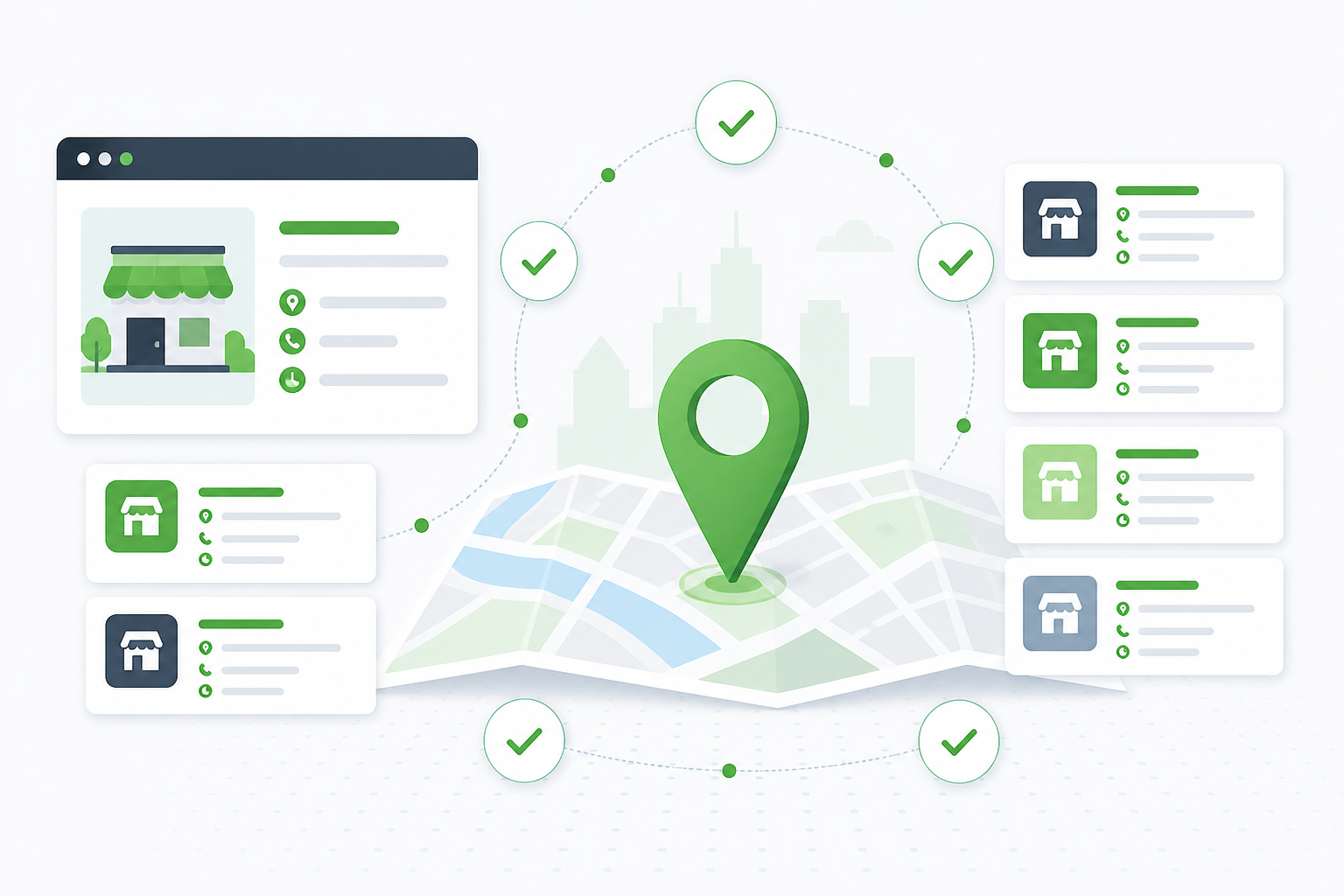
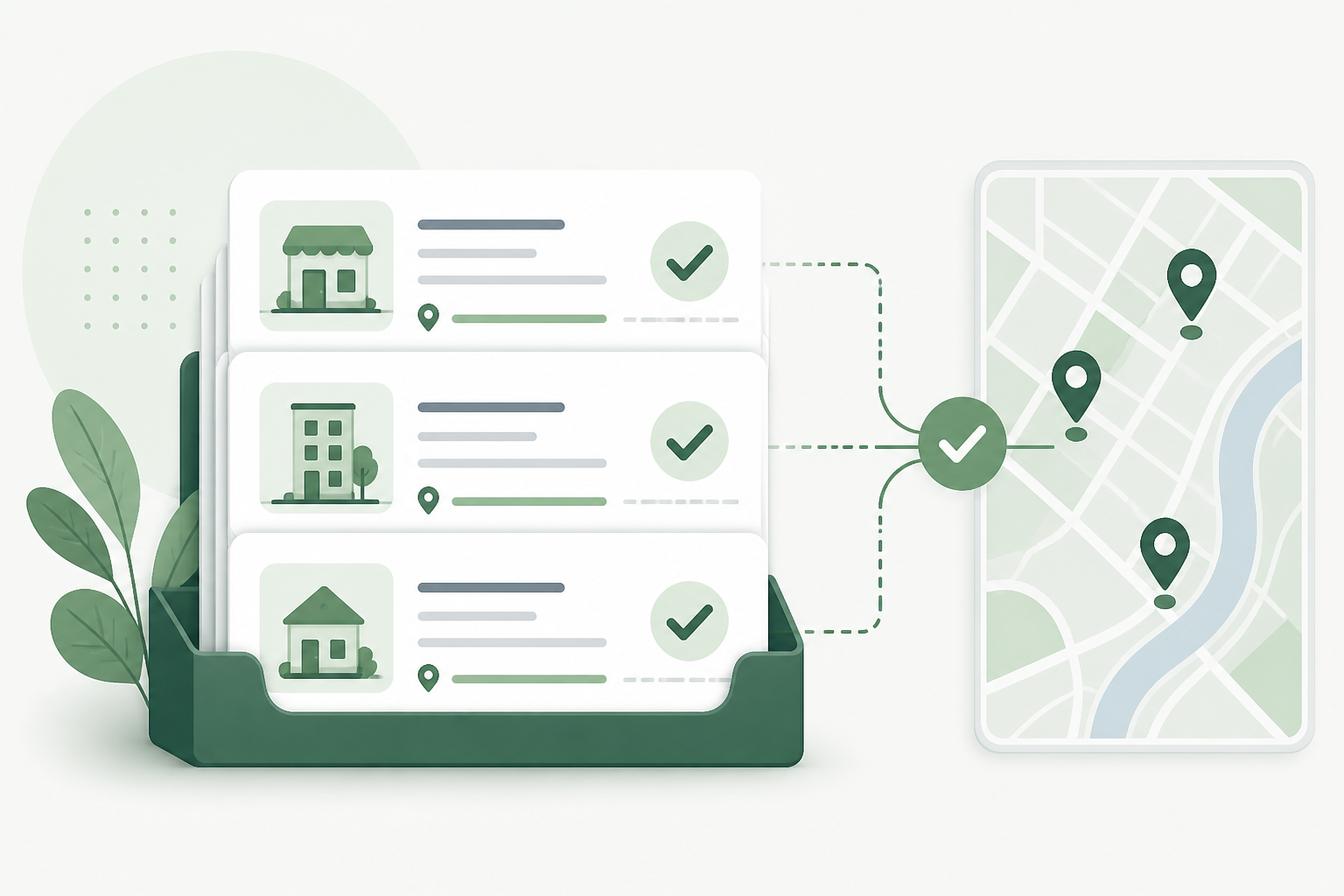
A citation is a structured or unstructured reference to your business identity, typically including NAP and sometimes a website, categories, and hours. Structured citations appear on directories and map platforms. Unstructured mentions can appear in articles or blogs. For local operators, structured NAP consistency is usually the priority.
Citations are not a magic ranking switch. Google has many ways to understand entities. Still, clean citations reduce customer friction and can support prominence when they corroborate the same real-world business. Spammy thousands of low-quality submissions are outdated and often harmful.
Think of citations as identity infrastructure. If half the web shows an old phone number and a former suite, people call the wrong line and algorithms see conflicting evidence. Cleanup is frequently higher ROI than net-new listings on obscure sites nobody visits.
GBP Local Ranker treats citation work as a Local SEO add-on that should be measured. Track inventory accuracy, duplicate suppression progress, and whether GBP actions improve after major cleanup waves—not vanity submission counts.
Citations also interact with offline reality. If your signage, invoices, and vehicle wraps show a different phone format than your directories, customers will paste conflicting details into forms and reviews. Align physical and digital NAP whenever you refresh branding.
Audit Before You Build
Start with a source-of-truth NAP document: exact name spelling, address format, phone, website, and primary category equivalents. Every subsequent listing should match that sheet. If marketing and operations disagree on the phone number, fix that internally first.
Search for the business name, phone, and address variations to find duplicates and outdated profiles. Note platforms with wrong hours, closed indicators, or hijacked details. Prioritize high-traffic directories and industry sites customers actually use in your market.
Photograph or export evidence of incorrect listings before you edit. Some platforms require claim tickets or document uploads. An audit spreadsheet with URLs, current NAP, status, and owner saves weeks of confusion later.
Do not create a new listing when an old one can be claimed and corrected. Duplicate creation is one of the most common citation mistakes and can scatter reviews and confuse Maps users.
Include closed or former trade names in your search queries. Legacy brands often leave zombie listings that still rank in secondary apps and recycle old phone numbers to competitors who later claim them by accident.
- Lock a canonical NAP style guide before editing directories.
- Inventory duplicates and outdated phone numbers first.
- Prefer claim-and-correct over create-new.
- Record URLs and ticket IDs for every cleanup task.
Priority Citation Sources Worth Your Time
Focus on major data ecosystems, reputable national directories, navigation apps relevant to your country, and niche industry sites your customers trust. A restaurant may prioritize dining platforms; a contractor may prioritize home-service directories and supplier networks.
Local sources still matter: chambers of commerce, tourism boards, city directories, and neighborhood associations can drive referral traffic even when their SEO weight is modest. Relevance beats sheer volume.
Keep categories truthful on every platform. Forcing unrelated categories to chase keywords creates policy and customer trust issues. Match the spirit of your Google Business Profile primary category without copying Google's taxonomy blindly where a directory uses different labels.
Ignore offers to submit you to hundreds of tiny sites overnight. Many are thin, scraped, or ignored. Ethical citation programs move slower, document claims, and verify that listings remain accurate after approval delays.
When you expand into a new city, rebuild the priority list for that market instead of cloning another region's directories. Local platforms, hospital networks, tourism boards, and trade associations change by geography, and irrelevant submissions waste claim capacity without helping customers find you.
Duplicate Cleanup Playbook
Duplicates appear after rebrands, moves, franchise confusion, or old vendor blasts. Identify the canonical listing on each platform, claim it, and request merges or closures for extras when the platform allows. Be patient; cleanup timelines vary.
Standardize name variations carefully. If the legal name and public brand differ, follow each platform's naming rules while keeping customer recognition intact. Do not stuff cities into names to win local searches.
Update the website and Google Business Profile first when the business moves, then cascade changes to citations. Reversing that order leaves directories correcting toward an outdated source of truth.
For multi-location brands, prevent duplicates with a creation governance rule: only authorized roles may create directory listings, and every new store gets a controlled citation checklist. Uncontrolled local managers inventing profiles is a common failure mode.
After each cleanup sprint, re-search your phone number and suite variants to confirm the bad listing is gone or redirected. Incomplete merges leave shadow profiles that keep recycling the wrong NAP into aggregator feeds months later.
Maintenance Cadence and Working With Vendors
Citations drift. Phones change, hours change, and platforms re-scrape old data. Schedule a quarterly accuracy pass on top directories and an annual deeper audit. After any move or rebrand, run an emergency cascade within the first weeks.
If you hire a citation vendor, demand transparency: which sites, which credentials, what happens on failure, and how duplicates are handled. Refuse guaranteed ranking language and refuse fake name variations. Good vendors sound like operations partners, not magicians.
Connect citation maintenance to reporting. A monthly Local SEO report should note citation tickets closed, not only '500 submissions.' Quality and accuracy percentages are better KPIs than raw volume.
Keep access credentials in a secure business vault. Directory logins abandoned in personal employee emails become tomorrow's cleanup project. Offboarding checklists should include citation platform access.
When a vendor relationship ends, collect export files and reclaim ownership of directory dashboards immediately. Leaving publisher access with a former contractor is how incorrect NAP reappears months later without anyone noticing.
How Map Citations Work With Google Business Profile
Your Google Business Profile remains the center of Maps presence. Citations should agree with it, not compete with conflicting NAP. When GBP and major directories disagree, customers lose trust and support teams waste time.
Use citations to reinforce landing pages that convert. Where directories allow a website link, point to the correct location page. Generic homepages with no local proof weaken the journey from discovery to contact.
After major citation cleanup, watch Insights and rank trends over a month or two rather than days. Pair observation with other changes logged in your analytics notes so you do not over-claim credit.
Combine this work with ethical reviews, accurate categories, and useful posts. Citations are one support beam in a Local SEO structure that GBP Local Ranker helps measure through audits and visibility tracking.
Citation program priorities
| Priority | Work type | Why first |
|---|---|---|
| 1 | Canonical NAP document | Prevents inconsistent edits |
| 2 | Duplicate cleanup | Removes customer confusion |
| 3 | Major directories and apps | Highest traffic and trust |
| 4 | Industry and local sources | Relevant referral paths |
| 5 | Long-tail directories | Only if quality justifies time |
Citation audit spreadsheet fields
| Field | Example | Notes |
|---|---|---|
| Platform | Major maps app | Include login owner |
| Listing URL | https://... | Canonical vs duplicate |
| NAP status | Match / mismatch | Detail the mismatch |
| Action | Claim / edit / close | Ticket ID |
| Last verified | 2026-08-01 | Quarterly reminder |
Healthy vs spammy citation tactics
| Topic | Healthy | Spammy |
|---|---|---|
| Volume | Relevant quality sources | Hundreds of tiny scrapers |
| Names | Real brand name | Keyword-stuffed titles |
| Duplicates | Merge and correct | Create extras to 'rank' |
| Promises | Accuracy and maintenance | Guaranteed map-pack #1 |
FAQ
Do map citations still help local SEO?
Accurate citations still help customers and can support entity trust. Their value is consistency and relevance, not blasting endless low-quality links. Cleanup often outperforms aggressive new submissions.
How many citations does my business need?
There is no universal number. Cover major platforms, relevant industry directories, and important local sources, then maintain them. Chasing a big count for its own sake usually wastes budget.
Should citations match my Google Business Profile exactly?
Yes for core NAP details, allowing for platform-specific formatting rules. Categories may use different labels, but they should describe the same real business. Conflicts in phone or address should be fixed quickly.
What is the biggest citation mistake?
Creating duplicates instead of claiming and correcting existing listings. Duplicates split information, confuse customers, and create ongoing maintenance debt that is harder than doing it right once.
Can a vendor guarantee rankings with citations?
No ethical provider can guarantee Google Maps rankings. Be wary of anyone selling guaranteed positions through citation blasts. Ask for process transparency and accuracy metrics instead.
How often should we audit citations?
Quarterly checks on top platforms work for many businesses, with deeper annual audits and immediate cascades after moves or rebrands. High-change industries may need tighter cycles.
Do service-area businesses need citations?
Yes, with careful NAP and service-area honesty. Do not publish a fake storefront address across directories. Consistency with your Google Business Profile rules is essential.
How does GBP Local Ranker relate to citation work?
GBP Local Ranker helps audit profile health and track Maps visibility while citation projects run. Use it to see whether cleanup and consistency work coincide with improved discovery and engagement over time.