GMB Analytics & Reporting: Turn Insights Into Local Decisions
GMB analytics and reporting converts Google Business Profile activity into decisions about categories, content, staffing, and Local SEO investment. Insights alone are not a strategy; they become valuable when paired with rank context, review health, and real lead outcomes. This GBP Local Ranker guide shows how to choose metrics, build a weekly and monthly cadence, avoid vanity reporting, and communicate results to owners and agencies without promising guaranteed rankings.
What to Measure on a Google Business Profile
Start with customer actions: calls, direction requests, website clicks, and conversation actions where available. These metrics connect Maps visibility to business outcomes. Impressions matter as context, but actions tell you whether the listing earns attention that customers are willing to spend.
Add reputation metrics: new review count, average rating, and response time. A spike in calls means less if unanswered one-star reviews are driving people away at the decision moment. Analytics without reputation is incomplete local reporting.
Include profile hygiene signals: hours accuracy checks completed, posts published, photo refreshes, and unresolved Q&A. These are leading indicators. They explain future dips before the monthly action chart turns red.
Finally, track local visibility for a focused keyword set and geographic grid when your market is competitive. GBP Local Ranker helps teams monitor Maps visibility so Insights changes can be interpreted with ranking context rather than isolated screenshots.
Understanding Insights Limitations
Google Insights are helpful and imperfect. Interfaces and definitions change. Some views are estimates. Comparing absolute numbers across unrelated industries without context creates false alarms. Use trends, baselines, and annotations instead of single-day panic.
Seasonality and promotions distort charts. A holiday campaign, a viral social post, or a storm-related service surge can lift calls without any ranking change. Log external events in your reporting notes so stakeholders do not mis-attribute success or failure to the last profile edit.
Multi-location portfolios must normalize by market size and store age. A brand-new listing should not be scored against a five-year incumbent on raw review count. Cohort reporting keeps conversations fair and actionable.
Never invent precision the data does not support. Ethical analytics admits uncertainty. Decision-quality reporting beats dashboard decoration every time. When a chart looks dramatic, ask whether the underlying sample size and time window can support a strong claim before you brief leadership.
Also separate branded and non-branded discovery when your tools allow it. A rise in people searching your exact business name is encouraging, but it is a different story from gaining visibility on category queries such as emergency plumber or dental clinic near a neighborhood. Mixing those stories in one line chart hides the work still left to do.
- Prefer trends and baselines over one-day spikes.
- Annotate promotions, outages, and seasonal events.
- Cohort multi-location metrics by age and market.
- Separate leading hygiene metrics from lagging actions.
Weekly and Monthly Reporting Cadence
Weekly reports should be short: actions vs prior week, new reviews and response gaps, posts published, and any critical field changes. The goal is operational awareness, not a novel. If something broke, the weekly note should trigger a fix the same week.
Monthly reports can go deeper: keyword visibility, competitor observations, citation or landing-page progress, and experiments run. Include two or three recommended actions with owners. A report without next steps is a museum exhibit.
Quarterly reviews should revisit the metric set itself. Are you tracking keywords customers still use? Are call-tracking numbers aligned? Did Google change Insight definitions? Refresh the framework so reporting stays honest.
Agencies should match cadence to client decision speed. Some owners want a fifteen-minute monthly call; others need a live dashboard. Agree on the format in the statement of work so analytics does not become unpaid custom software.
Store every report in a shared folder with a consistent filename date. When a new manager inherits the Google Business Profile, historical context prevents repeating failed experiments and makes year-over-year seasonality easier to explain without guesswork.
Connecting Ranks, Insights, and Revenue Outcomes
Map-pack positions are intermediate metrics. They matter because they often correlate with discovery, but the business pays for jobs and appointments. Whenever possible, connect GBP actions to CRM stages or call outcomes. Even a simple tagged spreadsheet beats arguing about average rank in isolation.
When ranks rise and calls do not, inspect conversion factors: photos, reviews, hours, landing pages, and phone answer rates. When calls rise and ranks look flat, look for branded demand, promotions, or measurement gaps. Analytics is diagnosis, not scorekeeping.
Avoid declaring victory after one keyword moves. Competitive local markets fluctuate. Use a basket of priority terms and multiple pin locations if you serve a wide area. Document methodology so month-to-month comparisons remain valid.
GBP Local Ranker fits here as the visibility layer beside Insights exports and review tools. Shared history helps teams explain what changed after a category update, a review surge, or a citation cleanup.
If you use paid local campaigns, note them in the same analytics narrative. Paid clicks can lift calls while organic map-pack positions stay flat, and stakeholders deserve that distinction so organic budgets are not judged unfairly against mixed traffic.
Dashboards That Stakeholders Will Actually Use
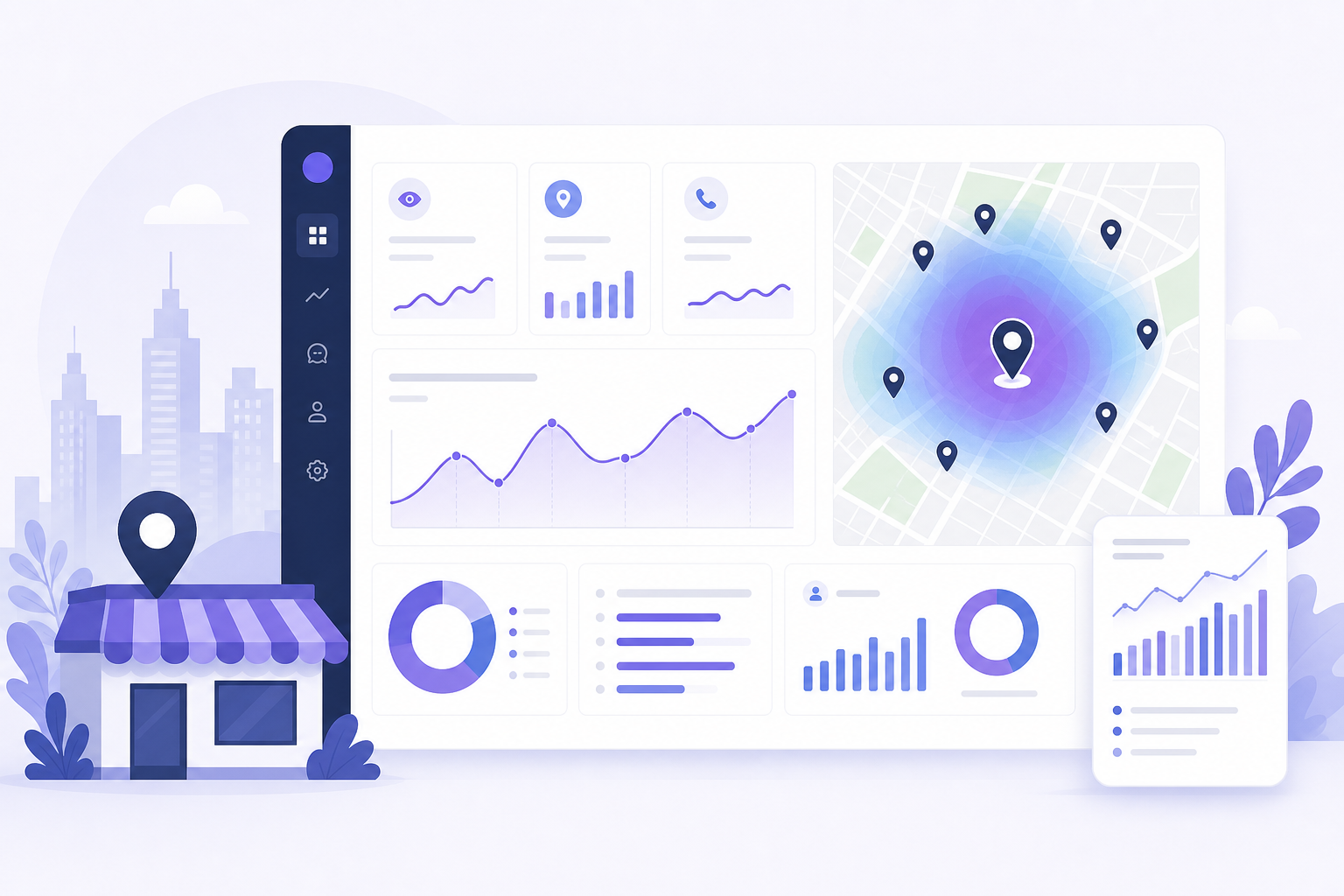
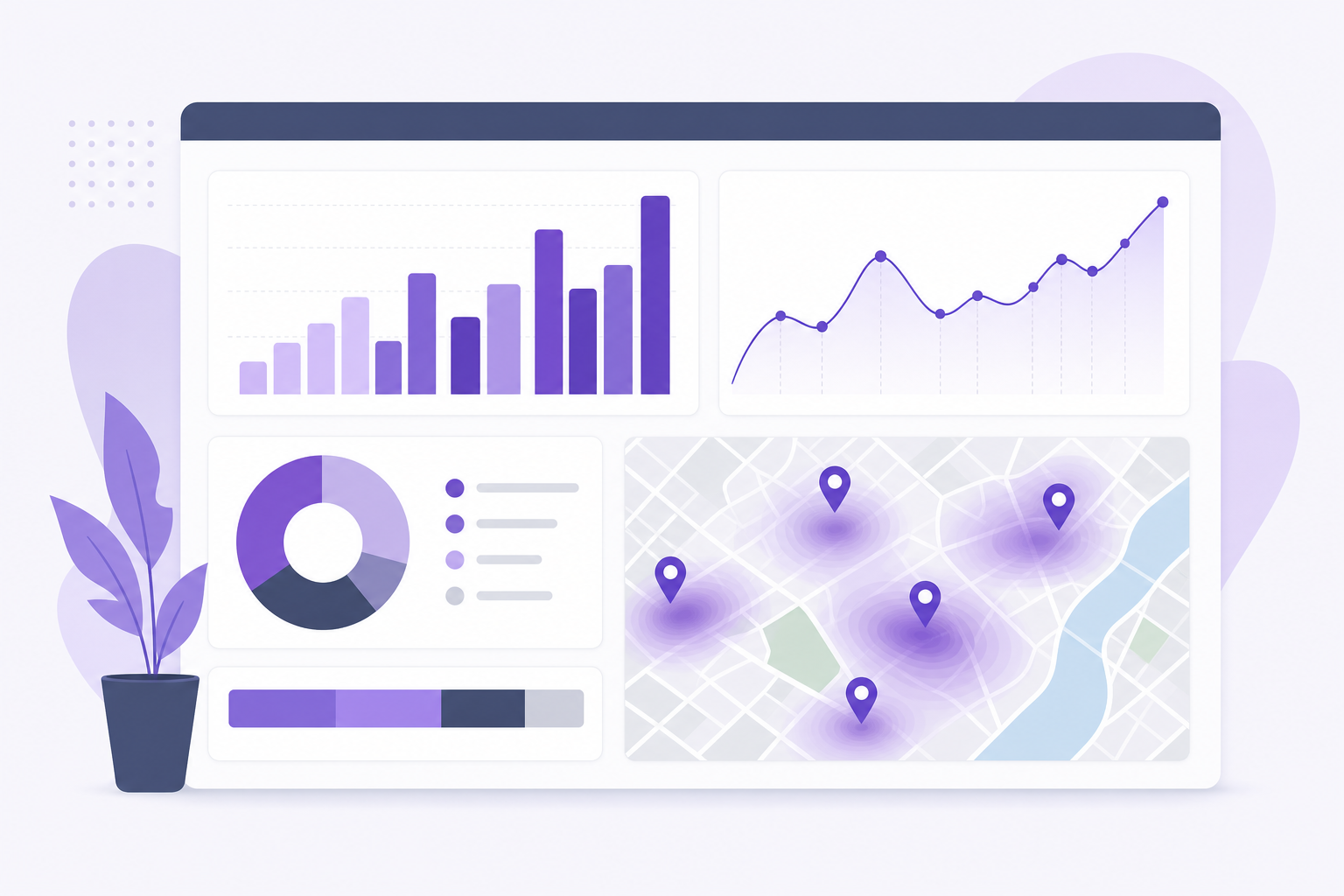
Design for the reader. Owners need a one-screen summary: actions, reviews, top issues, next actions. SEO leads need drill-downs. Executives of multi-location brands need portfolio heatmaps that show which stores need intervention.
Use plain language labels. 'Direction requests' is clearer than internal jargon. Explain what a metric means in one sentence the first time it appears in a recurring report. Clarity builds trust in the analytics program.
Limit vanity charts. Huge impression graphs with no actions or outcomes waste attention. Every chart should earn its place by changing a decision. If nobody acted on a widget for two quarters, remove it.
Protect access to raw accounts. Reporting exports should not require sharing owner passwords. Use proper manager permissions and centralized reporting tools so analytics never compromises security.
From Reports to Action Without Busywork
Close the loop. Every monthly report should generate a backlog item: fix special hours, refresh photos, improve a landing page, accelerate review responses, or pause an add-on that is not helping. Analytics without operations is theater.
Assign owners and due dates. Cross-functional local SEO fails when 'someone' was supposed to update the website NAP. Put names on tasks and review them in the next cadence meeting.
Test changes deliberately. If you alter the primary category and launch a new offer the same day, you will not know what worked. Stage experiments when stakes are high, and keep an annotation log.
Retire metrics that cannot influence behavior. If a number is interesting but never changes staffing, content, or budget decisions, it does not belong in the executive pack. Keep GMB analytics lean enough that people keep reading it.
Core GBP analytics metric set
| Metric | Type | Decision it informs |
|---|---|---|
| Calls and direction requests | Outcome proxy | Whether Maps traffic converts |
| Website clicks | Outcome proxy | Landing page and offer fit |
| Review velocity and rating | Trust | Reputation program priority |
| Post and photo cadence | Leading | Content capacity needs |
| Keyword visibility | Discovery | Optimization and content focus |
Weekly vs monthly report contents
| Cadence | Include | Skip |
|---|---|---|
| Weekly | Actions, review gaps, critical edits | Long competitor essays |
| Monthly | Ranks, experiments, recommendations | Raw dumps without insight |
| Quarterly | Framework refresh and ROI review | Unchanged vanity charts |
Common analytics misreads
| Symptom | Possible cause | Check next |
|---|---|---|
| Calls down, ranks flat | Answer rates or hours issues | Phone logs and special hours |
| Ranks up, calls flat | Weak photos or reviews | Listing conversion factors |
| Impressions up, actions flat | Broad irrelevant views | Query categories and CTA clarity |
| One store outliers | Local event or outage | Annotations and cohort peers |
FAQ
What is the most important GMB metric to track?
Customer actions such as calls, direction requests, and website clicks are usually the best starting set. Pair them with review health and a focused visibility view so you understand both demand and trust.
How often should we report on Google Business Profile performance?
A light weekly ops check plus a deeper monthly review works for most teams. Quarterly, revisit whether the metrics still match business goals and Google interface changes.
Do higher Insights numbers always mean better SEO?
No. Seasonality, brand campaigns, and one-time events can lift numbers without durable visibility gains. Interpret Insights with annotations, rank context, and outcome data.
Should agencies share raw Insights screenshots?
Screenshots can support a narrative, but stakeholders need interpreted trends and recommended actions. A clean summary with owners and due dates beats a pile of unmarked images.
How many keywords should we track for local ranks?
Start with a focused set tied to revenue services and real search language. Too many keywords create noise. Expand only when the core set is stably measured and acted upon.
Can analytics prove ROI for Local SEO add-ons?
Yes when you baseline before a module starts and avoid launching everything at once. Track actions, reviews, and visibility over thirty to ninety days, then keep or cut modules based on evidence.
How does GBP Local Ranker support GMB analytics?
It helps with audits and Maps visibility tracking that complement Google Insights. Together they give a clearer picture of profile health and discovery trends for reporting conversations.
What if our phone number is a call-tracking line?
Keep NAP consistency carefully and ensure tracking numbers are configured in ways that do not create confusing public citations. Report both GBP actions and call-tracking outcomes so the funnel is visible end to end.