Most Google Business Profile optimization advice online is a checklist with no order and no reasoning behind it. That leaves owners ticking boxes without understanding which ones actually move visibility and which ones are just tidy. This guide gives you both: the exact fields worth your attention, why each one matters, and a realistic 30-day sequence to work through them without burning an entire weekend.
Optimization is not a one-time task you finish and forget. It is the foundation that everything else—posts, reviews, rank tracking with GBP Local Ranker, paid ads pointing at the profile—sits on top of. Get the foundation wrong and every later tactic underperforms no matter how well it is executed. If you would rather hand this work to a team that does it daily, our GMB optimization service covers the same sequence end to end.
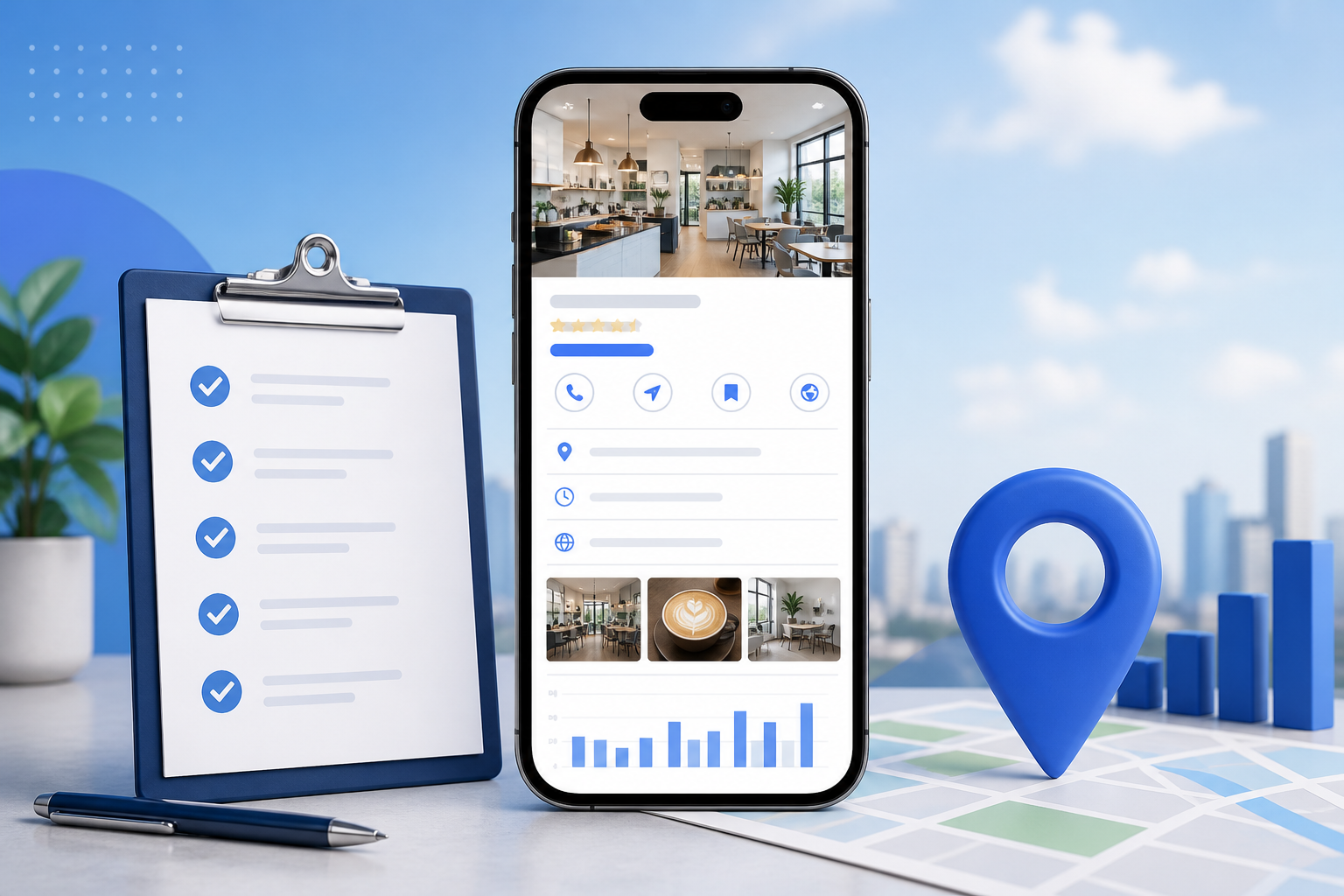
Why Optimization Still Beats Tactics in 2026
It is tempting to chase whatever tactic is trending in a local SEO forum this month—a new post format, a review widget, a trick attribute. Almost none of it outperforms simply making sure your profile tells Google, and your customers, an accurate and complete story. A profile that is fully filled out, correctly categorized, and visually current will consistently beat a half-finished profile running clever tactics on top of gaps.
Think of optimization as removing friction. Every missing field, vague service description, or outdated photo forces Google—and the customer—to guess. Guessing reduces confidence, and reduced confidence shows up as lower relevance scoring and lower click-through in the pack. Fixing the fundamentals is unglamorous, but it is where almost all of the available improvement lives for most small and mid-sized businesses.
Step 1: Verification, NAP and Foundational Accuracy
Before touching anything creative, confirm you actually control the listing and that its most basic facts are correct. Add a second trusted admin so ownership does not depend on a single phone or email address. Check that your business name matches your signage exactly, with no extra keywords appended—Google treats that as a guideline violation, not a growth hack.
Verify your address pin sits on the actual entrance customers use, and confirm your phone number, website, and booking link match your website footer exactly. Small mismatches between your profile and your website are one of the most common, least visible reasons a profile underperforms its potential.
Step 2: Categories, Services and a Description That Match Real Intent
Your primary category is the single highest-leverage field on the entire profile. Choose it based on how customers actually search, not on internal industry terminology. Add secondary categories only for services you genuinely deliver—padding this list with aspirational categories dilutes relevance rather than expanding it.
Write your services list the way a customer would phrase a search, with a short, specific description for each one instead of a bare title. Your business description should read like a clear, honest paragraph about who you serve and how, with your city and core services mentioned naturally—no keyword walls. For a deeper walkthrough on category selection specifically, see how to choose the right GBP categories for maximum visibility.
| Field | Priority | What good looks like |
|---|---|---|
| Primary category | Highest | Matches the exact intent of your top searches |
| Services list | High | Specific, customer-phrased, individually described |
| Business description | Medium | Clear, honest, human-readable, no keyword stuffing |
| Attributes | Medium | Every genuinely applicable attribute enabled |
| Hours | Medium | Accurate including holidays and special exceptions |
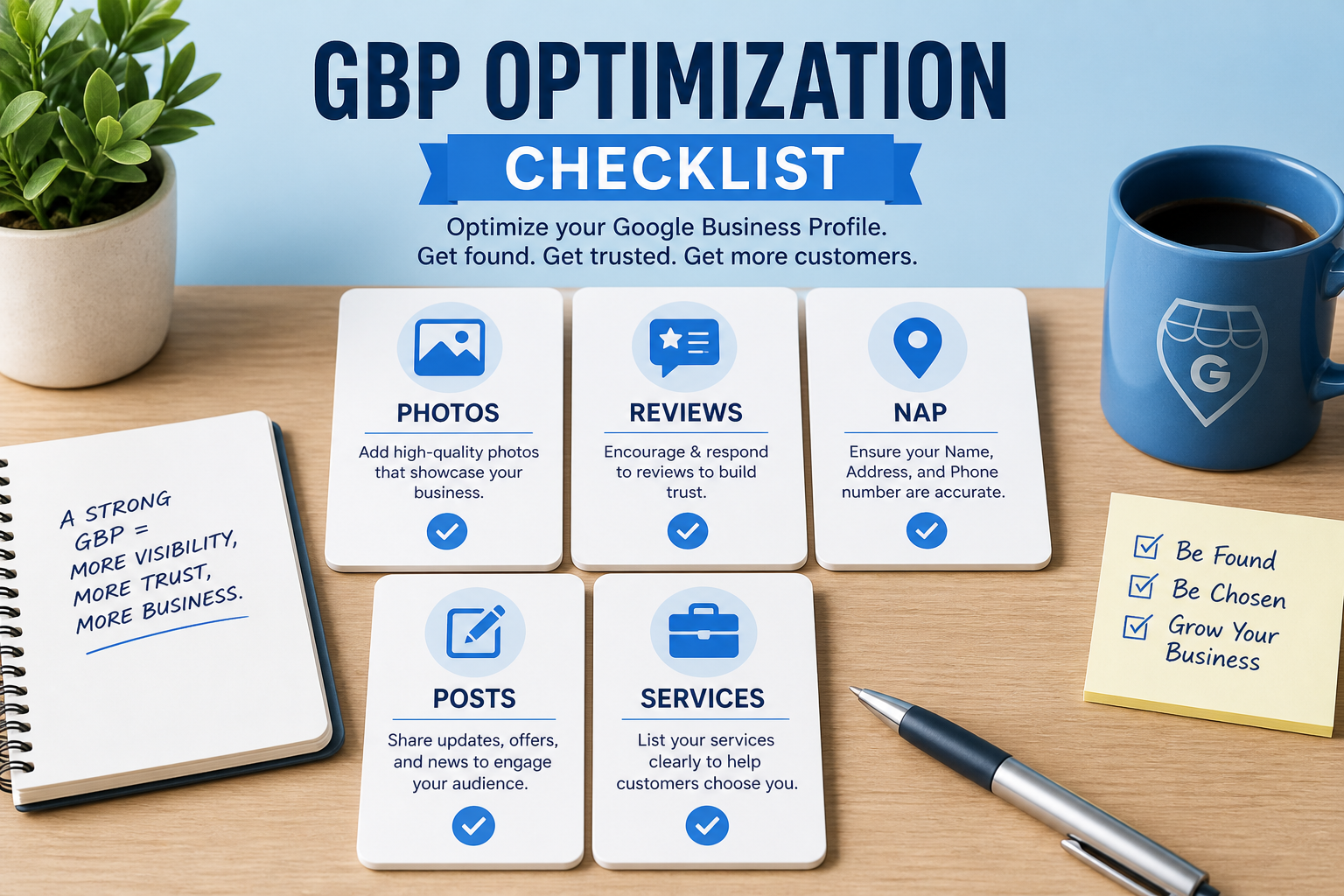
Step 3: Photos, Videos and Visual Proof
Photos do double duty: they build trust with human visitors and they signal an active, real business to Google. Seed the profile with a genuine mix—exterior and interior shots, the team at work, products or completed jobs, and a professional logo and cover photo that render well on a small mobile screen inside Maps.
Avoid relying solely on stock photography. Customers can usually tell, and a listing full of generic stock imagery reads as less trustworthy than a handful of imperfect but real photos. Add new images on a monthly cadence rather than uploading thirty at once and never returning.
Step 4: Products, Q&A and Attributes
Use the Products or Services module to list real offerings with prices or "starting from" ranges when that is helpful for the customer's decision. Monitor the Q&A section closely and answer common questions yourself before a competitor or an uninformed passerby plants a misleading answer that sits there for months. Enable every attribute that genuinely applies—accessibility, payment options, identity attributes—since these fields quietly support both relevance and trust.
Step 5: Reviews and Trust Signals
A steady, ethical review request habit matters more than any single optimization trick. Build the ask into your actual service flow—after a completed job, at checkout, or in a follow-up message—rather than hoping satisfied customers remember on their own. Reply to every review within a couple of days, thanking positive reviewers specifically and responding to negative ones calmly and professionally.
Step 6: Connecting the Website and Local Landing Pages
Your Business Profile does not operate in isolation. If your profile ranks for "emergency electrician" but your website has no page addressing that service and city combination, you are leaving conversion value and prominence support on the table. Build local landing pages that mirror your real services, and make sure NAP details match exactly. Our local SEO playbook covers how to structure these pages so they reinforce the profile instead of competing with it.
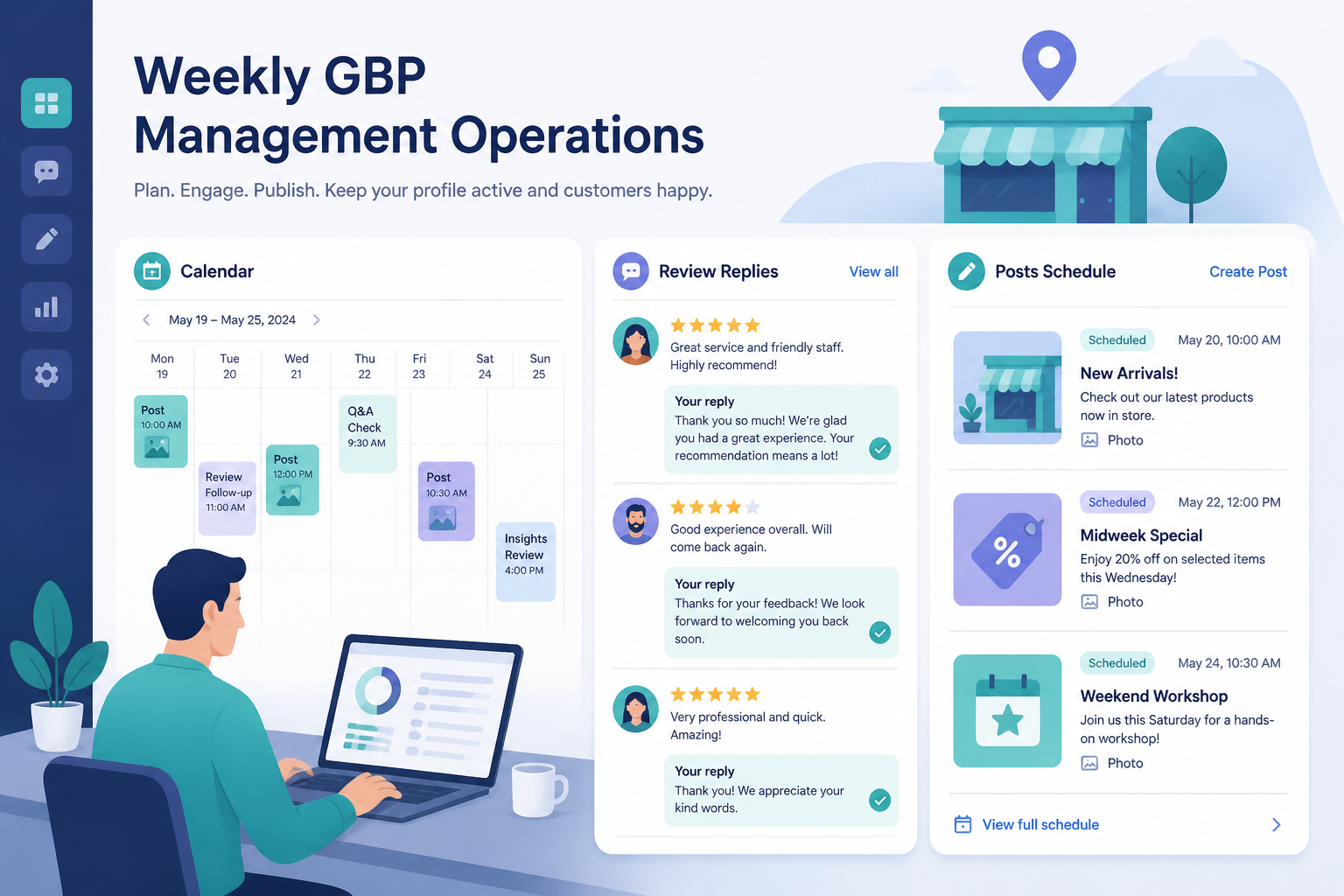
How to Prioritize When You Cannot Do Everything at Once
Most owners reading a complete optimization guide feel a little overwhelmed by the full scope of work described. If time is genuinely limited, prioritize in this order: verification and category accuracy first, because they affect eligibility for the searches you want to win at all; reviews second, because they compound the most over time and benefit from starting early; photos and services third, because they directly affect conversion once someone finds you; and website alignment last, since it typically requires more time and coordination to execute well.
This order is not arbitrary—it follows the same relevance, distance, and prominence logic that underpins Maps ranking generally. Getting the highest-leverage items right first means that even a partially completed optimization project still delivers most of the available benefit, rather than leaving you with an evenly incomplete profile that underperforms across every category at once.
| Priority | Task | Time investment | Why it comes first |
|---|---|---|---|
| 1 | Verification and category audit | One to two hours, one time | Determines search eligibility |
| 2 | Review request habit setup | Thirty minutes to set up, then ongoing | Compounds the longer it runs |
| 3 | Photos and services refresh | One hour monthly | Directly improves conversion |
| 4 | Website landing page alignment | Several hours, one time plus upkeep | Reinforces relevance and trust |
Multi-Location Optimization Without Losing Consistency
Businesses managing several locations face a different challenge: keeping every profile optimized without turning it into a full-time job or letting quality drift between locations. Standardize what should stay consistent—naming convention, brand voice in descriptions, core service list structure—while deliberately localizing what should vary, including neighborhood-specific keywords, team photos, and hours.
Assign clear ownership for each location rather than assuming head office will handle every profile centrally. A local manager who actually knows the store can spot a wrong holiday hour or a stale photo far faster than someone managing the task remotely from a spreadsheet. Build a shared checklist so every location follows the same optimization sequence, and schedule a recurring audit—quarterly works well for most multi-location brands—so drift gets caught before it accumulates into a visible ranking problem.
A 30-Day Optimization Rollout Plan
Spread this work over four weeks instead of attempting it in one sitting. Week one: verification, NAP accuracy, and category audit. Week two: services list, description rewrite, and attributes. Week three: photo refresh and Q&A cleanup. Week four: review request system launch and local landing page alignment. This pacing keeps the work sustainable and gives you a clean before-and-after picture using a rank grid to confirm what actually moved.
Resist the temptation to skip ahead to week four's review push before finishing the earlier weeks. Reviews arriving on top of a wrong category or a missing service description still help conversion, but they do less for overall relevance than they would once the foundation is actually accurate. Sequencing the work in this order consistently produces better results than doing the same tasks in a random order over the same month.
Final Takeaway
Google Business Profile optimization is not a single afternoon project—it is a sequenced foundation that makes every later effort more effective. Fix ownership and accuracy first, then relevance fields, then trust and visual proof, then connect the website. Track the results with neighborhood-level rank tracking such as GBP Local Ranker so you can see which parts of the rollout actually changed your visibility, not just which parts felt productive.
Frequently Asked Questions
How long does a full Google Business Profile optimization take?
Spread across a 30-day plan, most single-location businesses can complete a thorough optimization in eight to ten focused hours total.
What is the single highest-priority field to optimize first?
Primary category accuracy, followed closely by verifying your address pin and NAP consistency across your website and directories.
Do I need professional photography for my profile?
It helps, but genuine, well-lit photos taken on a good phone are far better than generic stock imagery. Authenticity matters more than production value.
How many services should I list on my profile?
List every service you genuinely deliver with a short description each, rather than a fixed number—quality and specificity matter more than hitting a target count.
Should I optimize my profile before or after building local landing pages?
Do both in parallel where possible. A well-optimized profile without matching landing pages, or vice versa, underperforms compared to aligning them together.
How often should I revisit my optimization after the initial rollout?
Do a light monthly check on hours, photos, and Q&A, plus a fuller quarterly audit of categories and services as your business evolves.
Can optimization alone get me to the top of the Map Pack?
Optimization builds the foundation, but reviews, proximity, and ongoing engagement still determine final position. Treat it as necessary, not sufficient, on its own.