Choose the Right GBP is one of the highest-leverage local search topics in 2026. If you could only fix one field on your Google Business Profile, it should be your primary category. It is the single strongest signal Google uses to decide which searches you are eligible to appear for, and it is also one of the fields owners get wrong most often—usually by choosing something too broad, too narrow, or simply outdated compared to how the business has evolved.
This guide walks through how primary and secondary categories actually function, how to research the right choice instead of guessing, the mistakes that quietly cap visibility, and how often to revisit the decision as your business changes. For the rest of the optimization sequence, see our complete guide to Google Business Profile optimization .
Why Categories Are the Highest-Leverage Field on Your Profile
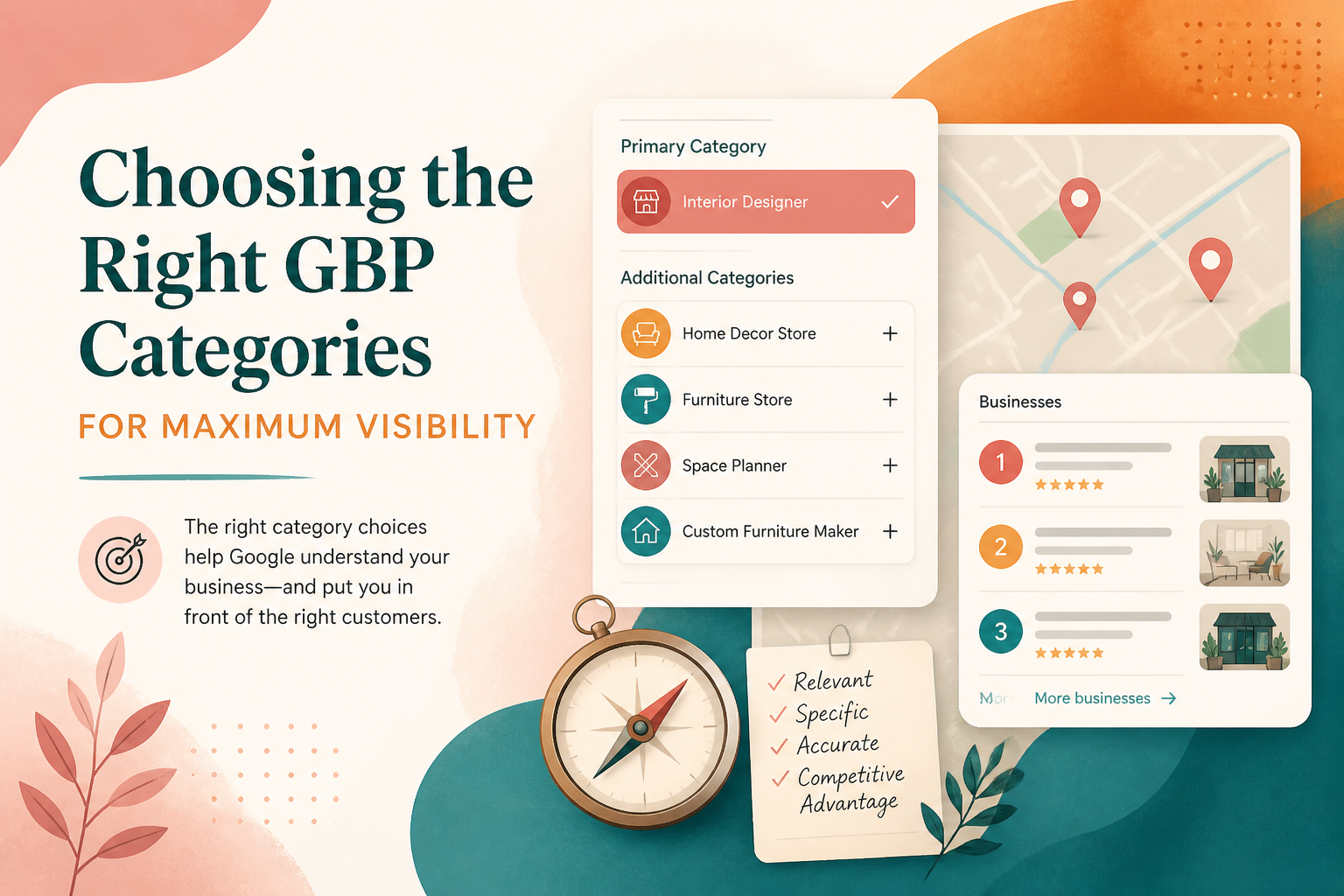
Your category tells Google, in a single structured field, what kind of business you are and which searches you deserve to compete for. Unlike a description, which Google has to interpret through language processing, a category is an exact, unambiguous match to a taxonomy Google already understands. That precision is exactly why getting it wrong is so costly: a mismatched category can quietly exclude you from searches you would otherwise easily win.
Primary vs Secondary Categories: What Each One Actually Does
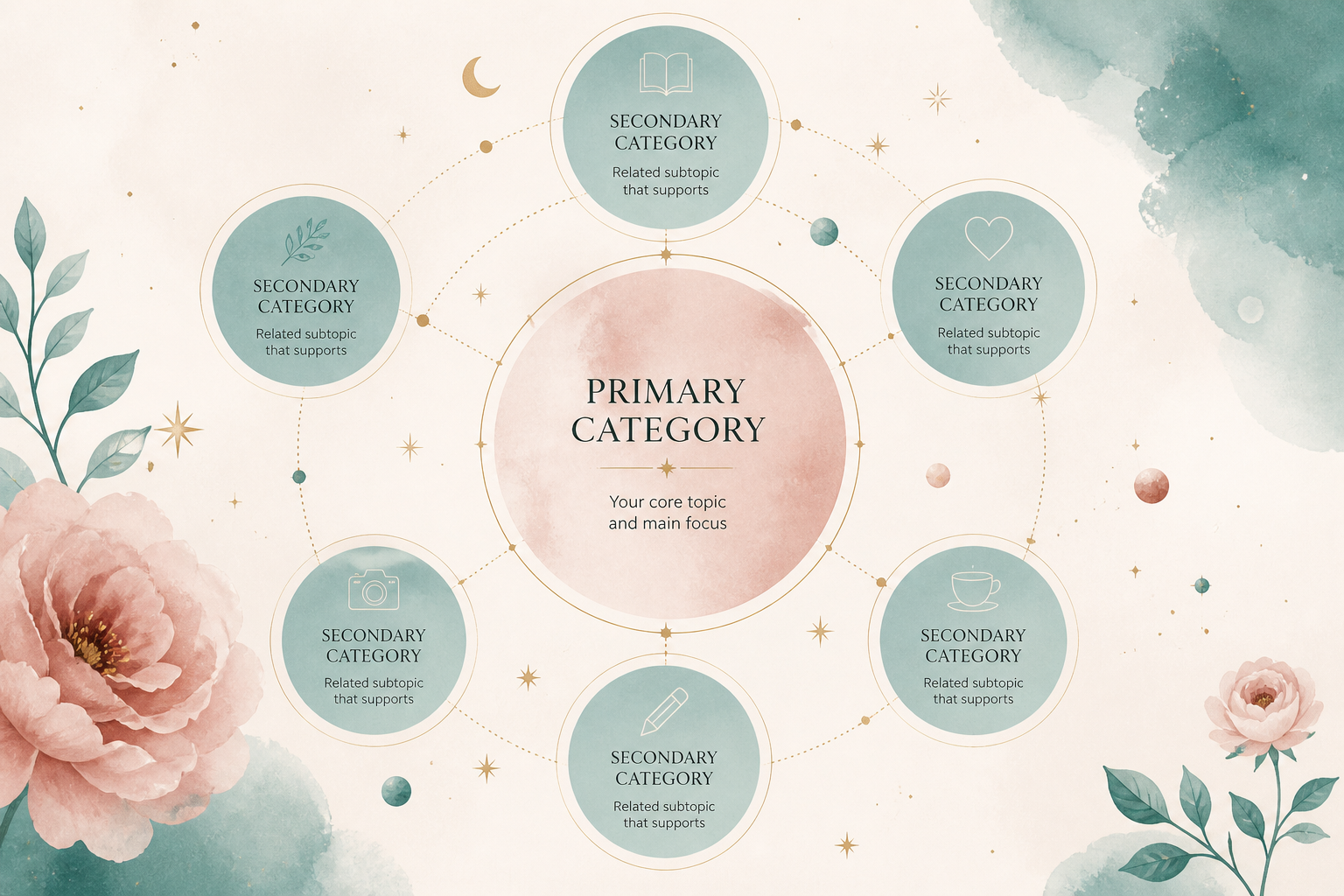
Your primary category carries the most weight and should represent the core of what your business does—the answer to "what kind of business is this" in one clear phrase. Secondary categories broaden your eligibility for related searches without diluting the primary signal, but only when they describe services you genuinely, currently offer. Adding a secondary category for something you rarely do, hoping to catch extra search volume, usually weakens relevance rather than strengthening it.
| Category type | Weight | Best practice |
|---|---|---|
| Primary | Highest | Match your core, most-searched service exactly |
| Secondary (relevant) | Moderate | Add only for services you genuinely deliver |
| Secondary (aspirational) | Low to negative | Avoid—dilutes relevance without real benefit |
How to Research the Right Primary Category
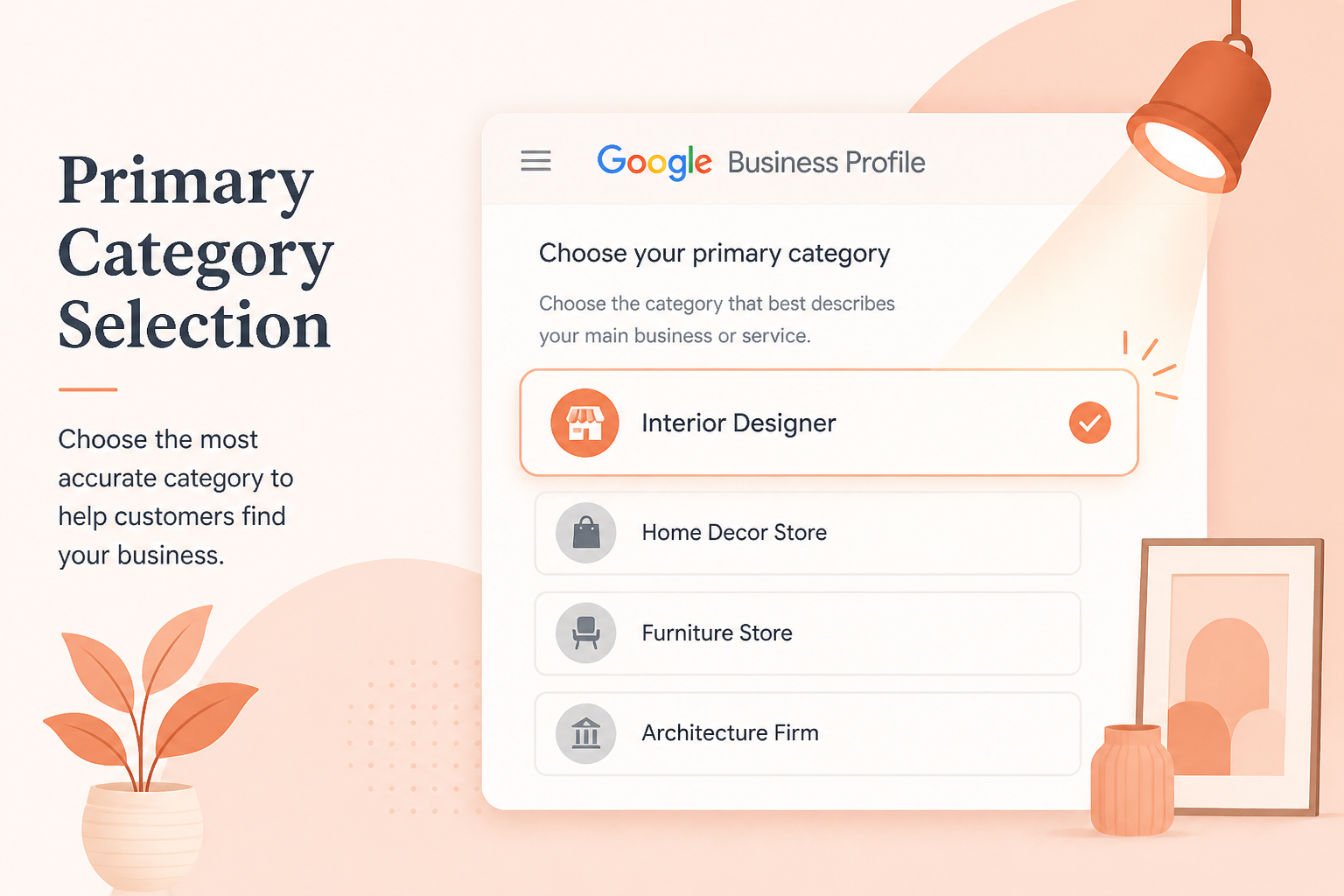
Start by searching the terms your actual customers use, not internal industry language, and note which category names appear on the top-ranking competitors in your area. Google's own category list, visible during profile setup, often reveals options more specific than the generic term you assumed was correct—choosing the more specific, accurate option almost always outperforms a broader catch-all category.
Cross-check your choice against your actual service list and website content. If your primary category and your most detailed website page describe two different core services, that mismatch signals inconsistency to Google and confuses customers who click through expecting one thing and finding another.
Common Category Mistakes That Suppress Visibility
The most damaging mistake is choosing an overly broad category, like a general "restaurant" label for a business that is specifically a bakery or a specific cuisine, missing out on the more targeted searches that specific category would have captured. The second most common mistake is leaving the category unchanged after the business pivots—a shop that expanded from repairs into full retail sales but never updated its primary category is quietly telling Google to ignore its new core business.
| Mistake | Visibility cost | Fix |
|---|---|---|
| Choosing an overly broad category | Misses specific high-intent searches | Pick the most specific accurate option available |
| Never updating after a business pivot | Relevance drifts from actual operations | Re-audit categories after any major service change |
| Stacking irrelevant secondary categories | Dilutes overall relevance signal | Remove any category you cannot honestly support |
| Copying a competitor's category blindly | May not match your actual services | Verify against your own real offerings first |
What Happens When You Cannot Decide Between Two Close Options
Sometimes two categories seem almost equally accurate, and the choice feels arbitrary. In that situation, look at your actual highest-value or most frequently requested service and let that decide the tie, rather than picking whichever option happens to sound more impressive. A business that leans slightly more toward one specialty in practice should let its category reflect that reality, even if the other option is not technically wrong.
It can also help to test both options over a period of a few weeks each, if your situation allows for it, and compare grid visibility before committing permanently. This is more feasible for businesses with a genuinely close call between two options than for those where one category is clearly more accurate—do not use testing as an excuse to avoid an obvious, honest decision that was already clear from the start.
Multi-Service Businesses: Choosing Without Diluting Relevance
Businesses that genuinely offer several distinct services—a spa offering both massage and hair styling, for example—face a real trade-off rather than an obvious answer. Choose the primary category based on whichever service drives the most revenue or the most search demand in your specific market, then use secondary categories generously but honestly for the rest. If two services are roughly equal in importance and search volume, consider whether a separate listing for a genuinely distinct sub-brand or location makes more sense than forcing one profile to represent two unrelated businesses.
How Often to Revisit Your Categories
A light annual review is enough for most stable businesses, but any time you add a major new service line, drop an old one, or notice a meaningful shift in how customers describe what you do, revisit the category choice immediately rather than waiting for the scheduled review. Pair category changes with a grid check using GBP Local Ranker a few weeks later to confirm the change is helping rather than accidentally narrowing your reach.
It also helps to keep a short written log of category changes and the date they were made, especially if more than one person manages the profile over time. Without this record, it becomes easy to lose track of why a particular category was chosen, and a well-meaning team member can accidentally revert a deliberate, researched decision back to a generic default months later.
How Category Choice Interacts With Your Services List
Categories and services work together rather than independently, and it is worth checking that they tell a consistent story once you have settled on a primary category. If your primary category is a specific specialty but your services list still reads like a generic overview written before that specialty became the focus, the two fields quietly undercut each other instead of reinforcing the same relevance signal.
Review your services list immediately after any category change, and rewrite entries so they clearly support and elaborate on the category you have chosen. This alignment between category and services is a small step that many owners skip, yet it is often the difference between a category change that visibly improves visibility and one that produces only a marginal, hard-to-notice effect.
Learning From Category Changes at Scale
Agencies and franchise operators managing many locations get an advantage individual owners rarely have: the ability to see how a category change performs across multiple similar businesses rather than guessing from a single data point. If switching from a broad category to a more specific one improves visibility for three locations in a row, that pattern is far more trustworthy than a single anecdotal result, and it is worth rolling out to the remaining locations with more confidence.
The same discipline applies in reverse. If a category change unexpectedly hurts visibility at one location, investigate before assuming the category itself was the problem—sometimes a genuinely correct category change gets undermined by an unrelated issue happening at the same time, like a citation inconsistency or a review dip. Isolating variables carefully, one change at a time where possible, is what separates a reliable playbook from a collection of coincidences mistaken for cause and effect.
A Final Word on Category Ambiguity
Not every business fits neatly into Google's category taxonomy, and that ambiguity is genuinely frustrating rather than a sign you are doing something wrong. When the fit is imperfect, resist the urge to solve the problem by adding an excessive number of loosely related secondary categories in the hope that quantity will compensate for imprecision. A smaller, honestly accurate set of categories consistently outperforms a large, scattered one, even when none of the individual options feels like a perfect match.
Final Takeaway
Choosing the right Google Business Profile category is not a one-time setup task you complete and forget—it is a decision worth revisiting as your business and the market around you change. Get specific rather than broad, stay honest rather than aspirational, and check that your categories, services list, and website all tell the same story. That alignment alone resolves more visibility problems than most owners expect. For the rest of the setup, our GMB optimization guide and local SEO playbook cover what to do next.
Frequently Asked Questions
How many secondary categories should I add?
Add as many as genuinely apply to services you actually deliver, and no more. There is no target number—accuracy matters far more than reaching a specific count.
Can changing my primary category hurt my existing rankings?
It can cause a temporary adjustment period as Google recalculates relevance, but if the new category is genuinely more accurate, it typically improves visibility within a few weeks.
Should I choose the same category as my top-ranking competitor?
Only if it genuinely and accurately describes your business too. Copying a competitor's category without matching services can create a mismatch that hurts more than it helps.
What happens if no category perfectly matches my business?
Choose the closest, most specific honest match available, and use your services list and description to clarify the details a single category cannot fully capture.
Does category choice affect which searches trigger my Google Posts and Q&A?
Category primarily affects overall relevance and ranking eligibility rather than directly controlling which specific searches surface posts or Q&A content.
Is it risky to change categories frequently?
Frequent, unnecessary changes can create instability in how Google evaluates your relevance. Change only when your business genuinely evolves, not as a routine experiment.
Can the wrong category get my listing suspended?
A deliberately misleading category chosen to game visibility can trigger review and suspension. An honest, imperfect category choice is not a policy risk by itself.