Local SEO is not one skill — it is a collection of interlocking disciplines: a well-run Google Business Profile, a genuine review system, an accurate technical foundation, a defense against spam and suspensions, and increasingly, a clear-eyed understanding of how AI-driven search is changing (and not changing) how customers find businesses. Most guides pick one piece and treat it as the whole picture. This one is different: it is a map of the entire discipline as it stands in 2026, with a clear path into the deeper, dedicated guides covering each individual piece in more depth.
Nothing here promises overnight results or a guaranteed top ranking — anyone claiming that is not being straight with you. What follows is the honest, complete roadmap: what to build first, what to maintain continuously, and where to go deeper on each specific piece once the foundation is solid.
The Foundation: Getting Your Google Business Profile Right
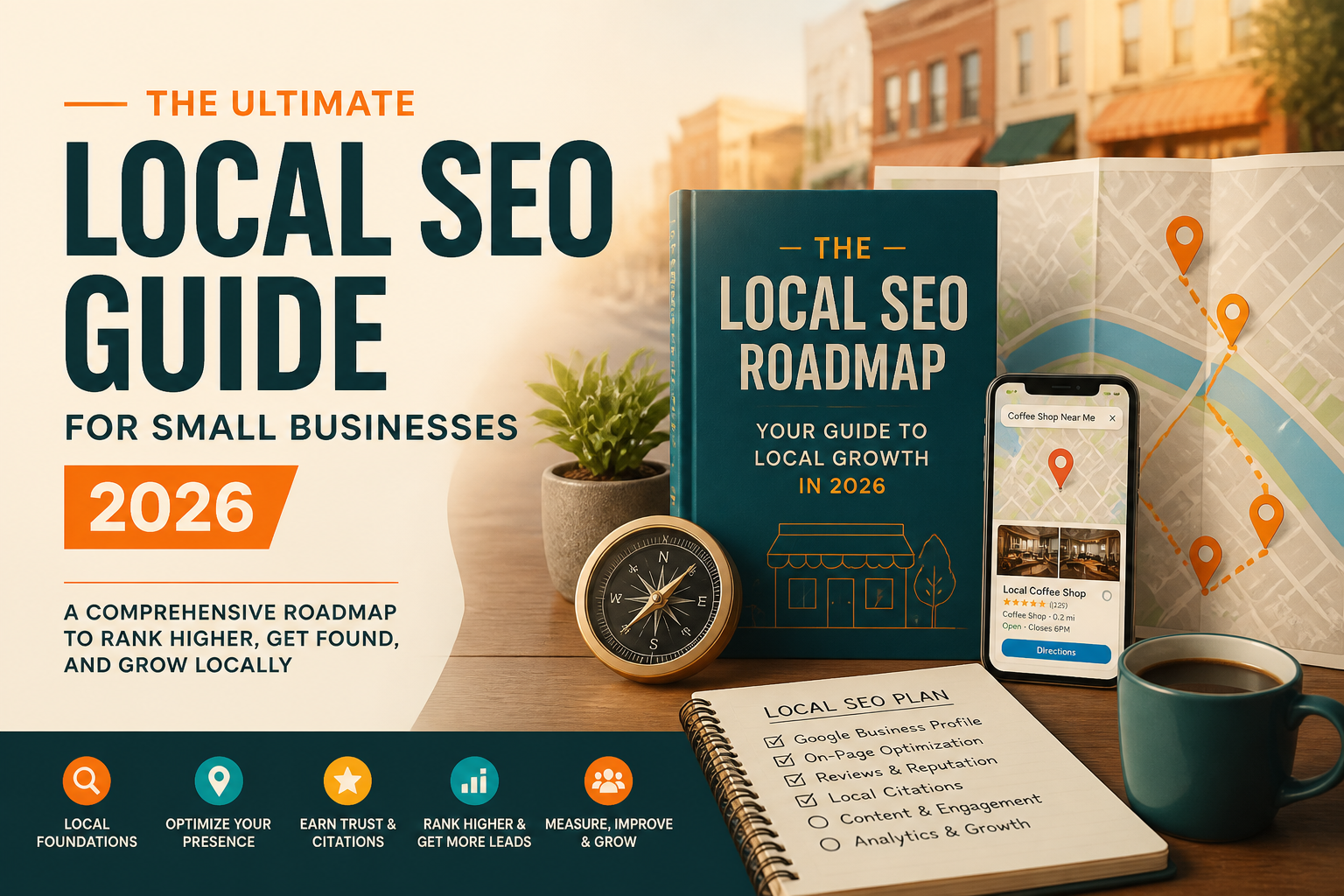
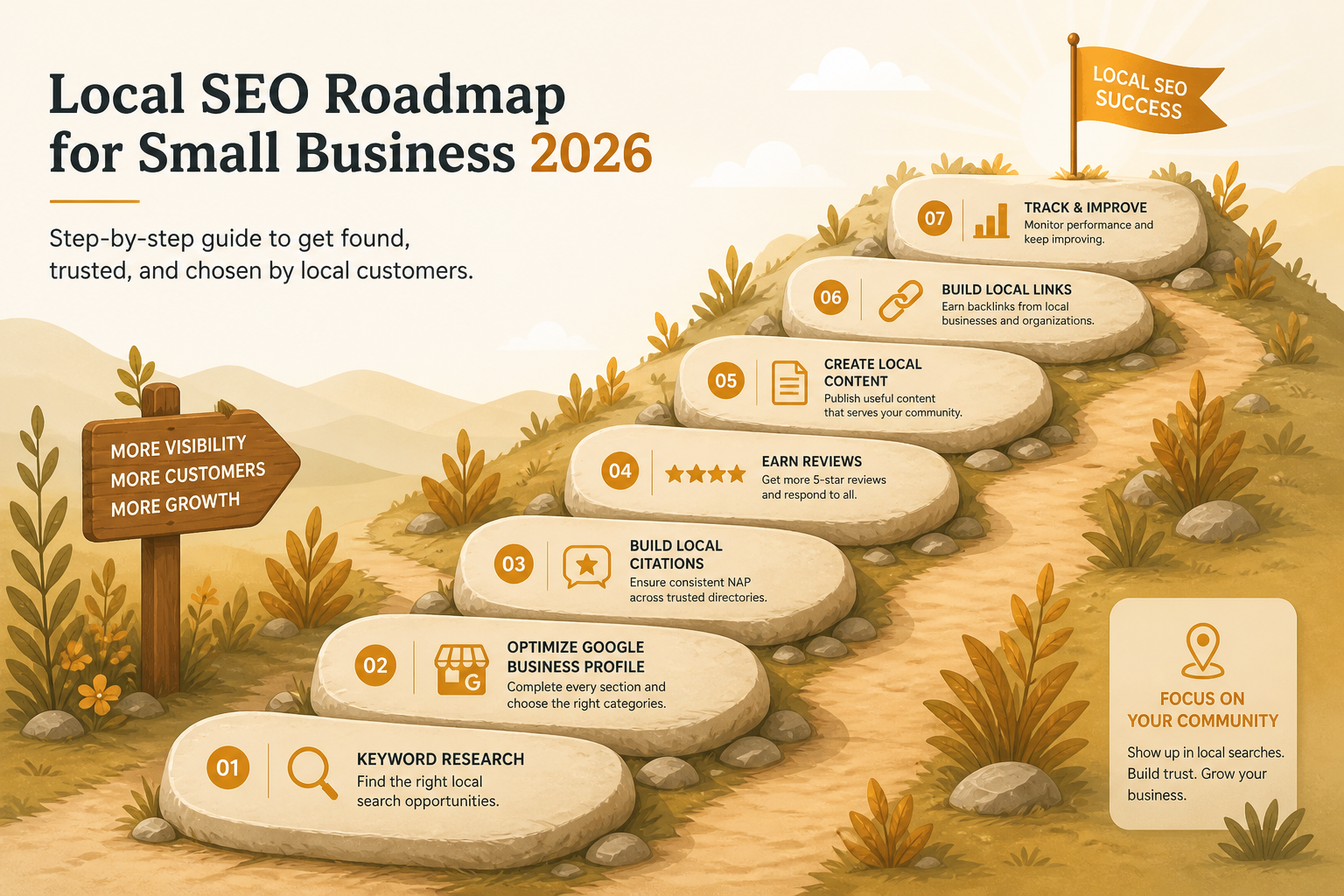
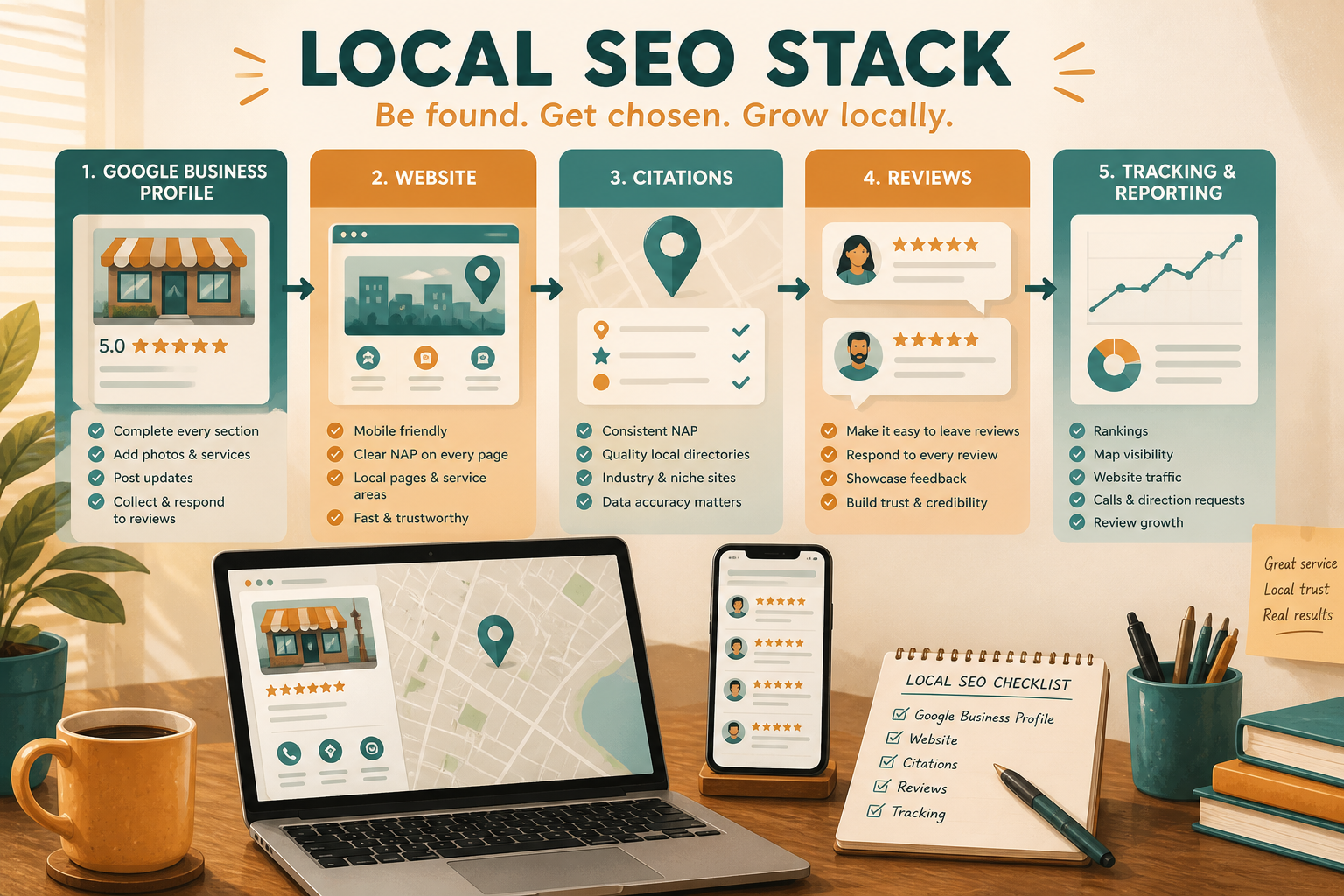
Everything else in local SEO sits on top of an accurate, complete Google Business Profile — correct category selection, accurate hours and service areas, a genuine business description, and every relevant attribute filled in. Small, unforced errors here quietly cap performance regardless of how much effort goes into everything else, which is why our local SEO quick wins guide is a useful starting checklist, and our full Google Business Profile optimization resource covers the complete setup.
Reviews: The Trust Engine Behind Every Local Decision
A consistent, ethical review generation system — asking every customer at the right moment, making it effortless, and responding to what comes back — remains the single highest-leverage ongoing activity in local SEO, and it is one no shortcut or paid tactic can substitute for. Our dedicated guide on getting more customer reviews covers the full system, including the ethical boundaries around incentives that are easy to accidentally cross.
Visual Presence: Why Photos Still Earn Their Place
Photos are not a direct ranking factor, but they shape the split-second decision a searcher makes about whether your business looks trustworthy and current, and a steady cadence of genuine, well-lit images consistently outperforms a one-time upload from years ago. The full reasoning and a practical cadence are covered in our guide on why Google Business Profile photos matter .
Technical Foundations: Schema and Consistency
Structured data will not single-handedly move your map pack ranking, but correctly implemented LocalBusiness schema, combined with consistent NAP data across your website, citations, and profile, is a genuine — if modest — clarity signal that supports everything else you build. Our honest breakdown in does schema markup really help local SEO separates the real value from the overstated marketing claims.
| Layer | Primary Role | Read Next |
|---|---|---|
| Google Business Profile | Core relevance and distance signals | Local SEO Quick Wins |
| Reviews | Prominence and trust | How to Get More Customer Reviews |
| Photos | Engagement and conversion | Why GBP Photos Matter for Rankings |
| Schema & website consistency | Clarity and rich result eligibility | Schema Markup for Local SEO |
| Compliance & spam defense | Protecting what you've built | GBP Spam: How to Report and Remove It |
Protecting What You've Built: Spam, Suspensions, and Compliance
A strong profile is worth defending, both from genuine guideline violations that can trigger a suspension and from the spam listings that crowd honest businesses out of competitive map packs. Understanding what qualifies as spam, how to report it correctly, and how to keep your own listing unmistakably clean is covered fully in our guide to reporting and removing Google Business Profile spam .
Scaling Beyond a Single Location
The moment a business opens a second location, local SEO shifts from optimizing one asset to managing a system, where consistency and repeatable processes matter more than any single clever tactic. Our dedicated guide on local SEO for multi-location businesses covers building that system without the common pitfalls that show up almost exclusively at scale.
Earning Visibility Without Paid Ads
Every principle in this guide works without an advertising budget, because organic map pack results are governed by relevance, distance, and prominence, entirely separate from paid placements. Our guide on improving Google Maps visibility without buying ads lays out exactly how to build genuine, no-budget prominence and a realistic timeline for seeing results.
Measuring What Matters
None of this work is worth much without a clear way to tell whether it is actually moving the numbers, and the native Performance tab on your Google Business Profile — when read correctly — is a genuinely useful, if imperfect, diagnostic tool. Our breakdown of what Google Business Profile insights data really means explains how to turn the dashboard into decisions instead of a vanity metric to glance at occasionally.
| Timeframe | Focus | Expected Outcome |
|---|---|---|
| Days 1-30 | Fix profile fundamentals, launch a review request habit | Cleaner profile, early review momentum |
| Days 31-60 | Add schema, audit citations, build a photo cadence | Stronger consistency and clarity signals |
| Days 61-90 | Build local content, monitor insights, address any spam | Early, measurable movement in discovery searches |
| Beyond 90 days | Sustain reviews, content, and consistency indefinitely | Compounding, durable prominence over time |
Looking Ahead: Where Local Search Is Actually Heading
AI-generated answers are genuinely changing how some informational and comparison searches get answered, but the transactional searches that drive real local business decisions still rely heavily on the same map-based results they always have, and entity consistency is becoming more valuable, not less, as more systems try to synthesize answers automatically. Our fuller look at the future of local SEO and Google Business Profiles covers this in depth without the hype.
How Tools Fit Into This Roadmap Without Replacing It
Every layer covered in this guide can be executed manually with enough time and discipline, but most small businesses realistically benefit from software that tracks rankings, monitors reviews, flags citation inconsistencies, and surfaces insights trends automatically rather than relying on manual spreadsheet upkeep alone. The important distinction is that tools accelerate and organize the execution of a strategy — they do not replace the need for one.
A tool cannot substitute for the underlying strategy
Software that tracks your ranking position or flags a citation error is only useful once you already understand what a good outcome looks like and why the fundamentals in this guide matter in the first place. A business that buys a ranking tracker while ignoring its review system or leaving its category misconfigured will simply get a very precise, well-organized view of a listing that continues to underperform, which is not the same as actual progress.
What to prioritize when evaluating a local SEO platform
Look for a platform that consolidates the pieces most prone to manual drift — rank tracking across your actual service area, citation monitoring, review aggregation and response management, and profile audit alerts — rather than one narrow feature in isolation. Our own GBP Local Ranker toolset was built around exactly this principle: supporting the fundamentals in this guide rather than promising a shortcut around them.
Set a realistic budget and timeline before you start
Whether a business handles every piece of this roadmap manually or invests in software to support it, the honest expectation is the same: meaningful, durable results build over months, not days, and there is no budget size that meaningfully shortcuts the fundamentals of an accurate profile, genuine reviews, and consistent data. Setting that expectation upfront, whether internally or with a partner agency, prevents the frustration that comes from measuring a multi-month strategy against a two-week timeline.
Who Should Own This Roadmap Inside a Small Business
For a solo owner-operator, one person naturally owns every layer of this roadmap, which makes prioritization simpler but time scarcer. For a slightly larger business, it is worth explicitly assigning ownership of the profile, the review system, and the content work, even if the same person handles all three, so that each piece has a clear owner rather than becoming everyone's responsibility and therefore nobody's.
When it makes sense to bring in outside help
Outside help — an agency, freelancer, or dedicated software platform — tends to make the most sense once a business has multiple locations, a genuinely competitive category, or simply not enough internal time to sustain the ongoing pieces of this roadmap like reviews and content consistently. It rarely makes sense as a substitute for understanding the fundamentals in this guide yourself, since an informed business owner gets far more value out of any outside help than one hoping an outside party will handle everything invisibly.
Final Takeaway
There is no single tactic that makes local SEO work — it is the accumulation of an accurate profile, a genuine review system, honest technical hygiene, vigilant compliance, and patient, consistent effort sustained over months and years. Use this guide as the map, and the nine dedicated guides linked throughout as the deeper reference for each specific piece, paired with the tools and strategy resources to put it all into practice.
Frequently Asked Questions
Where should a small business start if local SEO feels overwhelming?
Start with Google Business Profile fundamentals — accurate category, hours, and description — then build a consistent review request habit before moving to the more advanced pieces.
How long does it realistically take to see results from a full local SEO effort?
Early movement often appears within the first one to two months, with more substantial, durable gains typically compounding over six months to a year.
Is it necessary to do everything in this guide at once?
No, sequencing matters more than doing everything simultaneously; fix profile accuracy and reviews first, then layer in schema, content, and monitoring over time.
Does local SEO work differently for multi-location businesses?
The fundamentals are the same, but multi-location businesses need repeatable systems and consistency checks across every listing rather than one-off manual management.
Will AI search make traditional local SEO obsolete?
No, transactional local searches still rely heavily on map-based results, and entity consistency and reviews are becoming more, not less, important.
How do I know if my local SEO efforts are actually working?
Track your Google Business Profile Performance tab consistently — discovery searches, action rates, and review growth — against a monthly baseline rather than checking sporadically.