A single Google Business Profile can realistically rank for a genuinely wide range of related searches, but the path there has nothing to do with stuffing keywords into your business name or repeating service terms unnaturally across your description — both of which risk a suspension rather than broader visibility. The actual path runs through structural, honest signals: an accurate category, a genuinely complete services list, reviews that naturally mention the range of work you do, and supporting website content that reinforces each specific service.
This guide covers how that actually works in practice, because "just add more keywords" is not real advice — it is the kind of shortcut that either does nothing or actively damages a profile that Google's systems increasingly scrutinize for exactly this pattern. What follows instead is the honest, structural approach to earning visibility across multiple related searches without gaming anything.
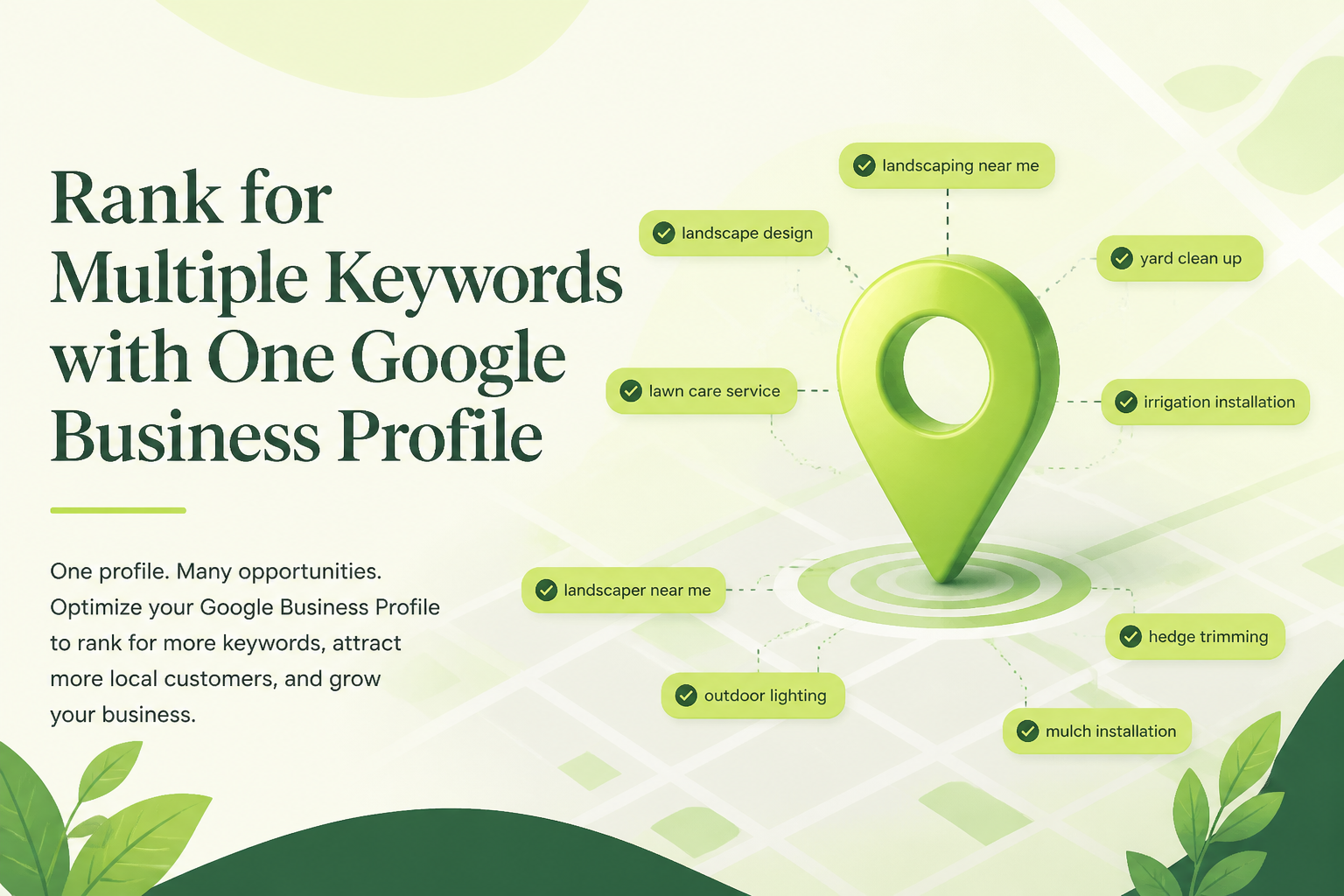
Why Keyword Stuffing Backfires in 2026
Adding keywords directly into your business name — "Smith Plumbing - Water Heater Repair Drain Cleaning" — used to produce a short-term visibility bump before Google's enforcement caught up, and even then it violated guidelines. Today, this practice is both against the rules and a well-known suspension trigger, covered in more depth in our guide on recovering from a GBP suspension . Repeating service keywords unnaturally in your business description carries a smaller risk of direct suspension but still tends to read as spammy to both searchers and Google's quality systems, undermining trust rather than building relevance.
The Real Lever: Your Category Structure
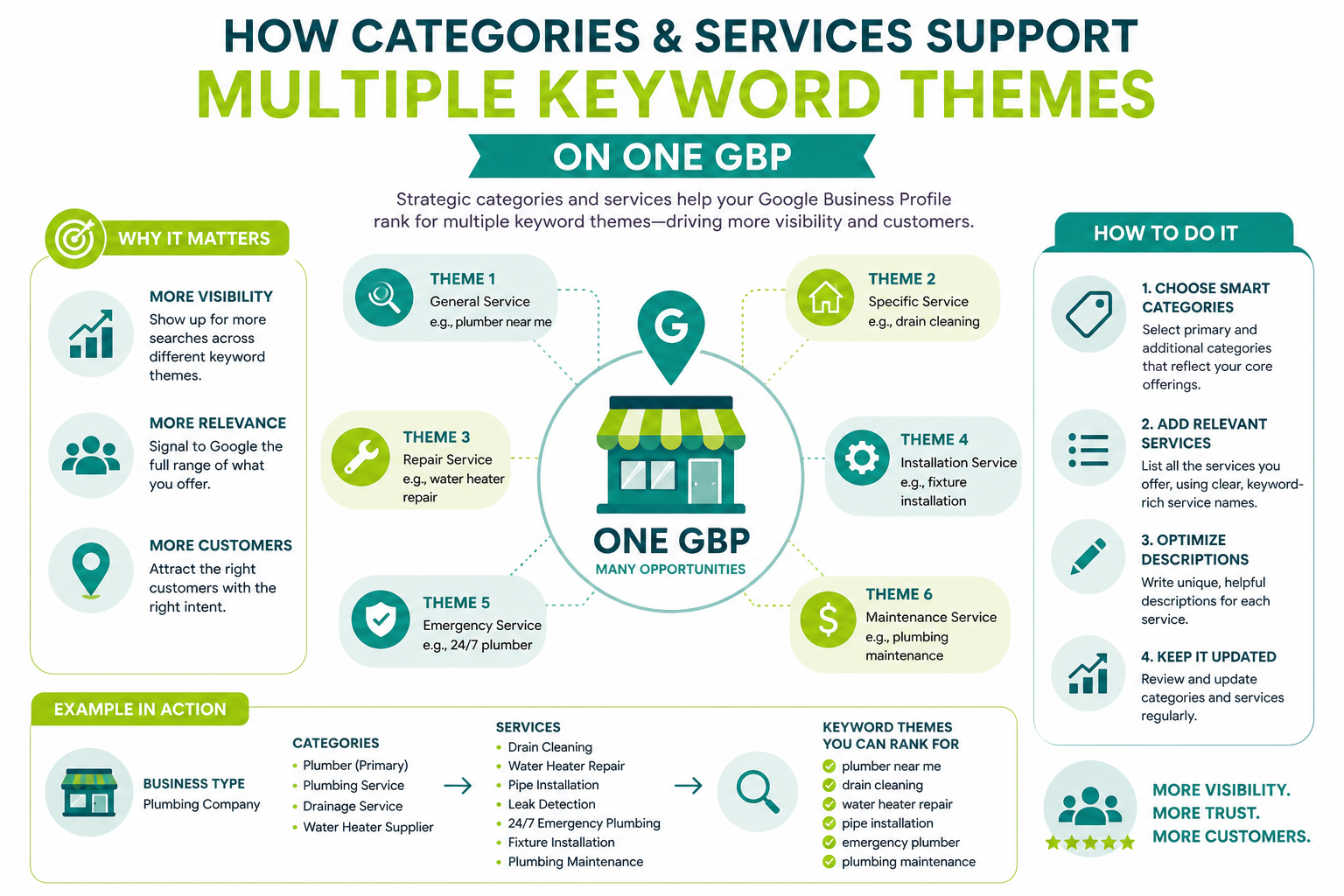
Your primary category should reflect the single service driving the majority of your business, while your secondary categories — Google allows up to nine additional ones — should cover genuinely distinct services you actually provide, not synonyms of the same offering repeated for extra coverage. A business that does both HVAC repair and duct cleaning as genuinely separate, real service lines can use secondary categories to legitimately expand its relevance across both, rather than trying to cram both into a single overloaded primary category.
More categories is not automatically better
Adding a secondary category for a service you do not genuinely and regularly perform is both against guidelines and likely to dilute relevance for the searches that actually matter to your business, since Google's systems increasingly weigh whether the breadth of a profile's claimed services matches the depth of evidence — reviews, photos, website content — actually backing each one up.
| Approach | What it looks like | Risk level |
|---|---|---|
| An accurate primary category | Matches your main, highest-volume service | None — this is required |
| Genuine secondary categories | Distinct services you actually and regularly perform | Low, when accurate |
| A category for occasional or aspirational work | A service you rarely or never actually perform | High — dilutes relevance and risks review |
| A keyword-stuffed business name | Services crammed into the name field itself | Very high — a common suspension trigger |
The Services List: Your Most Direct, Safe Expansion Tool
Unlike the category and business name fields, the dedicated services list is specifically designed to let you list the genuine range of what you offer without the same guideline risk, as long as each entry reflects real, current work. Our detailed guide on services best practices and companion piece on how many services to add cover the specifics, but the core idea here is that a specific, complete services list is the intended, sanctioned mechanism for exactly the kind of multi-keyword coverage business owners often try to achieve through riskier shortcuts.
Write each service entry the way a customer would actually search for it — "emergency drain unclogging" rather than a vague catch-all like "plumbing services" — since specificity in this field directly feeds relevance matching for the corresponding searches. A services list with fifteen specific, accurate entries covers meaningfully more search variety than a name or description stuffed with the same handful of terms repeated for emphasis.
Reviews Naturally Reinforce Multiple Service Keywords
One of the most overlooked, fully legitimate ways a profile ends up ranking for a broader range of searches is through the organic language customers use in their own reviews. A customer who mentions "they fixed our water heater fast" or "great job with the bathroom remodel" is naturally reinforcing relevance for those specific services in a way that reads as genuine, because it is genuine. This is one more reason a steady, varied stream of reviews across your different service lines does more for multi-keyword visibility than any manipulation of your own profile fields ever could.
Encourage specific feedback without scripting it
When requesting reviews, a simple prompt like "let us know which service we helped with" encourages customers to naturally mention the specific work performed, without crossing into scripting or incentivizing specific keyword usage, which would violate review guidelines. The goal is genuine specificity, not manufactured phrasing.
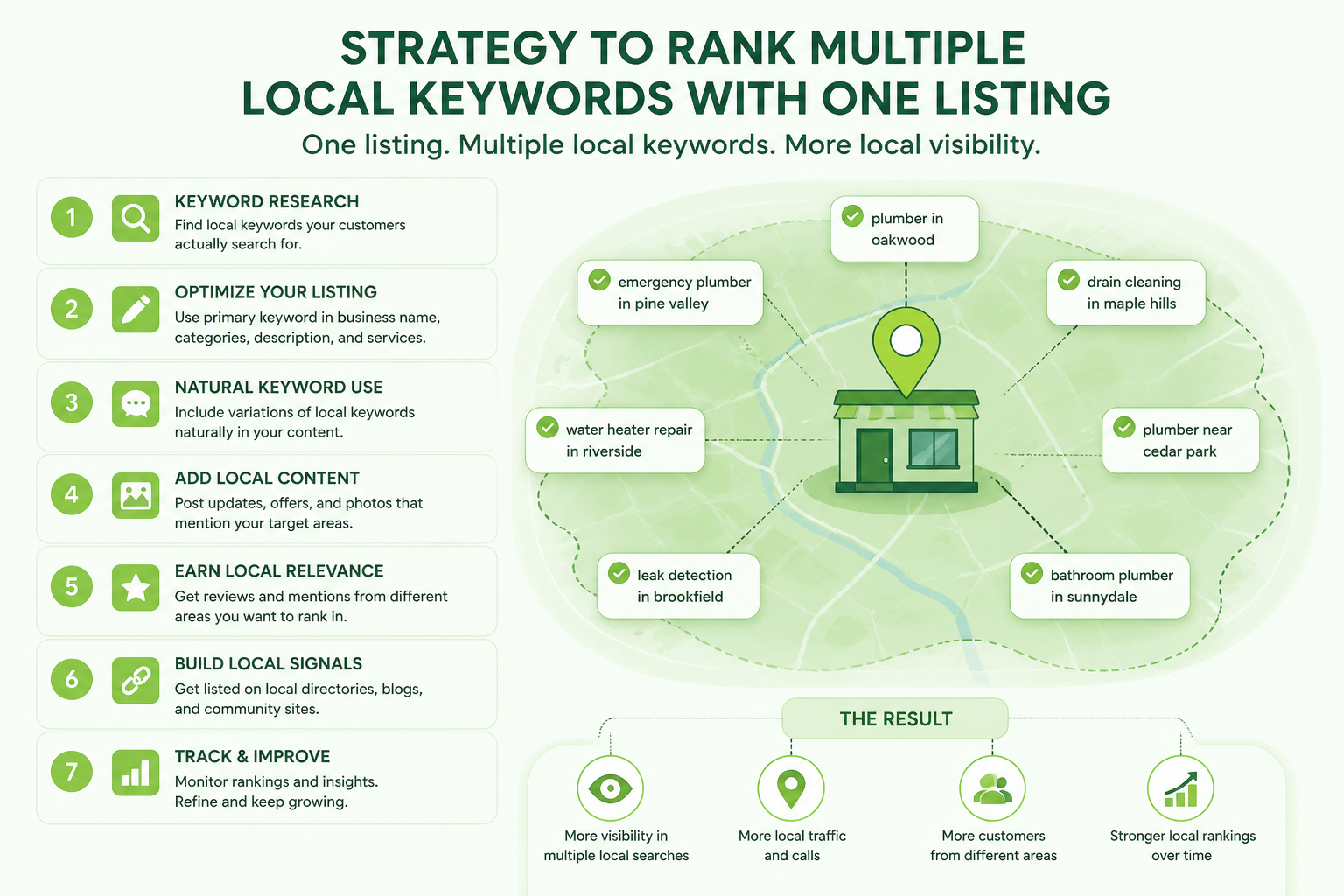
Your Website Should Mirror and Reinforce the Same Structure
A profile claiming a wide range of services gains additional credibility when your website has genuine, distinct pages or sections covering each one, rather than a single generic services page that vaguely gestures at everything. This reinforces the same relevance signals from an independent source, which matters both for your website's own search visibility and, indirectly, for the overall trust signal Google's systems associate with your business as a coherent, verifiable entity across multiple properties.
Link your Google Business Profile to a specific, relevant page whenever the platform allows it, rather than always defaulting to your homepage. A link that lands a searcher on the exact service page matching what they were looking for reduces the chance they bounce away confused, and it gives that specific page one more signal of relevance tied directly back to a real, verified business entity rather than a generic anonymous URL.
| Legitimate approach | Risky shortcut it replaces |
|---|---|
| Specific, accurate services list entries | Keywords stuffed into the business name |
| Genuine secondary categories for real services | A single category overloaded with unrelated terms |
| Naturally varied, specific customer reviews | Scripted or incentivized review keyword usage |
| Distinct website pages per real service | One thin page vaguely covering everything |
A Realistic Example: How This Plays Out in Practice
Consider a business that genuinely performs plumbing repair, drain cleaning, and water heater installation as three distinct, regularly performed services. The structural approach means setting plumbing as the accurate primary category, adding drain cleaning and water heater services as specific entries in the services list rather than separate categories if they fall under the same broad trade, and ensuring the website has distinct content addressing each service rather than one generic plumbing page.
Over the following months, as customers leave reviews naturally mentioning "fixed our water heater" or "cleared a stubborn drain fast," the profile organically accumulates the exact language search engines and searchers alike associate with each specific service, reinforcing relevance for all three without a single keyword ever being artificially inserted anywhere. This is a slower process than editing a business name once and hoping for a quick lift, but it is durable and does not carry any guideline risk.
What this business should avoid doing instead
The same business should avoid adding a secondary category for, say, general contracting simply because it occasionally does small related jobs, since that occasional work is not backed by a genuine, regular pattern of service, reviews, or dedicated website content. Adding it anyway would dilute relevance for the core plumbing searches that actually drive most of its revenue, in exchange for a marginal and likely ineffective chance at unrelated general contracting searches.
How Many Distinct Searches Can One Profile Realistically Cover?
There is no fixed ceiling, but realistic expectations matter: a profile can legitimately rank for a genuinely wide family of closely related searches tied to its actual services, but it will not meaningfully rank for searches entirely unrelated to what the business does, no matter how the fields are structured. A general contractor genuinely offering remodeling, roofing, and flooring work can realistically build visibility across all three; the same contractor cannot realistically expect to rank for landscaping searches simply by adding the word to a field somewhere.
Final Takeaway
Ranking for multiple related keywords with one Google Business Profile is entirely achievable, but it is built through accurate category structure, a specific and complete services list, naturally varied reviews, and supporting website content — not through stuffing terms into fields where they do not honestly belong. The structural approach takes longer to show results than a keyword-stuffed shortcut might promise, but it is durable, guideline-compliant, and pairs directly with the broader work covered in our GMB optimization guide and local SEO playbook .
Frequently Asked Questions
Can I add keywords directly to my Google Business Profile name?
No, this violates Google's guidelines and is a well-documented suspension trigger; your business name should match your real, legal or registered name exactly.
How many secondary categories should I add?
Only as many as reflect services you genuinely and regularly perform; adding categories for occasional or aspirational work tends to dilute relevance rather than help it.
Does a longer services list always help rankings?
A longer list helps only when every entry is accurate and specific; padding it with vague or inaccurate entries provides little benefit and can look inauthentic.
Can I ask customers to mention specific keywords in their reviews?
No, scripting or incentivizing specific review language violates guidelines; encouraging general detail about which service was performed is the appropriate approach instead.
Will my profile rank for services I do not actually offer if I list them?
It is unlikely to help meaningfully and risks a guideline violation, since Google's systems increasingly weigh whether claimed services are backed by real evidence like reviews and photos.
How does my website affect keyword coverage for my Google Business Profile?
Distinct, genuine pages per service reinforce the same relevance signals from an independent source, supporting the range of searches your profile can realistically cover.
Is there a limit to how many different searches one profile can rank for?
There is no fixed number, but realistic coverage is limited to genuinely related services; a profile will not rank for work entirely unrelated to what the business actually does.