Local SEO in 2026 looks different from even two years ago, but not in the way most headlines suggest. Yes, AI Overviews now answer plenty of informational queries before a searcher ever scrolls to a list of websites. Yes, generative summaries occasionally pull business details directly into a conversational answer instead of a traditional result. But when someone searches "plumber near me" or "dentist open now," Google still leans on the same three pillars it always has: relevance, distance, and prominence. What has changed is how unforgiving the competition has become for businesses that treat those pillars as a one-time setup instead of an ongoing discipline.
This guide skips the recycled advice you have probably read a dozen times already. Instead, it walks through the strategies that are genuinely producing results for real businesses right now — what deserves your limited time first, what has quietly stopped working, and how to build a realistic roadmap instead of chasing every new tactic that shows up in a marketing newsletter. None of it involves shortcuts, and none of it promises a guaranteed rank; it is simply what the evidence and day-to-day work with real listings actually shows.

The Three Pillars That Still Decide Local Rankings in 2026
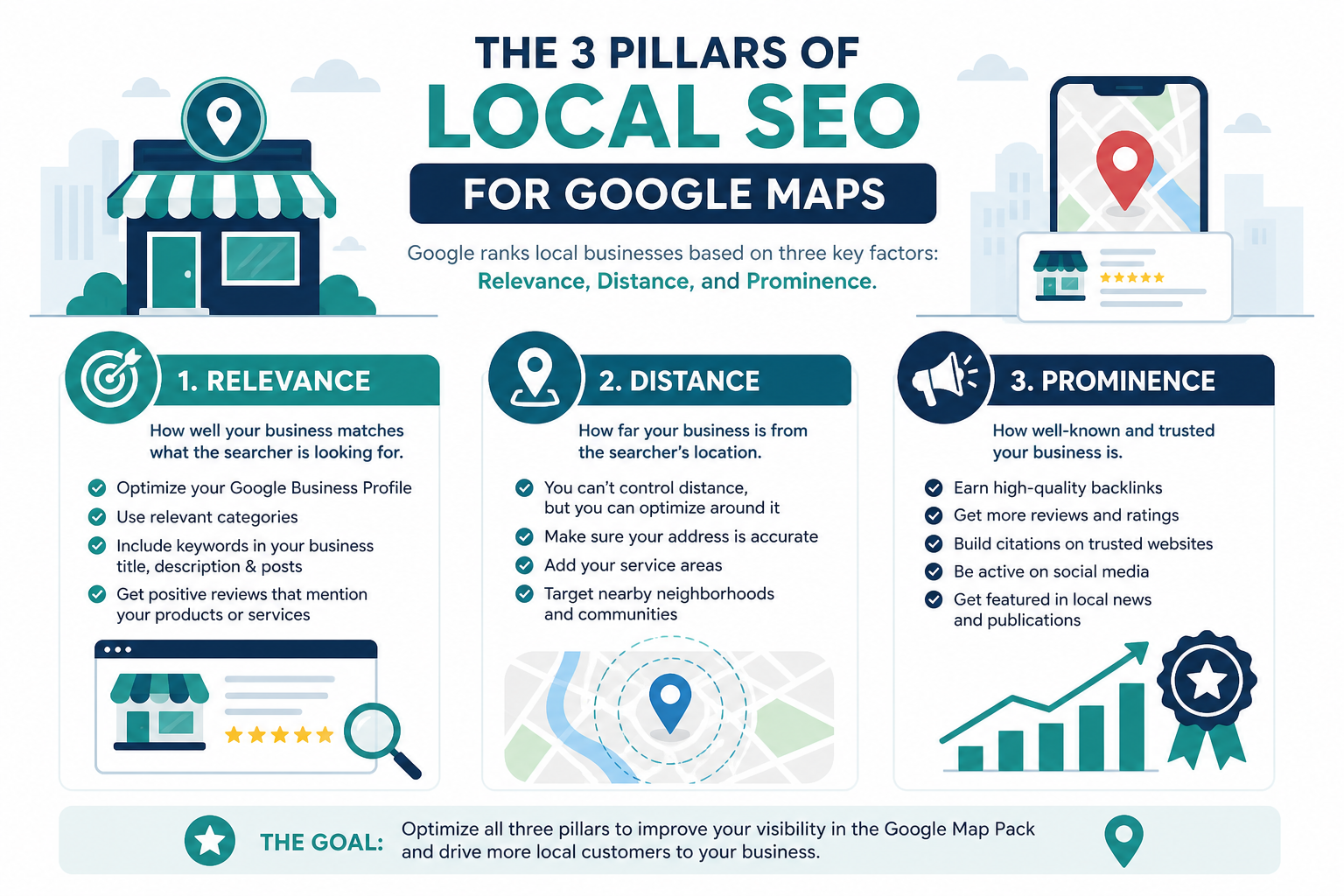
Every ranking factor Google has ever mentioned publicly folds back into relevance, distance, and prominence. Relevance measures how well your profile matches what someone searched for — your category, services list, and description all feed into it. Distance measures how close your business sits to the searcher or to the location they typed. Prominence measures how well-known and trusted your business appears, built from signals like review volume and quality, citation consistency, and how often people search for and engage with your brand directly rather than finding you incidentally.
None of this is new information, but in 2026 the bar for each pillar has risen simply because more businesses are actively optimizing all three at once. A profile that felt "complete" in 2022 often looks noticeably thin next to a well-run competitor today. Our full GMB optimization guide covers the field-by-field setup in detail, but the strategic layer — deciding where to spend limited time and budget first — is what actually separates businesses that rank consistently from those that plateau after an initial burst of effort.
| Pillar | What it measures | Highest-leverage action right now |
|---|---|---|
| Relevance | How closely your profile matches the search query | Accurate primary category plus a real, specific services list |
| Distance | Proximity to the searcher or the searched location | Precise pin placement, or an honest service-area list for SABs |
| Prominence | Trust and awareness signals across the web | Steady review velocity, consistent citations, and genuine engagement |
Strategy 1: Build a Genuinely Complete Google Business Profile
Categories and services should reflect real work, not aspiration
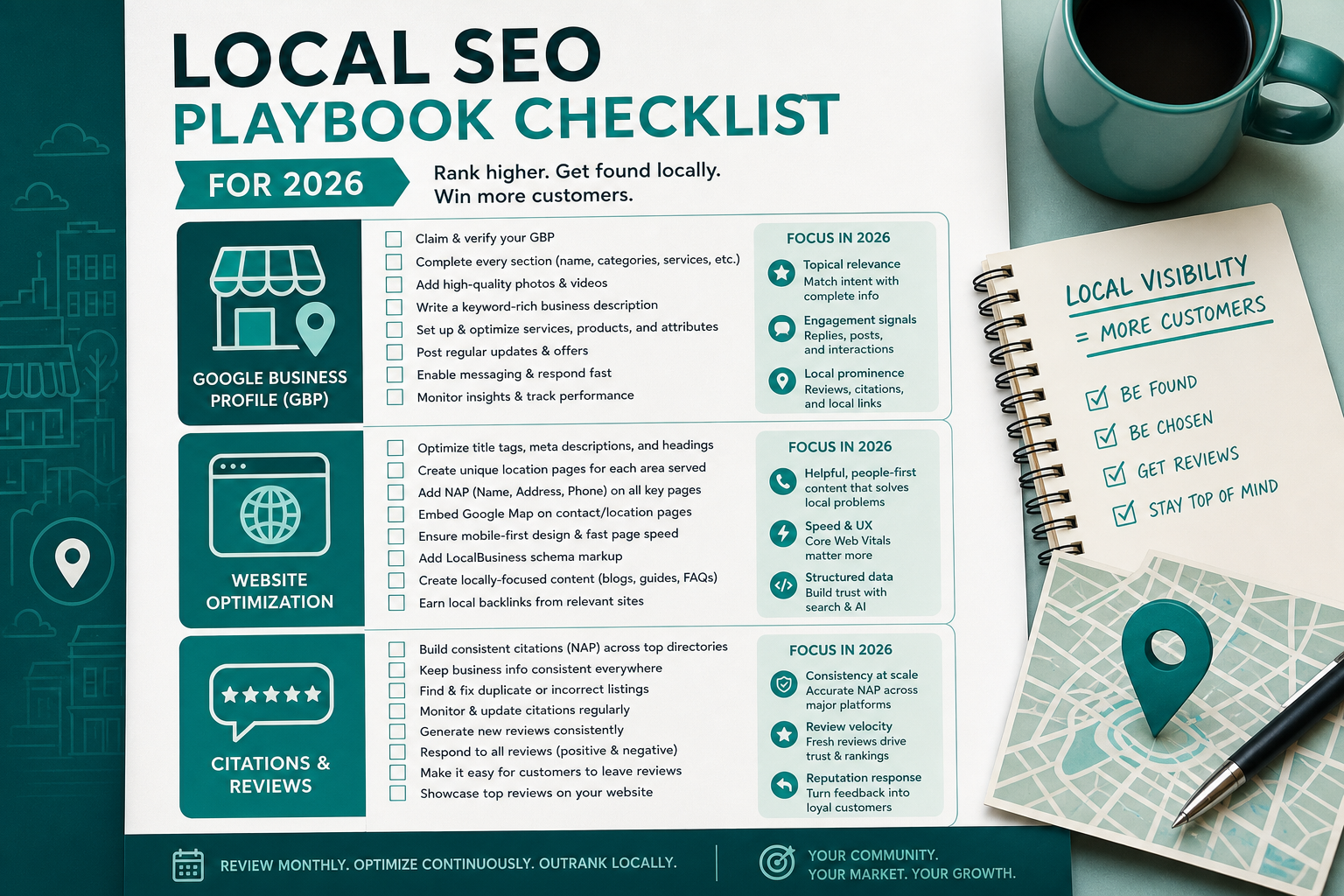
A surprising number of profiles still list a primary category chosen months or years ago that no longer matches the business's main revenue driver, or a services list copied from a template rather than written from the actual job list. Both quietly cap relevance for the searches that matter most today. Revisit your primary category and services list at least twice a year, and be specific: "emergency water heater replacement" matches more real searches than a generic "plumbing services" entry ever will.
Photos and posts need to stay current, not just exist
A profile with forty photos uploaded three years ago signals less activity to both customers and Google than one with a handful of genuinely recent images. Fresh, real photos of your team, completed work, and the actual storefront or vehicle do more for trust than any stock image ever could, and a light weekly or biweekly posting habit keeps the profile looking actively managed rather than abandoned after the initial setup.
Strategy 2: Treat Reviews as a System, Not a One-Time
Review count alone has never told the full story, and it matters even less in isolation now. Recency, response rate, and the specific language customers use in their reviews all feed into how Google and searchers judge a profile's trustworthiness. Our deeper breakdown in the truth about GBP reviews and rankings covers exactly how much weight reviews carry versus other factors, but the practical takeaway here is simpler: build a repeatable request habit instead of an occasional campaign.
A steady trickle of two or three genuine reviews a week, replied to within a couple of days, consistently outperforms a burst of fifty reviews collected once and then silence for six months. The system matters more than any single review, because Google's systems and human searchers alike read a stagnant review history as a warning sign, regardless of how strong the historical average looks.
| Week | Action | Goal |
|---|---|---|
| Week 1 | Send review requests to the most recent completed jobs | Two to four new genuine reviews |
| Week 2 | Reply to every review received so far this month | Zero unanswered reviews older than 48 hours |
| Week 3 | Follow up with customers who did not respond the first time | One or two additional reviews |
| Week 4 | Review the month, note patterns in feedback, adjust service where needed | A short list of real improvements, not just review count |
Strategy 3: Local Content and Location Pages That Serve Real
If you operate in more than one city or neighborhood, a single generic homepage rarely captures the specific intent behind "near me" and city-modified searches. Purpose-built location pages, done well, give Google unambiguous signals about where you genuinely operate and give searchers the specific detail they came looking for. Our companion guide on optimizing location pages for local SEO walks through the structure in detail, but the short version is: unique content per location, real local detail, and no thin, duplicated pages that just swap out a city name.
Content strategy beyond location pages should stay grounded in questions your actual customers ask, not keyword lists pulled from a generic tool. A blog post answering "how much does X cost in [city]" or "what to expect during Y service" earns organic traffic and builds the kind of topical depth that reinforces relevance across your whole site, which our broader local SEO playbook covers alongside the technical fundamentals.
Strategy 4: Keep NAP and Citations Consistent Across the Web
Name, address, and phone number consistency is unglamorous, but inconsistent listings across directories still create real friction for both Google's matching systems and confused customers. A phone number that changed three years ago but never got updated on five smaller directories is a common, quietly damaging problem. Our dedicated guide on why consistent business information matters for local SEO covers exactly how to audit and fix this without spending a fortune on citation-building services you do not need.
Strategy 5: Track Rank Movement Instead of Guessing
A surprising number of business owners still judge their local visibility from a single search on their own phone, which is skewed by search history, device location, and personalization in ways that make it unreliable as a diagnostic tool. A dedicated rank tracker like GBP Local Ranker shows how you actually appear across a grid of nearby points, which is a far more honest picture than one search from your own office chair happens to suggest.
Tracking matters because it turns local SEO from a guessing game into a feedback loop. Without it, you cannot tell whether a category change, a burst of new reviews, or a fresh set of photos actually moved anything, and you end up either repeating what worked by accident or abandoning tactics that were quietly working before you had the patience to see them through. Even a simple monthly snapshot of rank position for your two or three priority searches is enough to turn effort into an informed decision rather than a hopeful one.
A Realistic 2026 Roadmap: 30, 60, 90 Days
Trying to fix everything at once is how most local SEO efforts stall out. In the first 30 days, focus entirely on profile accuracy: category, services, hours, photos, and a NAP audit across your top ten citations. In the next 30, build the review request habit and start or refresh location pages for your priority cities. In the final 30, review what actually moved — rank position, call volume, direction requests — and double down on whichever lever showed real movement rather than spreading effort evenly across everything.
Final Takeaway
The businesses winning local search in 2026 are not the ones that found a secret trick; they are the ones that treat relevance, distance, and prominence as ongoing work rather than a checklist completed once and forgotten. AI-driven search results have changed how answers get presented, but they have not replaced the underlying need for an accurate, active, well-reviewed local presence. Build the habits in this guide consistently for a few months, and the ranking movement tends to follow — slower than anyone would like, but real and durable.
Frequently Asked Questions
Has AI search changed local SEO fundamentals in 2026?
It has changed how answers are presented, with more AI Overviews and generative summaries, but the underlying ranking factors — relevance, distance, and prominence — remain the same, so the fundamentals in this guide still apply.
How long does it take to see results from these strategies?
Most businesses notice early signals like more calls or direction requests within four to eight weeks of consistent effort, with clearer rank movement typically appearing over two to four months.
Which strategy should a small business with limited time prioritize first?
Profile accuracy and a simple review request habit usually deliver the fastest, most reliable return for the least effort, before investing time in location pages or broader content.
Do I need location pages if I only operate from one address?
No, a single well-optimized Google Business Profile and homepage are usually sufficient. Location pages matter most once you genuinely serve multiple distinct cities or neighborhoods.
Is posting on Google Business Profile still worth the time in 2026?
It is not a guaranteed ranking factor, but a light, consistent posting habit keeps a profile looking active and can improve click-through when searchers compare you against a competitor.
Can I do all of this without hiring an agency?
Yes. Every strategy in this guide is something an owner or a single staff member can execute with a couple of focused hours a week; the discipline matters more than the budget.
What is the biggest mistake businesses make with local SEO in 2026?
Treating it as a one-time project instead of ongoing maintenance. A profile optimized once and never revisited tends to lose ground to competitors who keep their reviews, photos, and listings genuinely current.