Most explanations of local ranking factors are written for SEO practitioners, full of jargon about entity resolution and proximity algorithms that leave a busy business owner no closer to knowing what to actually do on a Tuesday afternoon. This guide strips that away. It covers the same underlying factors our more technical GBP ranking factors breakdown covers, but organized specifically around what a non-specialist owner can realistically act on, prioritized by actual impact rather than how interesting each factor sounds.
There is no single trick here, and anyone promising a guaranteed top ranking is not being honest with you. What follows is a grounded, practical list of what genuinely moves the needle, roughly ordered from highest-leverage to more marginal, so you can spend your limited time where it counts most.
The Big Three, in Plain Language
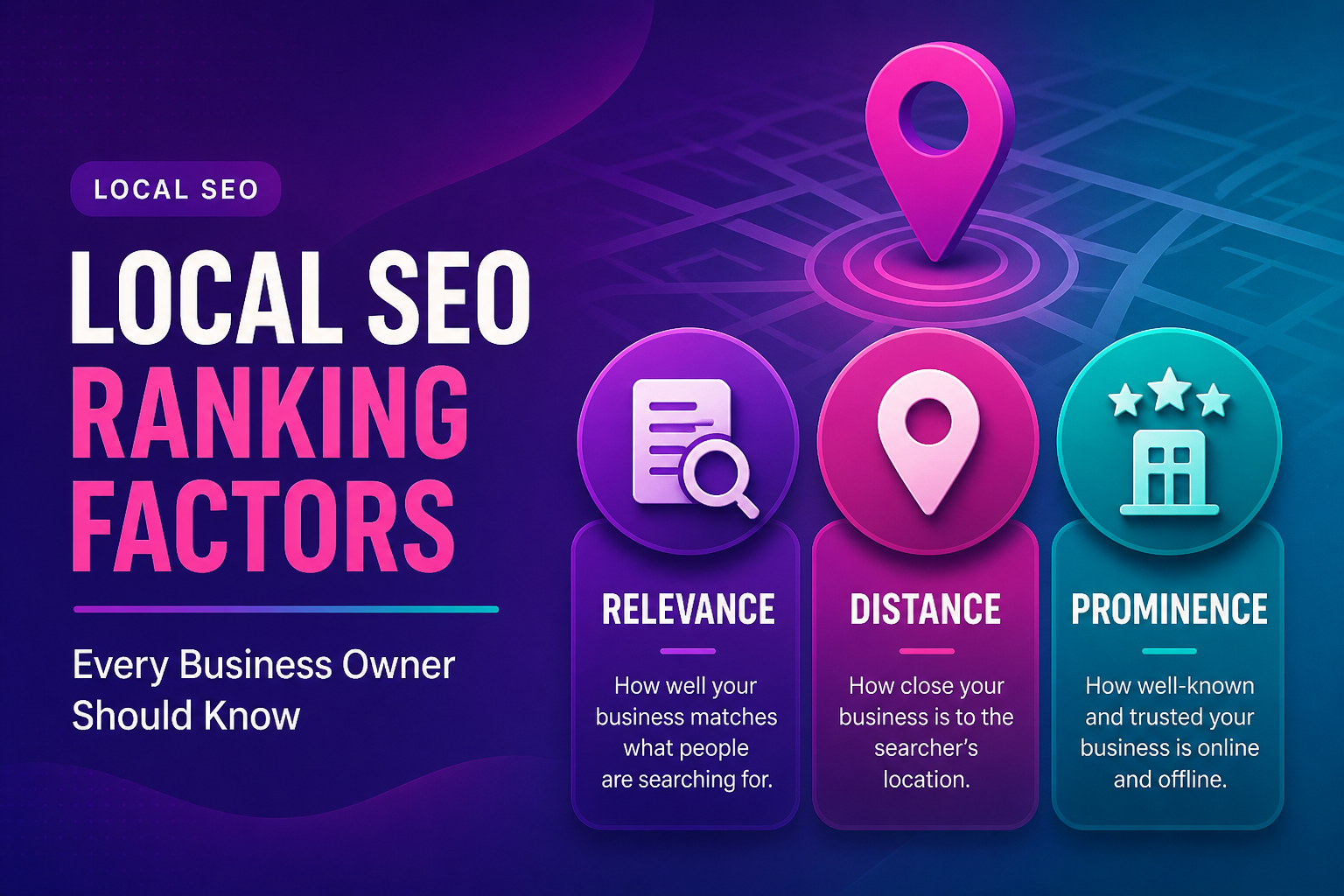
Every ranking factor Google has discussed publicly boils down to three ideas: how well your profile matches what someone searched for, how close you are to them, and how trusted and well-known your business appears across the web. You cannot change how close you are to a given searcher on any individual search, but you have real, direct control over the other two, which is why this guide focuses almost entirely there.
Factor 1: Your Category and Services Are Doing More Work Than You Think
Your primary category is arguably the single most consequential field on your entire profile, because it tells Google which searches you are even eligible to appear for in the first place. A landscaping business categorized generically instead of specifically will lose out on searches for the exact specialty work it actually performs. Review your category at least twice a year, and be as specific as the available options allow rather than defaulting to the broadest, vaguest match.
Services should read like your actual job list
The services section is frequently filled in once, quickly, and never revisited, even as the business's real offerings evolve. Treat it as a living list that matches what you genuinely do today, adding new services as you start offering them and removing ones you no longer provide, since an inaccurate list can actively work against relevance rather than simply being neutral.
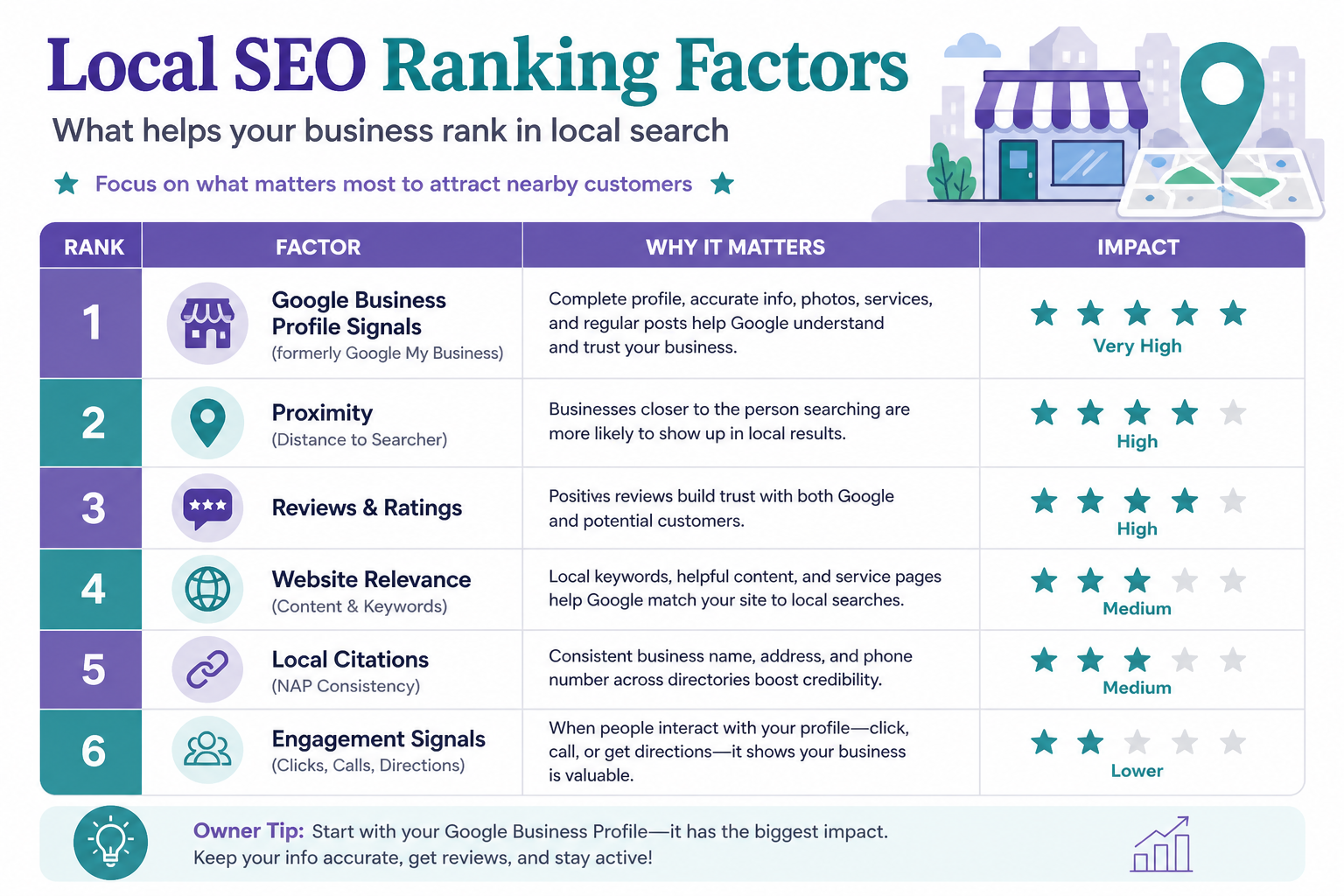
| Factor | How much control you have | Where to start |
|---|---|---|
| Category and services accuracy | Full control | Review and update at least twice a year |
| Review volume and recency | High control | Build a weekly request habit |
| NAP consistency across the web | High control | Audit your top ten citations |
| Photo freshness | Full control | Add a few new genuine photos monthly |
| Proximity to any individual searcher | No control | Focus energy elsewhere instead |
Factor 2: Reviews Are a System, Not a One-Time Task
Review count matters less in isolation than most owners assume; recency and consistency carry real weight too. A profile with a steady trickle of new, detailed reviews signals an active, trustworthy business far more convincingly than one with a large historical total but nothing new in the last several months. Build a lightweight habit of asking every satisfied customer, rather than treating review collection as an occasional campaign you run once and forget.
Responding to reviews — positive and negative alike — is a smaller but genuinely useful factor as well, and it costs almost nothing beyond a few minutes a week. A business that visibly engages with its reviews reads as more actively managed than one that lets feedback sit unanswered indefinitely, which matters both to human searchers weighing their decision and to Google's broader assessment of profile activity.
Factor 3: NAP Consistency Is Unglamorous but Real
Name, address, and phone number consistency across directories, your website, and social profiles remains a genuine trust signal, even if it rarely gets discussed with the same excitement as newer tactics. An old phone number still listed on a handful of smaller directories, or a slightly different business name format across platforms, creates friction for the matching systems that help establish your business as a single, verified entity rather than several ambiguous ones.
A simple quarterly audit is enough
This does not require an expensive ongoing service for most small businesses. A quarterly search of your business name and address across the major directories, correcting any mismatches you find, is enough to keep this factor from becoming a quiet drag on your visibility.
Factor 4: Photos and Activity Signal a Living Business
A profile with genuinely current photos and light, regular activity — a post here, a new photo there — reads as an actively maintained business, which correlates with the kind of prominence signals that support stronger rankings over time. This is one of the lowest-effort factors on this list relative to its payoff, since it requires only a smartphone and a few minutes every couple of weeks.
Factor 5: Your Website Still Plays a Supporting Role
Your Google Business Profile does not operate in isolation — a website with clear, relevant content about your services and location reinforces the same relevance signals your profile is trying to establish. This does not mean you need an elaborate site; even a clear, accurate homepage with your services and service area spelled out plainly supports your profile more than an outdated or thin site ever could.
If your business genuinely serves more than one city or neighborhood, dedicated pages for each area can reinforce relevance in a way a single generic homepage cannot, though this only matters once you serve multiple distinct areas well enough to justify the effort. For a single-location business, that same energy is better spent making the one homepage you have as clear and specific as possible rather than manufacturing thin pages for areas you do not meaningfully serve.
Two Factors Owners Often Overlook Entirely
Q&A sections left completely empty
The Q&A section on a Google Business Profile is public-facing and searchable, yet most owners never touch it after setup, leaving it for random visitors to populate — or leave empty entirely. Seeding it yourself with the three or four questions customers most commonly ask is a legitimate, guideline-compliant practice that adds genuine, relevant content to your profile at essentially no cost beyond a few minutes of writing.
Attributes that quietly disqualify you from relevant searches
Attributes like wheelchair accessibility, outdoor seating, or accepting a specific payment type feed directly into more specific, filtered searches, and an incomplete attributes section means your business simply cannot be matched to those queries at all, regardless of how well you would otherwise qualify. Spend ten minutes reviewing every available attribute for your category rather than assuming the default, unfilled state is harmless.
A Word on Realistic Expectations
None of the factors in this guide operate in isolation, and none of them guarantee a specific ranking outcome — Google has never confirmed exact weighting, and any claim otherwise should be treated skeptically. What is observable across real listings is that businesses executing consistently on these fundamentals tend to outperform otherwise similar competitors who treat their profile as a one-time setup task. That pattern, more than any single factor, is what this guide is built around.
Putting It Together: A Simple Monthly Habit
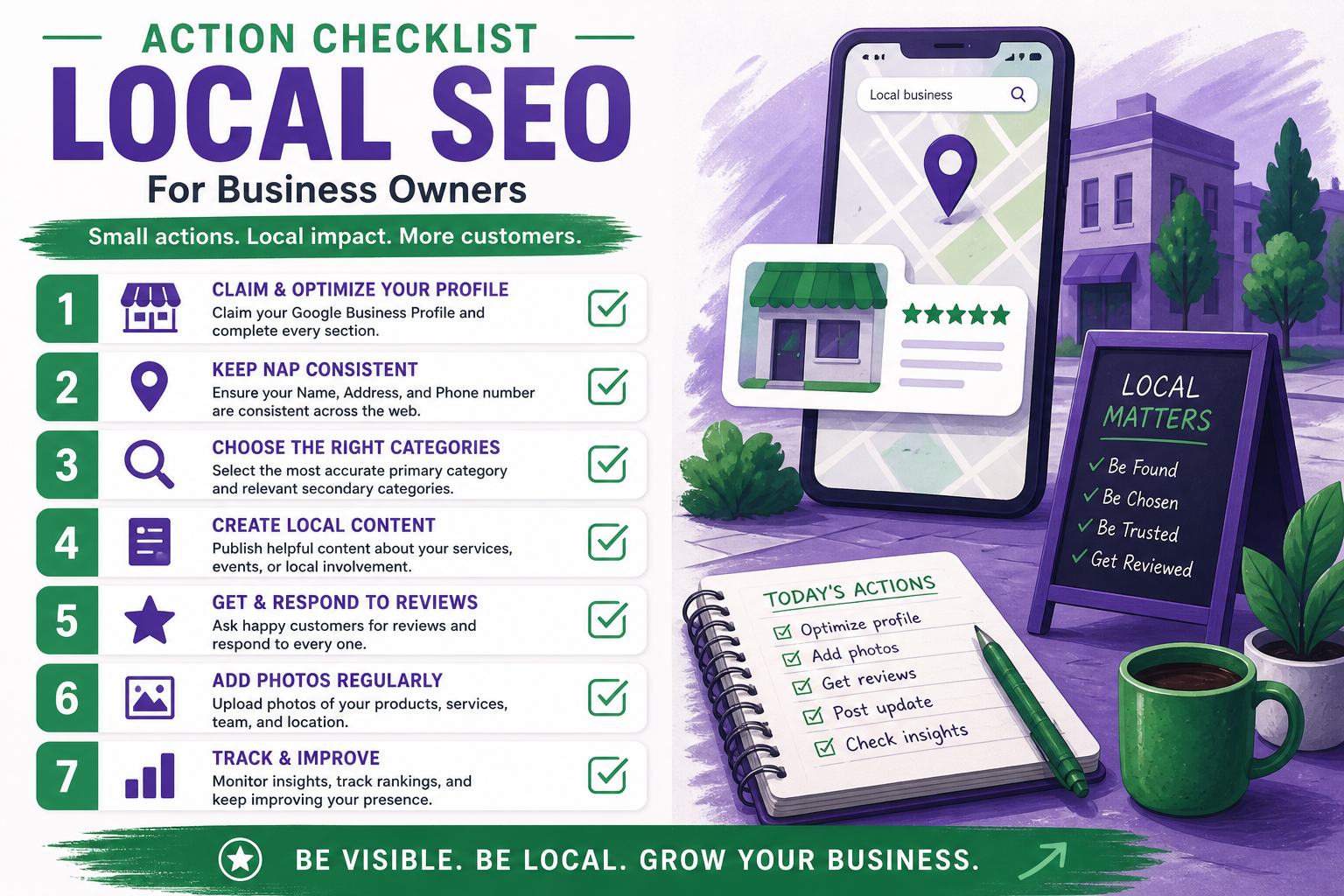
Rather than treating these factors as a one-time project, fold them into a short monthly routine: check your category and services for accuracy, request a handful of new reviews, respond to any that came in, add a couple of fresh photos, and glance at your top few citations for consistency. None of this takes more than an hour a month once it becomes routine, and our broader 2026 local SEO strategy guide covers how to sequence this alongside content and location page work as your business grows.
| Week | Task |
|---|---|
| Week 1 | Review category and services list for accuracy |
| Week 2 | Send review requests to recent customers |
| Week 3 | Add two or three new genuine photos |
| Week 4 | Spot-check NAP consistency on your top five directories |
If you only have time for one thing this month, make it the review request habit — it is the single factor most directly tied to both search relevance and a customer's actual decision to choose you over a competitor, and it compounds more visibly over time than almost anything else on this list.
Final Takeaway
You do not need to understand Google's algorithm at an engineering level to meaningfully improve your local rankings — you need to consistently execute on the handful of factors you genuinely control: an accurate profile, a real review habit, consistent business information, and current photos. Pair this practical list with our deeper GMB optimization guide and local SEO playbook when you are ready to go further, but starting here is enough to see genuine movement within a couple of months.
Frequently Asked Questions
Which local SEO ranking factor should a busy owner prioritize first?
Category and services accuracy, since it is fully within your control and directly determines which searches you are even eligible to appear for.
How many reviews do I actually need to rank well?
There is no fixed number; consistency and recency typically matter more than total volume, so a steady trickle beats a one-time burst.
Is NAP consistency still worth checking in 2026?
Yes, it remains a real trust and matching signal, even though it receives less attention than newer tactics in most marketing content.
Do I need a website if my Google Business Profile is strong?
A website is not strictly required for GBP visibility, but a clear, accurate site reinforces the same relevance signals and supports overall trust.
How often should I update my services list?
At least twice a year, or immediately whenever your actual offerings genuinely change, rather than leaving it static indefinitely.
Can I improve my proximity ranking for a specific searcher?
No, proximity for an individual search is outside your control; focus your effort on the factors you can actually influence instead.
How long does it take to see results from these habits?
Most owners notice early signals like more calls or profile views within four to eight weeks of consistent effort, with clearer rank movement over two to three months.