Improve Local Rankings Without is one of the highest-leverage local search topics in 2026. Plumbers, electricians, cleaners, mobile groomers, home inspectors, and dozens of other trades share one thing in common: they travel to the customer instead of the other way around. Google calls this a service-area business, and it comes with a genuinely different set of ranking rules than a storefront enjoys. Trying to compete using storefront tactics — worrying about a "better" address, for instance — usually wastes effort that could go toward the levers that actually matter for this business model.
This guide focuses specifically on what a service-area business can control to improve local visibility in 2026, without pretending an address trick or a shortcut exists where none does. It covers the foundation every SAB needs to get right first, and then the specific levers — reviews, categories, service-area precision, and content — that make the real difference once that foundation is solid.
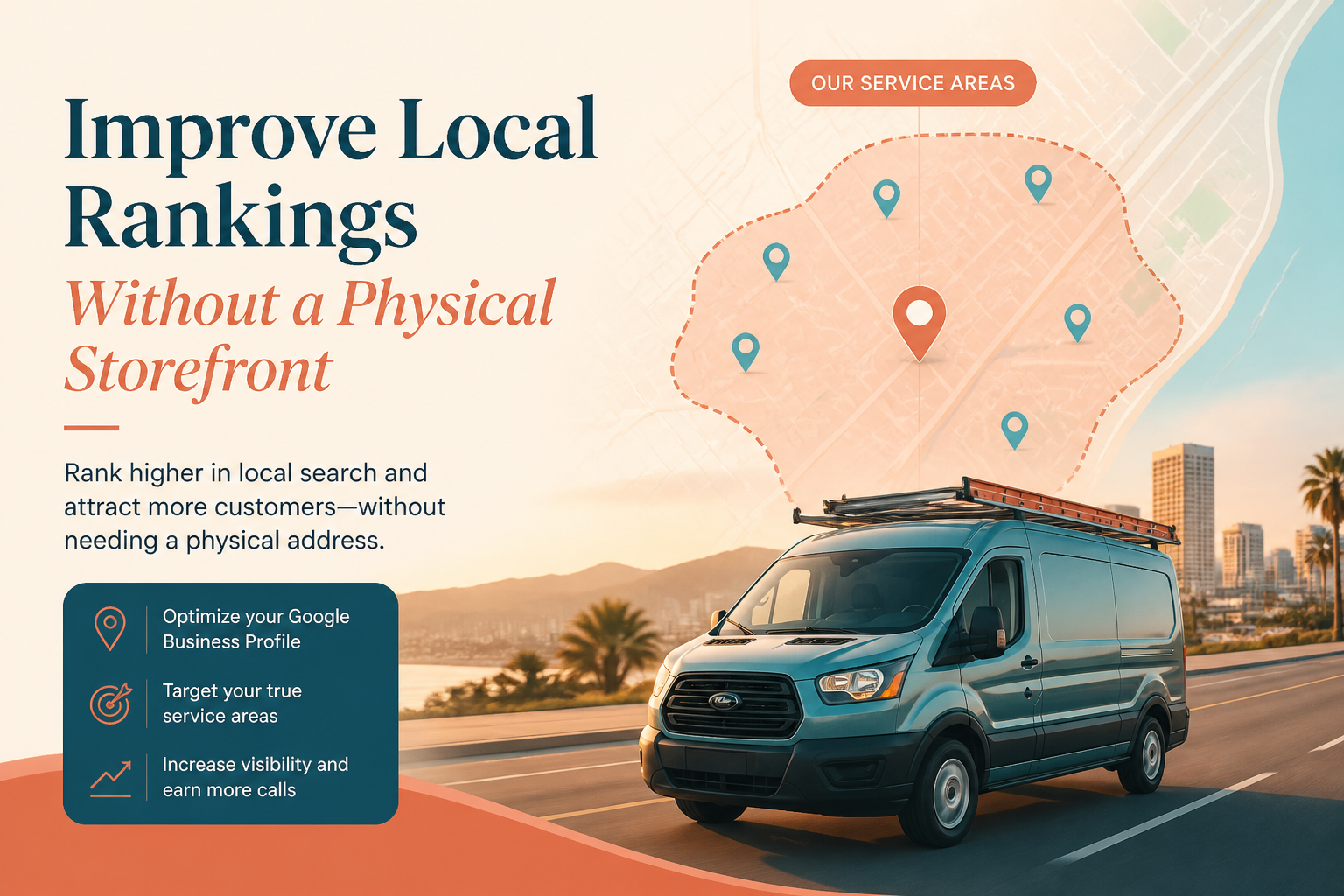
Why Service-Area Businesses Face a Different Ranking Reality
A storefront ranks partly on proximity to a fixed, public location — the closer a searcher is to that exact address, the more likely they are to see it in the map pack. A service-area business does not get that same proximity boost from a public address, because Google explicitly excludes SABs from using a visible street address as a ranking anchor, and asks them to hide it entirely. Instead, ranking is driven by your declared service-area list, your business's registered base location for internal distance calculations, and the same relevance and prominence factors every business shares.
This is not a disadvantage so much as a different playing field. Once the address confusion is cleared up, an SAB competes on largely the same levers as anyone else: how accurately your profile represents what you do, how strong and current your reviews are, and how well your declared coverage matches what you can realistically and reliably deliver.
| Factor | Storefront business | Service-area business |
|---|---|---|
| Address visibility | Public, precise, and complete | Hidden from public view per Google guidelines |
| Primary distance signal | Distance from the public pin to the searcher | Distance from the registered base location, filtered by declared service areas |
| Biggest common mistake | Vague or slightly inaccurate pin placement | Service area listed far wider than realistic travel range |
Get the Foundation Right First
Before optimizing anything else, confirm your address visibility setting is actually correct for your business model. A pure SAB should never show a public address; if yours currently does, this single setting is likely the highest-priority fix on the entire profile. Our detailed breakdown on whether adding an address improves GBP rankings covers exactly why an address adds nothing for a genuine SAB and can create real compliance risk instead.
Next, build an honest, realistic service-area list based on where you can actually deliver reliable service, not the widest radius the platform technically allows. Our companion guide on how to choose service areas for GBP walks through this in detail, but the short version is straightforward: list the specific cities or postal codes you genuinely and consistently serve, and revisit the list as your capacity or team size changes.
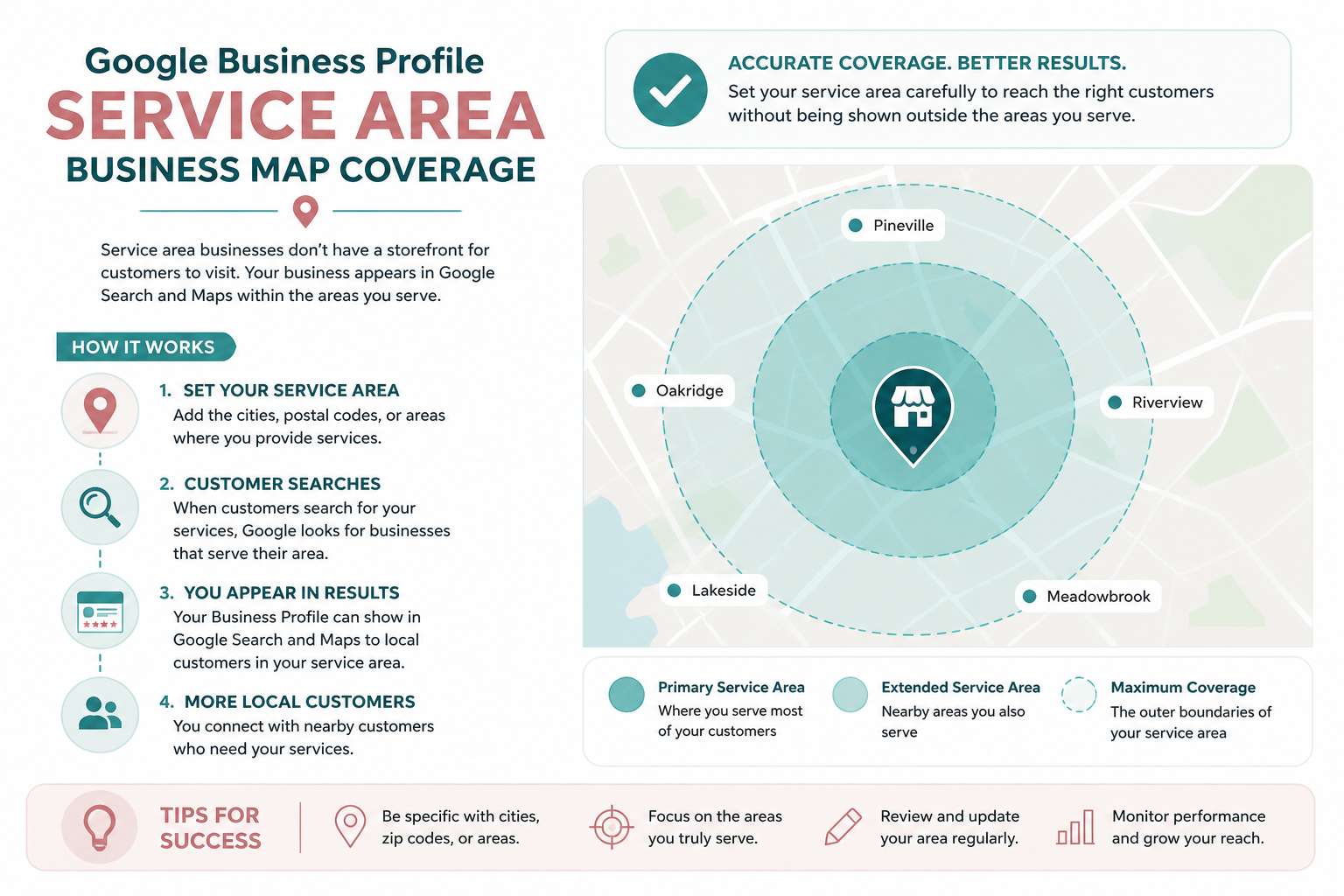
Ranking Levers You Actually Control as an SAB
Reviews weigh even more heavily without a physical location to build trust
A storefront customer can walk past a business and form an impression before ever searching for it online. A service-area customer almost never gets that chance — the profile and its reviews are frequently the entire basis for trust before someone lets a stranger into their home or hands over their vehicle. This makes a steady, specific review habit disproportionately valuable for SABs compared to storefront businesses, since reviews are doing more of the trust-building work that a physical presence would otherwise handle.
Category and service precision matters just as much as it does for anyone else
Nothing about being a service-area business changes the value of an accurate primary category and a specific, honest services list. If anything, precision matters more, since without a public address to add context, the category and services list carry a larger share of the relevance signal Google uses to decide whether your profile matches a given search.
Real photos of real work outperform any stock imagery
Service-area businesses sometimes lean on stock photography since there is no storefront to photograph, but genuine images of your team, your vehicle, and completed jobs consistently build more trust than polished stock alternatives that could belong to any business. Customers considering a service they cannot inspect in person beforehand are looking for concrete evidence of real work, not marketing polish.
| Lever | Typical impact | Effort required |
|---|---|---|
| Correct address visibility setting | High — fixes a foundational compliance and clarity issue | Low, one-time fix |
| Honest, specific service-area list | High — directly shapes which searches you can rank for | Low, periodic review |
| Steady, specific review habit | High — replaces the trust a physical location would provide | Ongoing, moderate effort |
| Real photos of team and completed work | Moderate — builds trust and supports conversion | Ongoing, low effort |
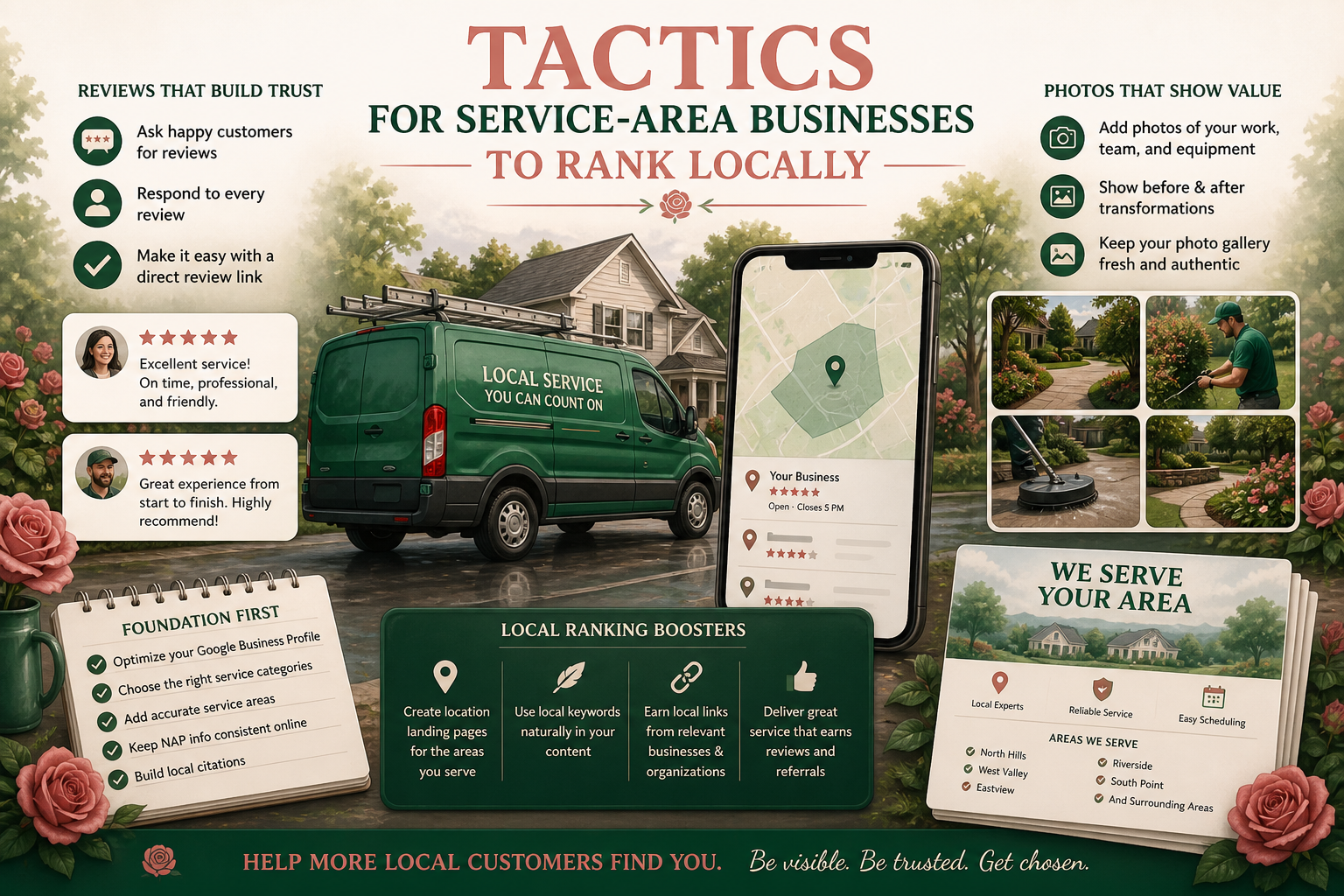
Common Mistakes Service-Area Businesses Make
The most common mistake is claiming a service area far beyond what is realistically deliverable, chasing broader visibility at the cost of relevance and, eventually, customer experience when a job takes twice as long as expected to reach. A close second is leaving the address publicly visible out of habit or a misunderstanding of the guidelines, which creates both a compliance risk and a missed opportunity to lean fully into the service-area model Google actually rewards for this business type. Combined with the broader fundamentals in our GMB optimization guide and local SEO playbook , avoiding these two mistakes alone puts most SABs ahead of a meaningful share of their local competition.
Building Content That Reflects a Traveling Business Model
Website content for a service-area business should speak directly to the reality of a traveling model rather than copying the structure of a storefront's site. Pages built around "we come to you" language, transparent explanations of how service-area coverage works, and honest answers to questions like "how far will you travel" or "is there a trip fee outside my area" address the specific hesitations a customer has before inviting a stranger to their property, which a generic storefront-style page rarely covers.
If you serve several distinct cities or regions within your realistic travel range, dedicated pages for each — genuinely differentiated, not just a swapped city name — can reinforce the same coverage story your Google Business Profile is already telling. This works best when paired with local proof: a review or two from a customer in that specific area, or a photo from a completed job nearby, rather than generic content that could describe service in any city at all.
Handling Multiple Team Members or Sub-Contractors
Service-area businesses that grow beyond a single owner-operator face a specific trust challenge: customers are inviting someone they have never met into their home based largely on a profile built around the business as a whole, not a specific technician. Featuring real photos of your actual team, briefly introducing key staff in your business description, and encouraging reviews that mention specific team members by name when appropriate all help close this gap, since specificity continues to build more trust than a generic "our team" reference ever does.
If you use sub-contractors, be transparent about it where relevant rather than implying every job is handled by direct employees, since customers who discover this after the fact through a review or a personal experience tend to react far more negatively than customers who understood the setup from the start. Trust, once lost over a perceived inconsistency like this, is considerably harder to rebuild than it would have been to simply state clearly upfront. A brief, honest line in your business description or a pinned Google Post explaining how your team is structured usually resolves this proactively before it ever becomes a problem worth a customer mentioning in a review.
Final Takeaway
Ranking without a storefront is not a disadvantage once you stop trying to force storefront tactics onto a fundamentally different business model. Hide the address correctly, build a service-area list grounded in reality, and lean harder into reviews, precision, and genuine visual proof than a storefront competitor typically needs to. None of this guarantees a top rank overnight, but it aligns your effort with the levers Google's own guidelines say actually apply to your business type, which is the honest starting point every service-area business deserves.
Frequently Asked Questions
Should a service-area business ever show a public address?
No, not if you genuinely do not serve customers at that location. Google's guidelines require hiding the address for pure service-area businesses, and showing it can create both compliance and clarity issues.
How do I rank without a visible address for proximity?
Ranking relies on your registered base location and declared service areas instead, combined with the same relevance and prominence signals that affect every type of business.
Can I use a P.O. box or virtual office as my base location?
No, Google requires a real, staffed base location for verification purposes even though it stays hidden from public view, and virtual addresses used purely for appearances violate the guidelines.
How wide should my service area actually be?
Base it on realistic travel time, typically 20 to 45 minutes for most local trades, rather than the maximum radius the platform technically allows you to select.
Do reviews matter more for service-area businesses than storefronts?
They tend to carry more relative weight since customers cannot build trust by simply walking past a visible location, making the profile and its reviews a larger share of the overall trust equation.
What is the biggest mistake service-area businesses make?
Claiming a service area far wider than what can realistically and reliably be served, which dilutes relevance and can create poor customer experiences once jobs are booked.
Can a hybrid business with both a storefront and traveling service both apply here?
Yes, hybrid businesses should keep a public storefront address while also declaring an honest service-area list around it, combining both sets of guidance rather than choosing only one.