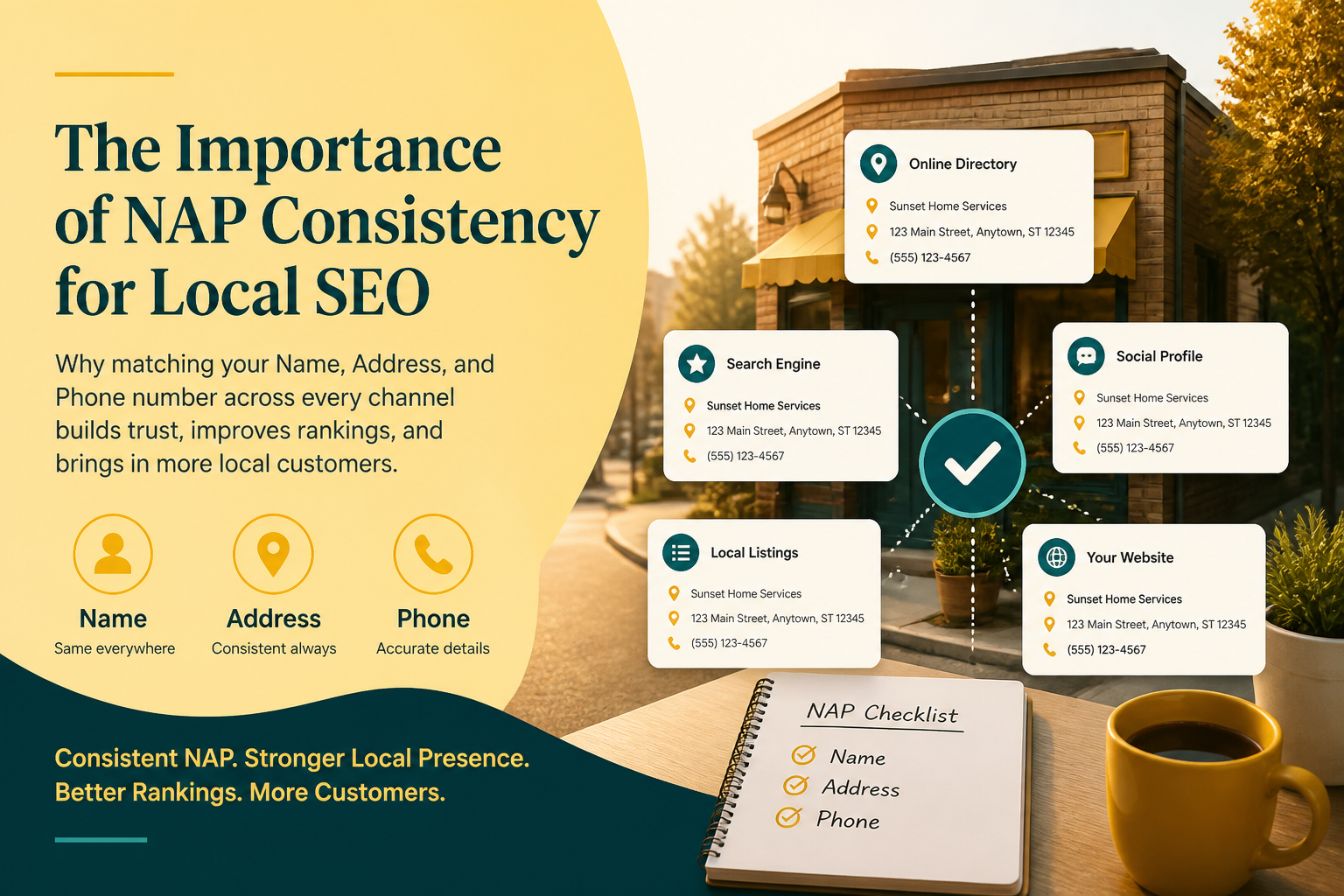
Most explanations of NAP consistency stop at the same basic point: keep your name, address, and phone number the same everywhere, because inconsistency confuses both customers and Google. That is true, and our earlier piece on why consistent NAP matters for local SEO covers exactly why it matters at that level. This guide goes further, into the operational side almost nobody addresses in depth: how inconsistencies actually accumulate over time, how to systematically find every instance across dozens of directories, and how to build an ongoing process that prevents new inconsistencies from creeping back in after you have already cleaned everything up once.
If you have never audited your citations before, expect to find more inconsistencies than you assume. Businesses that have moved locations, changed phone providers, updated their legal name, or simply operated for several years almost always accumulate a surprising number of small mismatches across directories they may not even remember submitting to originally.
How NAP Inconsistencies Actually Accumulate Over Time
Inconsistencies rarely happen all at once. A business moves offices and updates its website and Google Business Profile promptly but forgets the dozen smaller directories a citation service submitted to years earlier. A phone provider changes numbers during a system migration, and the update reaches the primary listings but never trickles down to older, less-visited directories. A legal name change during an entity restructuring updates official documents but never prompts a review of how the business appears across the web. Each of these is individually minor, but they compound over years into a genuinely confusing footprint.
Data aggregators make old information resurface
Even after you fix a citation directly, some directories pull their data from third-party aggregators rather than accepting direct edits, which means an old address or phone number can resurface weeks or months after you thought it was corrected. This is one of the more frustrating aspects of NAP cleanup, and it is exactly why a one-time fix is rarely sufficient without a periodic recheck built into your process.
Why This Matters More Than It Might Seem
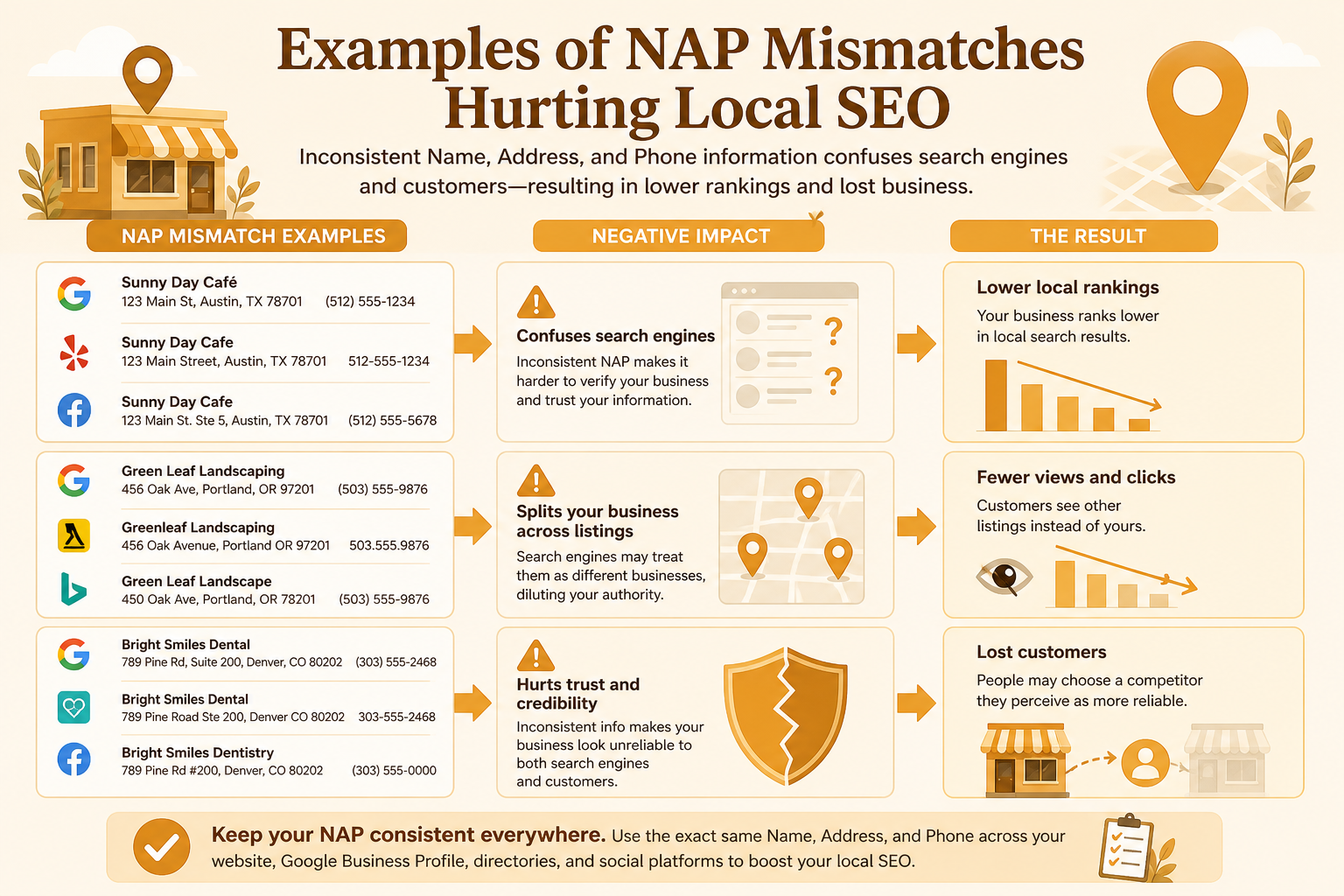
Google's local ranking systems use citation consistency partly as a corroboration signal — multiple independent sources agreeing on your business details reinforces confidence that your business is legitimate and located where you say it is. A scattered, inconsistent footprint does not necessarily cause a dramatic ranking penalty on its own, but it removes a layer of reinforcing evidence that a clean, consistent footprint would otherwise provide, and in a competitive market that small gap can matter.
The customer-facing cost is often more immediate and tangible than the ranking impact: someone finds an old phone number on a directory, calls it, and reaches a disconnected line or, worse, a different business entirely. Someone drives to an address that was correct three years ago and finds a location that has since moved or closed. Every one of these moments is a lost customer who blames the business rather than the outdated directory, regardless of who is actually at fault.
| Source | How it typically happens | How often to recheck |
|---|---|---|
| Legacy directories from old citation services | Submitted once years ago, never revisited | Every 6 to 12 months |
| Data aggregators | Pull outdated info even after direct fixes | Every 3 to 6 months |
| Old marketing materials indexed online | PDFs, old press mentions, outdated social bios | Annually |
| Third-party review or booking platforms | Address or phone entered manually at signup, rarely updated | Every 6 months |
A Systematic Audit Process, Not a One-Time Search
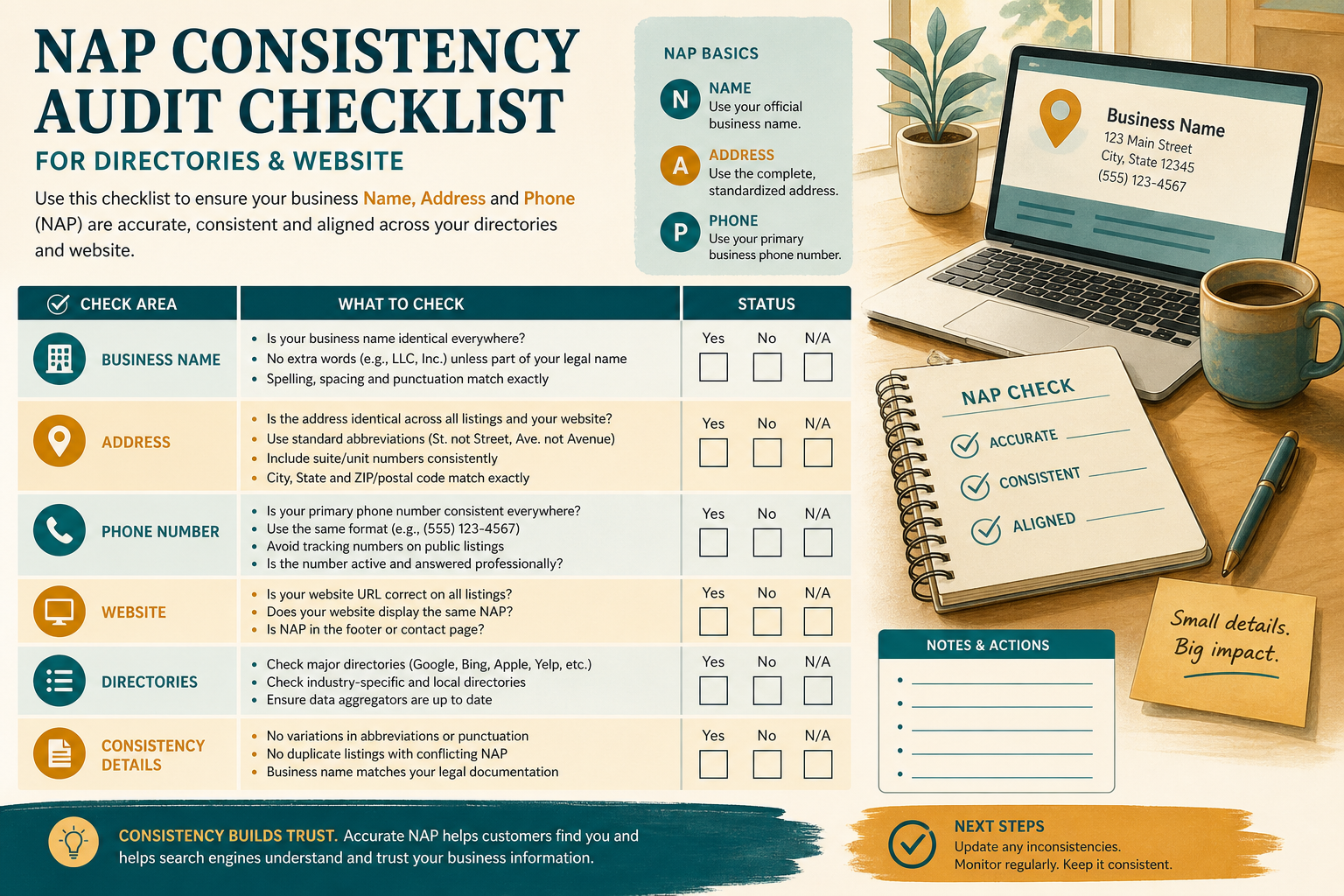
Start with a comprehensive search of every variation of your business name, current and former, alongside your current and any former address and phone number. Document every listing you find in a simple spreadsheet with columns for the directory, the current listed details, whether it matches your current source of truth, and the date you checked it. This documentation step is what most informal cleanup efforts skip, and it is exactly why those efforts tend to need repeating from scratch every year instead of building on previous work.
Prioritize by authority and visibility, not alphabetically
Not every directory deserves equal urgency. Your Google Business Profile, website, and the handful of major directories that feed data to many smaller ones deserve attention first, since fixing those often has a ripple effect on secondary listings. Smaller, low-traffic directories matter less individually, though a systematic audit should still eventually reach them rather than stopping at the obvious top ten and calling the job complete.
For businesses with a large or genuinely unknown footprint, a paid citation audit tool can surface listings a manual search would likely miss, particularly older or more obscure directories that do not rank prominently in a simple name search. This is worth the modest cost for a business that has operated for many years or has been through several rebrands, while a newer, single-location business can usually complete an equally thorough audit manually without paying for tooling it does not yet need.
Building an Ongoing Monitoring Habit
A cleanup done once and never revisited will drift back out of consistency within a year or two, particularly if the business changes address, phone provider, or legal name again in the meantime. Build a recurring calendar reminder — quarterly is reasonable for most small businesses — to re-run your core search and spot-check your top ten directories for any new discrepancy. This is a small, recurring time investment compared to the effort of a full audit from scratch after years of unchecked drift.
Whenever you do change any core business detail — a new phone number, a relocated address, a legal name update — treat updating your citation footprint as part of that change itself, not a separate task to get to eventually. Building this into your actual moving or rebranding checklist prevents the exact kind of gradual accumulation this guide describes, catching it at the source rather than discovering it scattered across a dozen directories years later.
| Task | Time required |
|---|---|
| Search all business name variations plus current details | 15 minutes |
| Spot-check your top ten directories for accuracy | 20 minutes |
| Update any discrepancy found directly at the source | Varies |
| Note any pending aggregator-sourced errors to recheck next quarter | 5 minutes |
Multi-Location Businesses Face a Bigger Version of This Problem
Everything in this guide multiplies for a business operating several locations, since each location has its own name, address, and phone number that can drift out of consistency independently of the others. A five-location business is not facing one NAP consistency problem — it is facing five simultaneous ones, each potentially scattered across a different set of directories with different levels of accuracy.
Centralizing ownership of this process matters more as location count grows. A single person or small team responsible for the full citation footprint across all locations, using a shared tracking spreadsheet or a dedicated citation management tool, prevents the common failure mode where each location manager assumes someone else is handling consistency and nobody actually is. This coordination problem, more than the technical difficulty of any individual fix, is usually what causes multi-location NAP consistency to fall apart in practice.
A single location move can ripple across dozens of listings
When one location in a multi-location business moves or closes, the citation cleanup required is proportional to how long that location existed and how many directories accumulated its details over the years. Building the relocation checklist mentioned earlier in this guide becomes even more valuable at scale, since catching the update at the moment of the move prevents a much larger cleanup project later across every location's own footprint.
What to Do When You Cannot Directly Edit a Listing
Some directories require claiming a listing before edits are possible, others require contacting support directly, and a small number genuinely have no accessible correction process at all. For directories with real traffic and no direct edit option, contacting support with clear documentation of your correct details is worth the effort. For obscure, low-traffic directories with no accessible correction path, it is reasonable to deprioritize them rather than spending disproportionate time chasing a listing that contributes little practical value either way.
Final Takeaway
NAP consistency is not a project you finish once — it is an operational habit that either holds steady through a recurring process or quietly drifts back into disorder as your business changes over time. Build the systematic audit and quarterly recheck habit covered in this guide, and pair it with the broader fundamentals in our GMB optimization guide and local SEO playbook, and this unglamorous piece of local SEO stops being a recurring source of lost trust and lost customers.
Frequently Asked Questions
How often should I audit my NAP consistency across directories?
A full audit once a year is reasonable for most small businesses, with a lighter quarterly spot-check of your top ten directories in between.
Why does an old listing keep reappearing after I fix it?
Some directories pull data from third-party aggregators rather than accepting direct edits, so outdated information can resurface even after the original source is corrected.
Does NAP inconsistency directly cause a ranking penalty?
It is unlikely to cause a dramatic penalty on its own, but it removes a reinforcing trust signal that a clean, consistent footprint would otherwise provide.
Should I use a paid citation service to fix inconsistencies?
It can save time for a large, scattered footprint, but a manual audit is entirely feasible for most small businesses willing to spend a few focused hours on it.
What should I prioritize first in a NAP audit?
Your Google Business Profile, website, and the major directories that feed data to smaller ones, since fixing those often has a ripple effect on secondary listings.
How do I find every directory listing my business appears on?
Search every variation of your business name alongside current and former addresses and phone numbers, and document each result in a simple spreadsheet as you go.
What should I do about directories with no way to submit a correction?
For high-traffic ones, contact support directly with documentation; for obscure, low-traffic directories, it is reasonable to deprioritize them rather than chase minimal value.