Everyone wants to rank in the local 3-pack faster, and understandably so — those top three map results capture the overwhelming majority of clicks and calls for local searches. The honest complication is that "faster" has real limits. Google does not have a fast lane for businesses in a hurry, and prominence in particular takes time to build. What you can control is removing every unnecessary delay caused by incomplete setup, wrong categories, or a slow review habit, which genuinely does compress the timeline compared to a business that ignores those basics.
This guide focuses specifically on the accelerants — the actions that measurably shorten the path to the 3-pack — rather than repeating the full ranking-factor list. If you have not already read our broader ranking factors breakdown and Google Maps ranking guide , they pair well with the faster-path steps below.
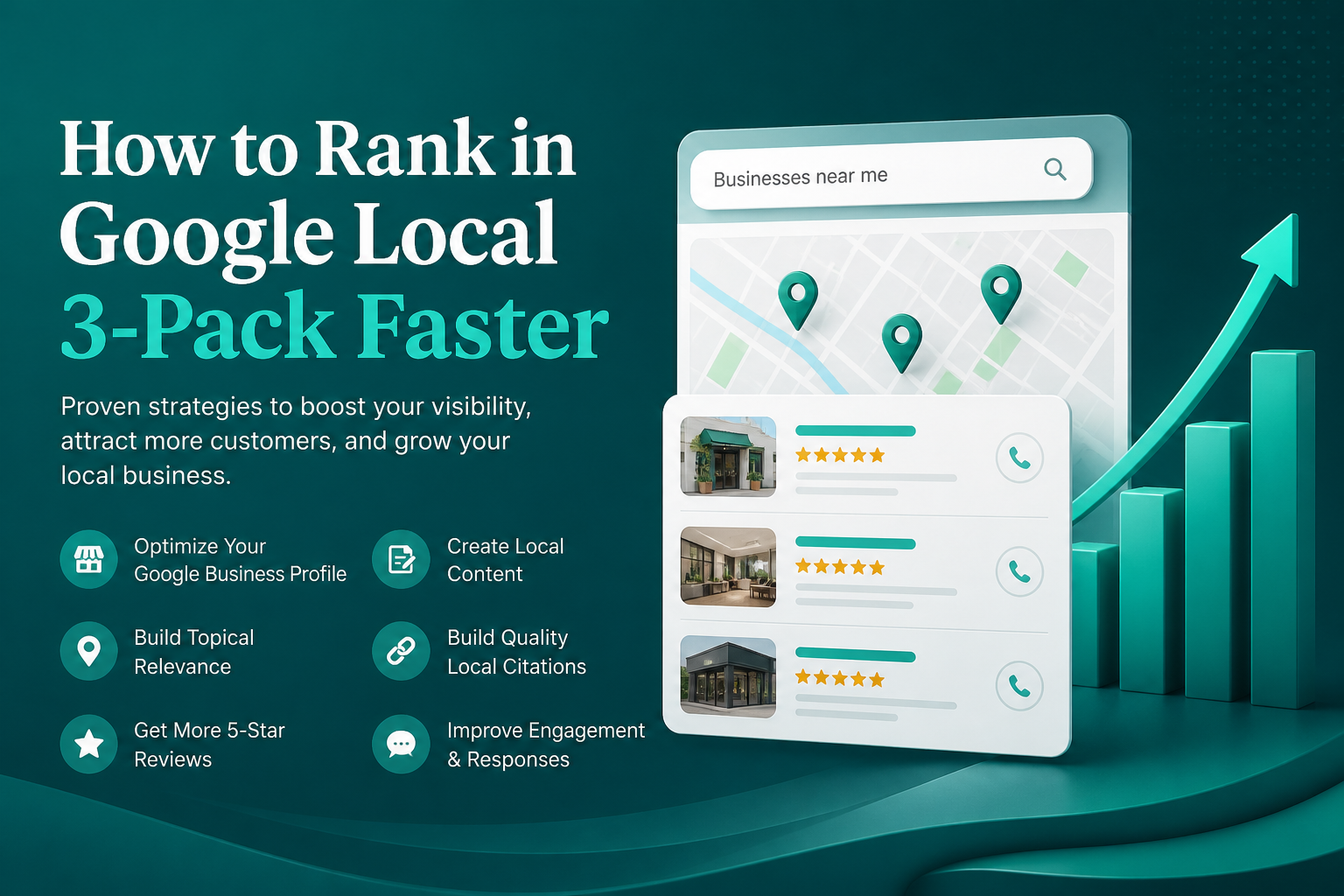
Why "Faster" Has a Real Ceiling
New listings, in particular, face a practical reality: Google needs time to accumulate confidence signals — genuine reviews arriving steadily, real engagement, consistent citations, and a track record of accurate information. A brand-new profile with zero history simply has less evidence behind it than a three-year-old competitor with hundreds of reviews, regardless of how perfectly the new profile is optimized on day one. Optimization removes friction; it does not erase the time needed to build trust.
That said, two similarly new businesses rarely rank at the same speed, and the gap between them almost always traces back to setup completeness, category accuracy, and how quickly each one built a genuine review pattern. The rest of this guide focuses on maximizing that controllable gap.
| Accelerant | Why it helps speed | Typical timeframe to apply |
|---|---|---|
| Correct primary category from day one | Avoids a mid-course category change that resets some trust | Immediate, one-time |
| Complete profile fields (hours, services, attributes, description) | Removes relevance gaps that would otherwise cost weeks | First week |
| Early, genuine review requests | Builds prominence signal earlier than waiting passively | First 30 days |
| Accurate pin and honest service area | Removes distance-based suppression from day one | Immediate, one-time |
| Consistent citations across directories | Speeds up trust-building compared to sparse citations | First 60 days |
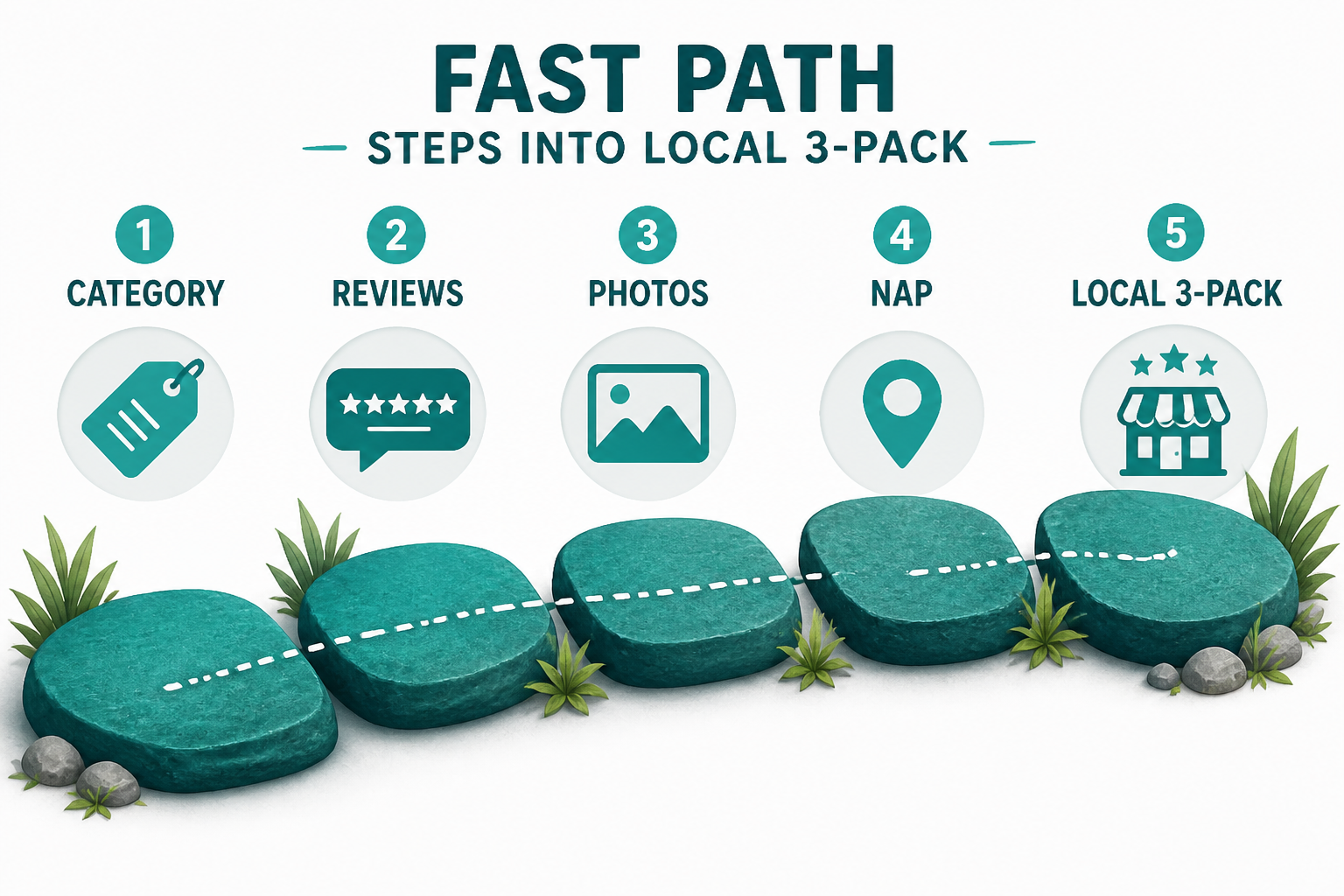
The Fastest-Impact Actions, In Order
1. Lock in the correct primary category before anything else
Changing your primary category later can partially reset the relevance signal Google had started to associate with your listing. Research the exact category customers would expect, not the closest-sounding option, and confirm it before investing further time in other optimizations.
2. Fill every completable field in the first sitting
Hours, attributes, services, products, business description, and appointment links all feed into how completely Google can match your profile to a query. A profile that is 90% complete on day one has a real head start over one that trickles in details over months.
3. Start a review request habit in week one, not month three
Waiting to "get established" before asking for reviews is one of the most common self-imposed delays. Ask your very first satisfied customers, even if there are only a handful, since review velocity compounds — five reviews in month one that keep growing steadily look stronger to both Google and customers than fifty reviews that all arrived in one burst after month six.
4. Publish real photos immediately, then keep adding them
A photo-empty profile looks unfinished and less trustworthy at a glance. Upload genuine photos of the storefront, team, and completed work in the first week, then continue adding a few every month rather than treating photos as a one-time task.
Where Grid Tracking Speeds Up Your Feedback Loop
One of the biggest hidden delays in ranking faster is not knowing whether your changes are working until weeks have passed. Tracking your position across a proper neighborhood grid — not a single search from your office — with a tool like GBP Local Ranker lets you see incremental movement early, so you can double down on what is working and stop wasting time on what is not.
This matters especially for new businesses, where every week counts and a slow feedback loop means discovering a mistake — like a wrong category or a missed service — a month later than necessary. Pair rank tracking with our local SEO playbook for a structured, ordered rollout instead of optimizing randomly.
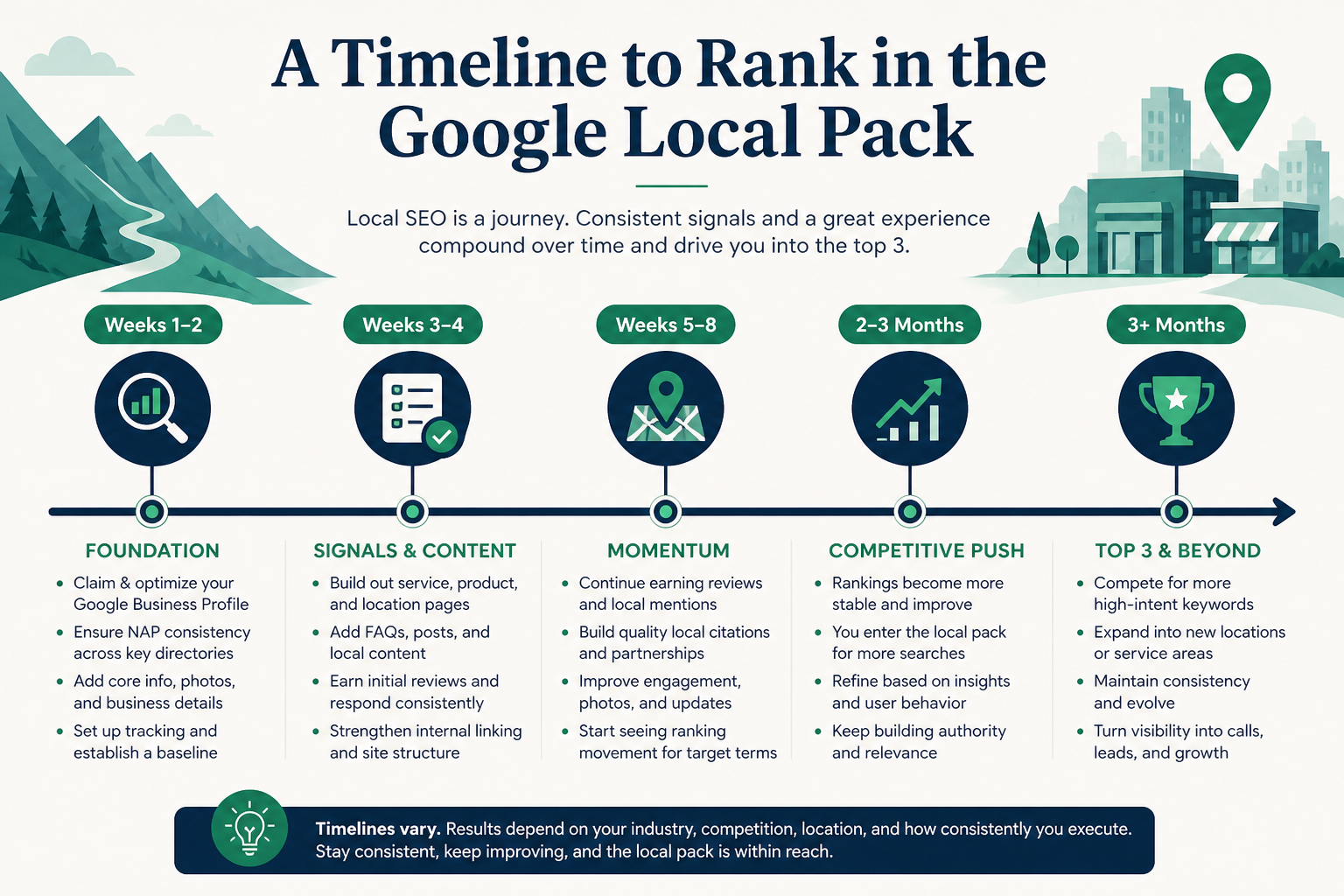
| Timeframe | What is realistic | What is not realistic |
|---|---|---|
| Weeks 1-2 | Fully complete, accurately categorized profile live | Ranking in the 3-pack for competitive terms yet |
| Weeks 3-6 | Early review momentum, initial grid rank movement | Consistent #1 position across a whole city |
| Months 2-4 | Meaningful visibility in less competitive niches or areas | Beating a decade-old competitor in a saturated market |
| Months 4-8+ | Competitive 3-pack presence in moderately competitive markets | Guaranteed ranking regardless of ongoing review and content effort |
Mistakes That Quietly Slow You Down
Changing categories more than once while "testing" what works resets some of the relevance confidence Google was building, effectively adding weeks back onto your timeline. Asking for reviews inconsistently — a burst, then silence for two months — produces a choppier prominence signal than a steady trickle, even if the total count ends up similar. And chasing every new tactic mentioned in a forum thread, instead of finishing the fundamentals first, spreads effort thin across the accelerants that actually matter.
The businesses that rank fastest are rarely the ones doing the most unusual things. They are the ones that get the boring fundamentals — category, completeness, honest service area, steady reviews — right immediately instead of gradually over six months.
Building Momentum That Lasts Past the First Sprint
Keep the same energy in month three that you had in week one
Most of the speed loss businesses experience happens not because the early accelerants stop working, but because owners get busy and quietly slow down on reviews, photos, and posts after the initial setup push. The businesses that keep ranking well are usually the ones that treat the first month's intensity as the new normal, not a one-time sprint.
Reinvest early wins into the next weak point
Once your foundation and reviews are solid, look for the next controllable gap — maybe your photo library is thin, or your service list has not kept up with new offerings. Continuously identifying and closing the next weakest link keeps the timeline compressing even after the initial fast-start phase levels off.
Watch for competitors copying your faster-start playbook
As more businesses in a niche learn to front-load their setup and review requests, the competitive bar for "fast" ranking rises across the board. Staying ahead means treating this guide as a starting baseline rather than a final answer, and continuing to refine your approach as the local competitive landscape evolves.
Special Considerations for Seasonal and Appointment-Based Businesses
Front-load setup before your peak season begins
Businesses with a clear seasonal peak — tax preparers, landscapers, holiday event venues — benefit enormously from completing every foundation item weeks before demand spikes rather than scrambling once the season has already started. A profile that is fully optimized and already collecting reviews heading into peak season captures more of that concentrated demand than one still fixing categories in the middle of it.
Time review requests around your natural service completion moments
Appointment-based businesses have a clear, repeatable moment to request a review — right after the appointment concludes — which makes building review velocity more predictable than for businesses without an obvious single touchpoint. Build the request into your existing confirmation or follow-up messaging so it happens consistently without relying on staff to remember every time.
Use posts to bridge slow periods between peaks
During the off-season, Google Posts can keep a seasonal business's profile looking active even when there is genuinely less to say, through educational content, off-season promotions, or preparation tips for the next peak. A profile that goes completely silent for months between seasons loses some of the freshness advantage built up during the busy period.
None of these seasonal considerations replace the core fundamentals covered earlier — they simply change the timing and emphasis of when you apply them. A landscaping business that nails categories and reviews in January is positioned to capture spring demand far more effectively than one still completing basic setup once the first warm-weather searches begin. Treat your calendar as part of your ranking strategy: know your busiest months in advance, and work backward to make sure every foundation item, review request habit, and photo update is already in place with enough runway before demand actually arrives, rather than reacting to a seasonal spike that has already started without you.
Final Takeaway
Ranking in the local 3-pack faster is real, but it is a story about removing self-imposed delays, not about finding a hidden shortcut. Lock in the right category, complete your profile immediately, start requesting reviews from day one, and track your actual grid position so you know within weeks — not months — whether your setup is working. That disciplined start compresses the honest timeline more than any single trick ever will.
Frequently Asked Questions
Can a brand-new Google Business Profile rank in the 3-pack quickly?
It is possible in low-competition niches or areas, but competitive markets typically require months of consistent reviews and engagement regardless of how well the profile is optimized initially.
Does paying for ads speed up organic 3-pack ranking?
No. Local Services Ads and Google Ads occupy separate placements from the organic 3-pack and do not directly influence organic Map Pack position.
Is it better to wait until my profile is perfect before asking for reviews?
No. Starting review requests early, even from a handful of first customers, builds a steadier review history than delaying until the profile feels fully polished.
How many reviews do I need to reach the 3-pack faster?
There is no fixed number. Steady, recent reviews with genuine detail matter more than reaching a specific count, and requirements vary significantly by competition level in your area.
Should I focus on one keyword or several when trying to rank faster?
Start with your most important, highest-intent service keyword and expand once that ranks reasonably well, rather than spreading category and service-list effort too thin across many terms at once.
Can changing my primary category later help me rank faster?
It can help if the original category was genuinely wrong, but frequent changes reset some trust and relevance signal, so get it right early rather than testing repeatedly.
How do I know if my 3-pack progress is actually working?
Track your position across a realistic grid of nearby search points over several weeks, alongside GBP Insights for calls and direction requests, rather than judging from a single search.