Ranking higher on Google Maps is often sold as a mysterious black box, when in practice it comes down to a small number of well-understood forces applied consistently over time. There is no single switch that flips a business from position six to position one. There is, however, a reliable set of moves that reduce your distance disadvantage, build genuine trust, and make your listing easier for Google to confidently recommend.
This playbook is written for owners and marketers who want a real plan, not a list of forty micro-tips with no sense of priority. We will cover what proximity actually means for your strategy, how prominence compounds, a step-by-step sequence for 2026, the mistakes that keep businesses stuck for years, and how to measure whether any of it is working.
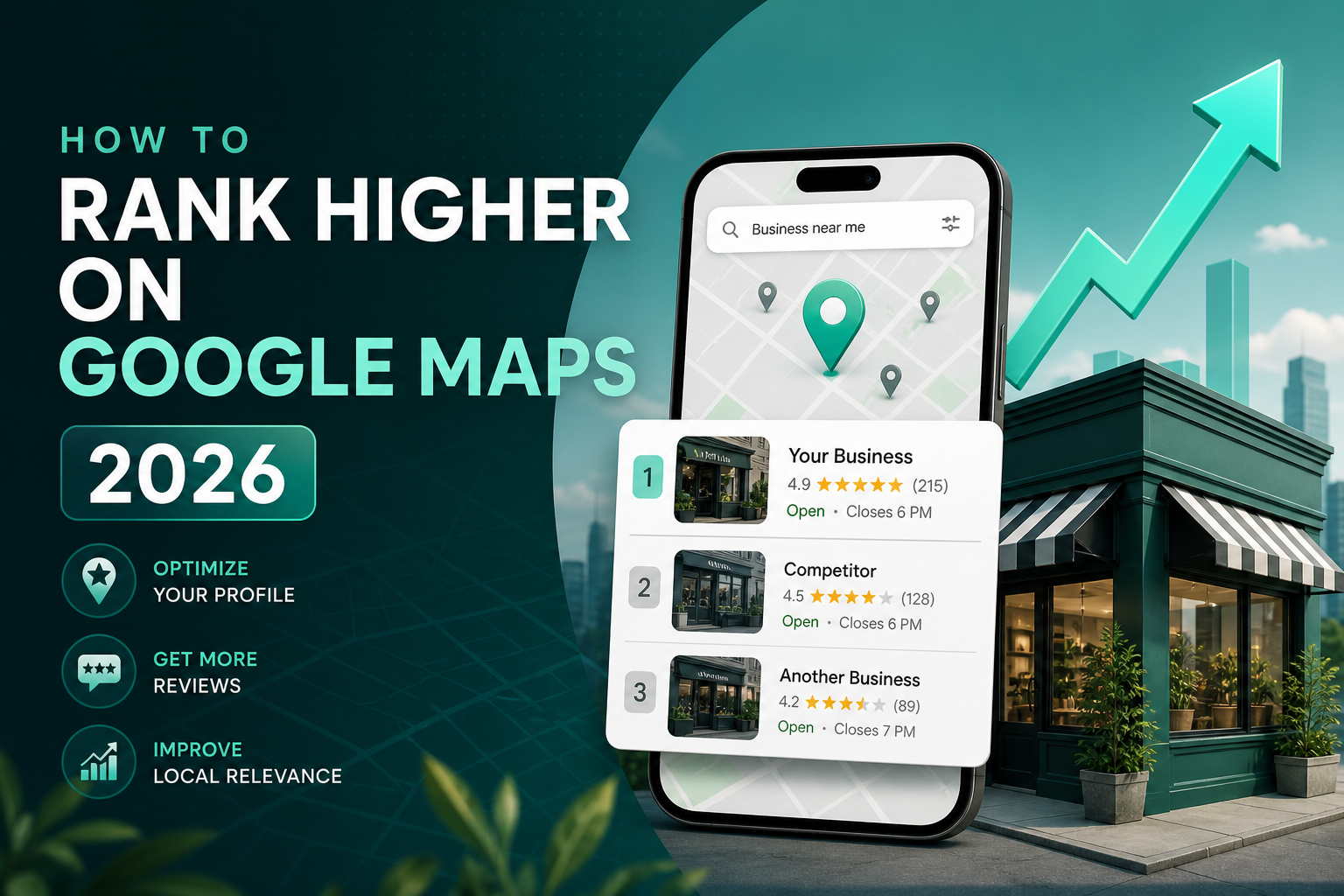
Google Maps Ranking in Plain Terms
When someone searches on Maps, Google is trying to answer a practical question: which nearby business best matches what this person is looking for, and can be trusted to deliver. Relevance decides the match, distance decides whether "nearby" applies, and prominence decides which of the remaining candidates is worth recommending first. Every tactic you consider should map back to improving one of these three things—if it does not, it is probably a distraction.
The Proximity Reality Check
Distance is the pillar most owners misunderstand, usually because it is the one they cannot influence with content or effort. If your storefront sits fifteen minutes from a searcher and a direct competitor sits three minutes away, no amount of posting or review generation reliably closes that gap for tightly local searches. Understanding this early saves you from chasing tactics that were never going to work for a specific keyword-location combination.
What you can control is making sure your declared service area, if you are a service-area business, is honest and not artificially inflated, and that your address pin is placed exactly where customers actually enter. Businesses regularly lose winnable rankings simply because their pin sits on the wrong side of a building or at an old address after a move.
Building Prominence That Compounds
Prominence rewards consistency far more than intensity. A steady trickle of genuine reviews over a year outperforms a single burst of fifty reviews followed by silence, because ongoing velocity and recency both matter, not just total count. The same logic applies to citations, backlinks, and engagement—slow, honest accumulation beats short bursts that fade.
| Activity | Short-term effect | Long-term durability |
|---|---|---|
| Ongoing review requests | Moderate | High—compounds steadily |
| One-time review push | High spike | Low—fades within months |
| Consistent citation cleanup | Low | High—removes friction permanently |
| Weekly photo/post updates | Moderate | High while maintained |
| Paid review incentives (avoid) | Risky spike | Very low, policy risk |
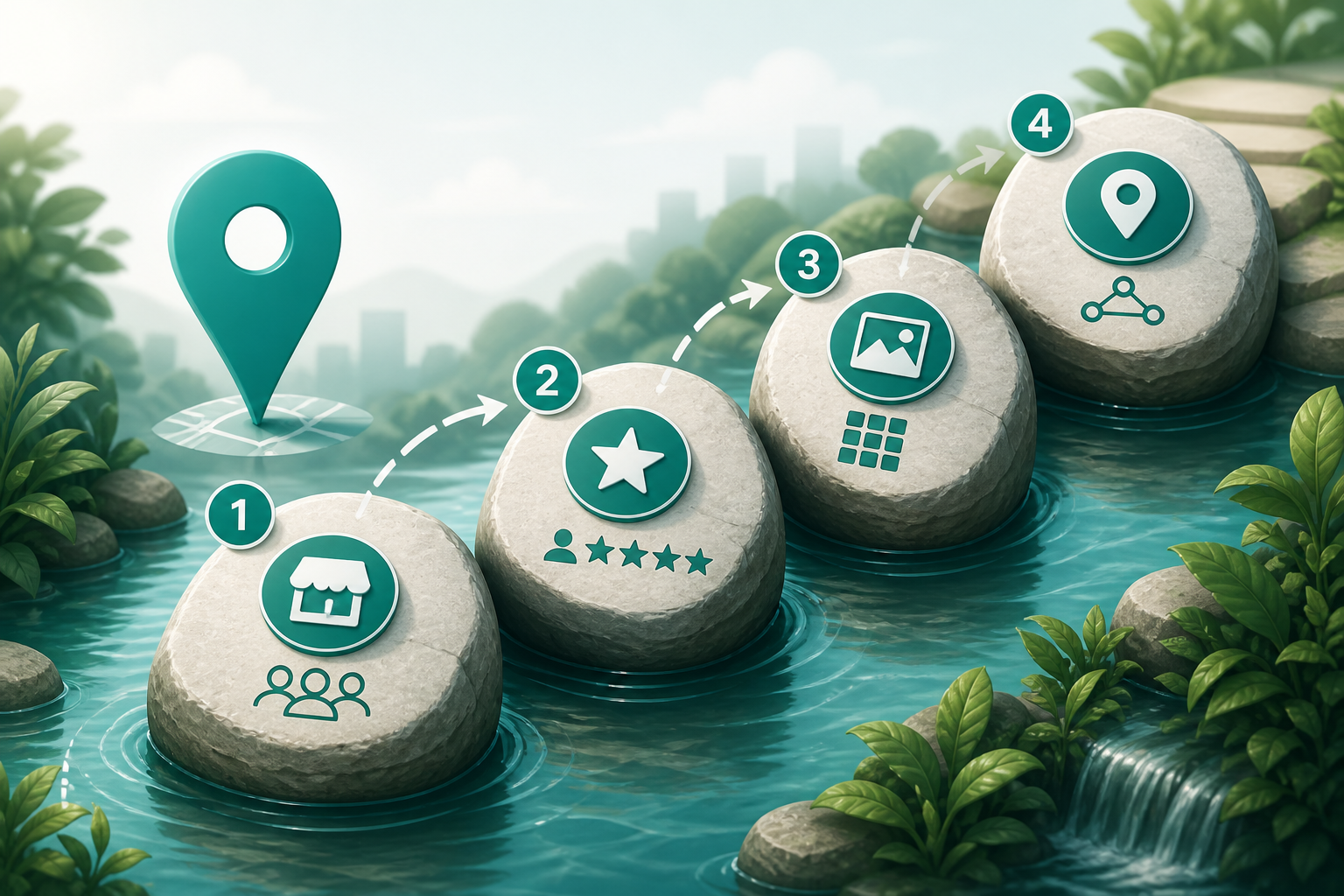
The 2026 Maps Playbook, Step by Step
Start with the profile itself: confirm ownership, correct the primary category, and verify NAP consistency across your website and directories. Then move to reviews, building a simple, repeatable request process rather than a one-off campaign. Next, refresh your visual presence with real, current photos on a monthly rhythm, and make sure your website has local landing pages that match the services you want to rank for—our GMB optimization guide and local SEO playbook both go deeper on execution.
Once the foundation is solid, layer in Google Posts and Q&A management to keep the profile looking active, and start tracking a neighborhood grid so you can see how position varies across the area you actually serve. A tool like GBP Local Ranker makes this last step far less guesswork than checking a single search from your desk every morning.
Why "Ranking Higher" Should Not Be the Only Goal You
It is worth pausing on a subtle trap in the phrase "rank higher on Google Maps": position is a proxy for the outcome you actually want, which is more calls, more direction requests, and more revenue. Chasing rank as an end in itself can lead to decisions that look good on a grid report but do not improve the business—like obsessing over a single hyper-competitive keyword while ignoring three easier, still-valuable searches where you could realistically dominate with far less effort.
Common Mistakes That Keep Businesses Stuck
The most common mistake is optimizing everything except the primary category, because changing it feels risky. A wrong or too-broad category quietly caps your relevance no matter how much other work you do around it. The second most common mistake is measuring progress from a single location—usually the office—which can show a comfortable top-three position while the business is invisible three neighborhoods over where paying customers actually live.
A third mistake is treating reviews as a marketing campaign instead of an operational habit, producing a burst-and-silence pattern that never builds durable prominence. And a fourth is ignoring the website entirely, assuming the profile alone can carry all the weight—when in reality a weak or mismatched website undercuts the trust and relevance the profile is trying to build.
| Consideration | Storefront business | Service-area business |
|---|---|---|
| Address visibility | Shown publicly on the profile | Hidden; only service area is shown |
| Proximity signal | Based on fixed pin location | Based on declared service-area radius |
| Biggest risk | Wrong pin placement | Overstated or unrealistic service area |
| Review focus | General satisfaction | Specific neighborhood and job-type language |
Service-Area Businesses Need a Slightly Different Playbook
Businesses that serve customers at their location rather than a fixed storefront—plumbers, cleaners, mobile pet groomers—face a distinct version of the proximity challenge. Because there is no physical address for a customer to visit, Google leans more heavily on the declared service area, making an honest, well-considered radius even more important than it is for a storefront. Declaring an unrealistically large service area to "cover more ground" typically backfires, diluting relevance for the neighborhoods you can genuinely serve well.
Service-area businesses should also pay particular attention to review language, since customers often mention their own neighborhood naturally when describing the job. Encouraging detailed, specific reviews indirectly reinforces geographic relevance across the areas you actually serve, in a way that a storefront business with a single fixed address does not need to think about in the same way.
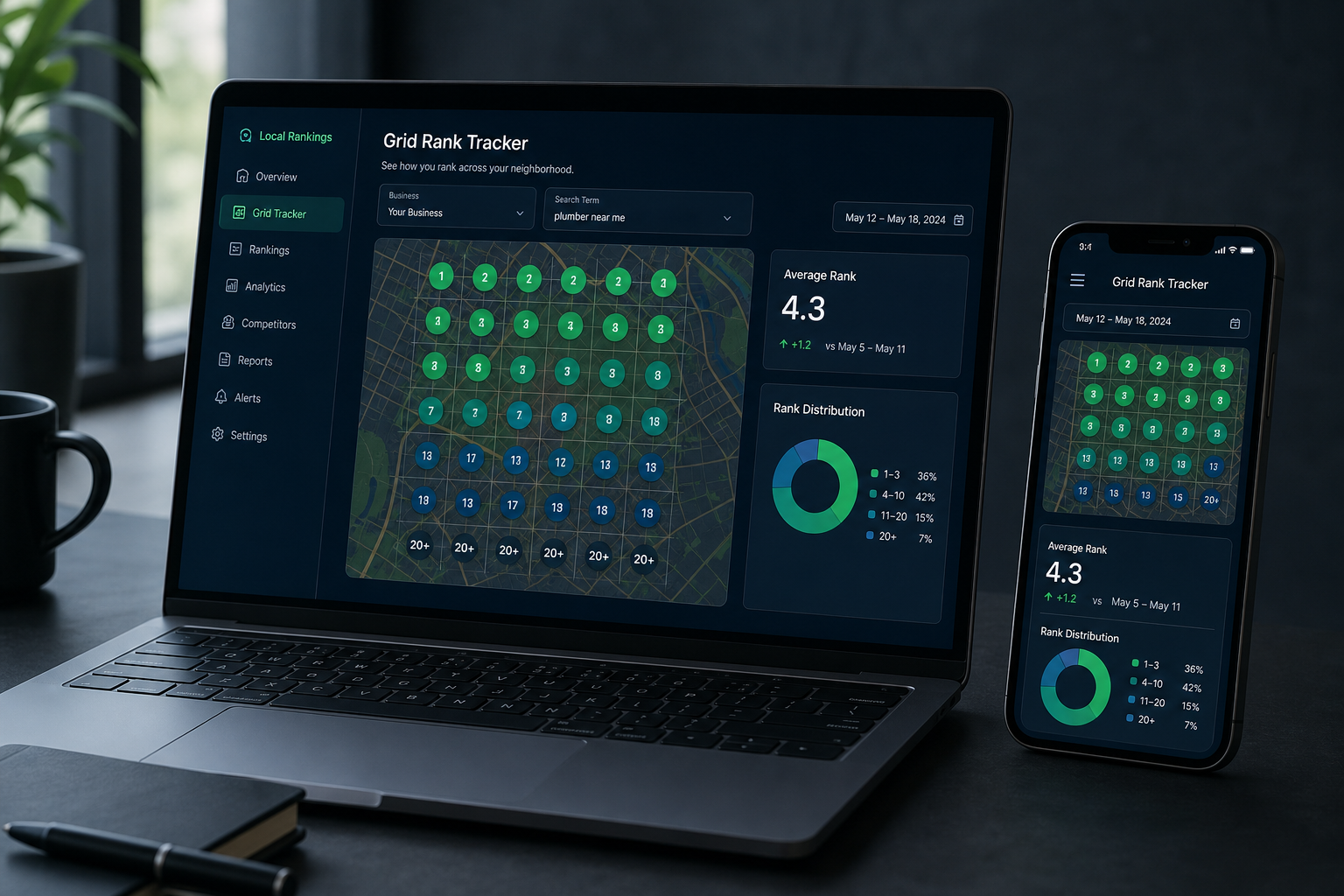
How to Measure Progress the Right Way
Rank position alone is an incomplete metric. Pair it with calls, direction requests, and website clicks from GBP Insights so you can see whether movement in the grid translates into real customer actions. Give any new effort at least four to eight weeks before judging it—local ranking signals rarely shift dramatically within days, and short evaluation windows lead to abandoning strategies that were actually working.
Build a simple monthly review habit: pull your grid report, note which specific points in your service area improved or declined, and cross-reference that against any changes you made that month. Over two or three cycles, this creates a genuine feedback loop instead of a series of disconnected guesses, and it makes it obvious when a competitor's activity, rather than your own effort, explains a temporary dip.
Documenting What You Tried So You Do Not Repeat Mistakes
A simple running log of changes—what you adjusted, when, and what happened to rank and engagement afterward—pays off far more than most owners expect. Without it, teams tend to repeat the same experiments every year without remembering the outcome, or they credit a rank improvement to the wrong change because too many things shifted around the same time to isolate cause and effect clearly.
Seasonal and Local Market Considerations
Ranking behavior is not static across the year. Seasonal businesses—landscapers, HVAC companies, tax preparers, festival-driven retail—often see legitimate rank volatility tied to search volume swings rather than anything wrong with their profile. Treat a seasonal dip in raw position with more skepticism than a sustained, multi-month decline, and time your bigger optimization pushes to land just before your peak season rather than during your quietest months when the payoff is smaller.
Local market maturity also matters. In a market where every competitor already runs a disciplined profile, review, and posting operation, incremental gains come slower and require sharper execution on every factor simultaneously. In a market where most competitors still have half-finished, neglected profiles, even a modest, consistent effort can produce outsized, relatively fast improvement. Understanding which situation you are in helps set realistic expectations for how quickly this playbook should show results.
Final Takeaway
Ranking higher on Google Maps in 2026 is a matter of sequencing ordinary, well-understood work correctly: fix the category and proximity honesty first, build prominence steadily rather than in bursts, and measure across a real neighborhood grid instead of a single search. There is no shortcut that replaces this sequence, but there is also nothing mysterious about it once you separate what you can influence from what you cannot.
Frequently Asked Questions
How long does it take to rank higher on Google Maps?
Most businesses see measurable grid movement within four to eight weeks of fixing foundational issues, with prominence-driven gains continuing to compound over several months.
Can I rank #1 on Google Maps for every keyword in my area?
Realistically, no single business dominates every keyword and every neighborhood. Aim for strong, consistent visibility across your core services and service area instead.
Does website SEO matter for Google Maps ranking?
Yes, indirectly. A relevant, fast, well-structured website supports the prominence and trust signals that feed into Maps ranking, even though the profile itself is the primary surface.
Is paying for Google Ads a shortcut to ranking higher organically?
No. Paid ads appear in a separate placement and do not directly influence organic Map Pack ranking, though the extra visibility can indirectly support brand searches and engagement.
What is the biggest quick win for most businesses?
Correcting an inaccurate or too-broad primary category usually produces the clearest, fastest relevance improvement of any single change. Google Business Profile visibility improves when each step under “Frequently Asked Questions” is measurable, repeatable, and owned by someone on your team.
Should I focus on Maps ranking or organic website ranking first?
For most local businesses, the Map Pack drives more immediate calls and visits, so it deserves priority, but the two should be developed together over time.
How do I know if my Maps ranking work is actually paying off?
Track grid rank alongside calls, direction requests, and website clicks. Rising engagement metrics alongside stable or improving rank confirm the work is translating into real business impact.