Get More Customer Reviews is one of the highest-leverage local search topics in 2026. Reviews are the single most visible trust signal a potential customer sees before ever contacting a business, and for many purchase decisions — choosing a dentist, a contractor, a restaurant for a special occasion — they carry more weight than anything on the business's own website, precisely because they come from other customers rather than the business itself. Yet most businesses treat review generation as something that happens passively, hoping satisfied customers volunteer feedback on their own, when in reality the businesses with genuinely strong review profiles almost always have a deliberate, repeatable system behind the numbers.
This guide covers how to build that system honestly: when to ask, how to ask in a way that does not feel awkward or transactional, what Google's guidelines actually allow versus what crosses into manipulation, and how to handle the negative reviews that inevitably show up even when service is genuinely good. There is no shortcut here that avoids doing quality work — reviews ultimately reflect the real experience customers had, and no request system fixes a service problem.

Why Both Volume and Recency Shape How Reviews Are Perceived
Volume builds a baseline of trust
A business with three reviews, however glowing, reads as an unknown quantity to most searchers, while a business with two hundred reads as an established, proven choice, even at a slightly lower average rating. This is simple human psychology as much as it is anything Google's algorithm does directly — a larger sample size feels more trustworthy because outliers matter less, and most consumers intuitively understand that a handful of five-star reviews could plausibly come from friends and family in a way that two hundred cannot.
Recency signals an actively trustworthy, currently operating business
A profile whose most recent review is from three years ago raises a quiet, reasonable question in a searcher's mind: is this business even still open, and does it still perform the way these old reviews describe? A steady, ongoing trickle of recent reviews signals an active, currently operating business people are still choosing today, which matters both for consumer confidence and, more practically, because Google's own systems appear to weigh review recency as part of a broader freshness and prominence signal.
| Factor | What It Signals | Practical Target |
|---|---|---|
| Total review count | Established, proven track record | Steadily growing, not a one-time push |
| Review recency | An active, currently operating business | At least a few new reviews every month |
| Average rating | Overall satisfaction level | Genuine score reflecting real service quality |
| Review detail / length | Depth of the customer experience described | Encourage specifics, not just a star rating |
| Owner responses | Engagement and accountability | Respond to both positive and negative reviews |

Building a Review Request System That Actually Works
Timing the ask around a genuine moment of satisfaction
The best moment to ask for a review is immediately after a customer has expressed satisfaction, not days later in a generic automated email that has lost the context of why they were happy in the first place. A contractor finishing a job walkthrough, a stylist at the end of an appointment, or a restaurant server clearing a table where guests mentioned enjoying the meal are all natural windows where a request feels like a continuation of a good experience rather than an interruption. Our guide on the best time to ask for reviews covers this timing question in more detail.
Making the ask as frictionless as physically possible
Every additional step between a satisfied customer and a submitted review — searching for your business name, figuring out which platform to review on, creating an account — reduces the number of people who actually follow through. A direct link or QR code that opens straight to your Google review form removes nearly all of that friction, and it is worth generating one and displaying it prominently at the point of service: on a receipt, a counter placard, or a technician's business card.
| Channel | Typical Response Rate | Best Used For |
|---|---|---|
| In-person QR code / direct link | Highest | Point-of-sale and service completion moments |
| SMS text with direct link | High | Service businesses right after job completion |
| Email follow-up | Moderate | Retail or e-commerce order confirmations |
| Printed request on receipt / invoice | Low to moderate | Reinforcing other channels, not standalone |
| Social media post asking generally | Very low | Awareness, not a reliable primary channel |
What You Can and Cannot Do to Encourage Reviews
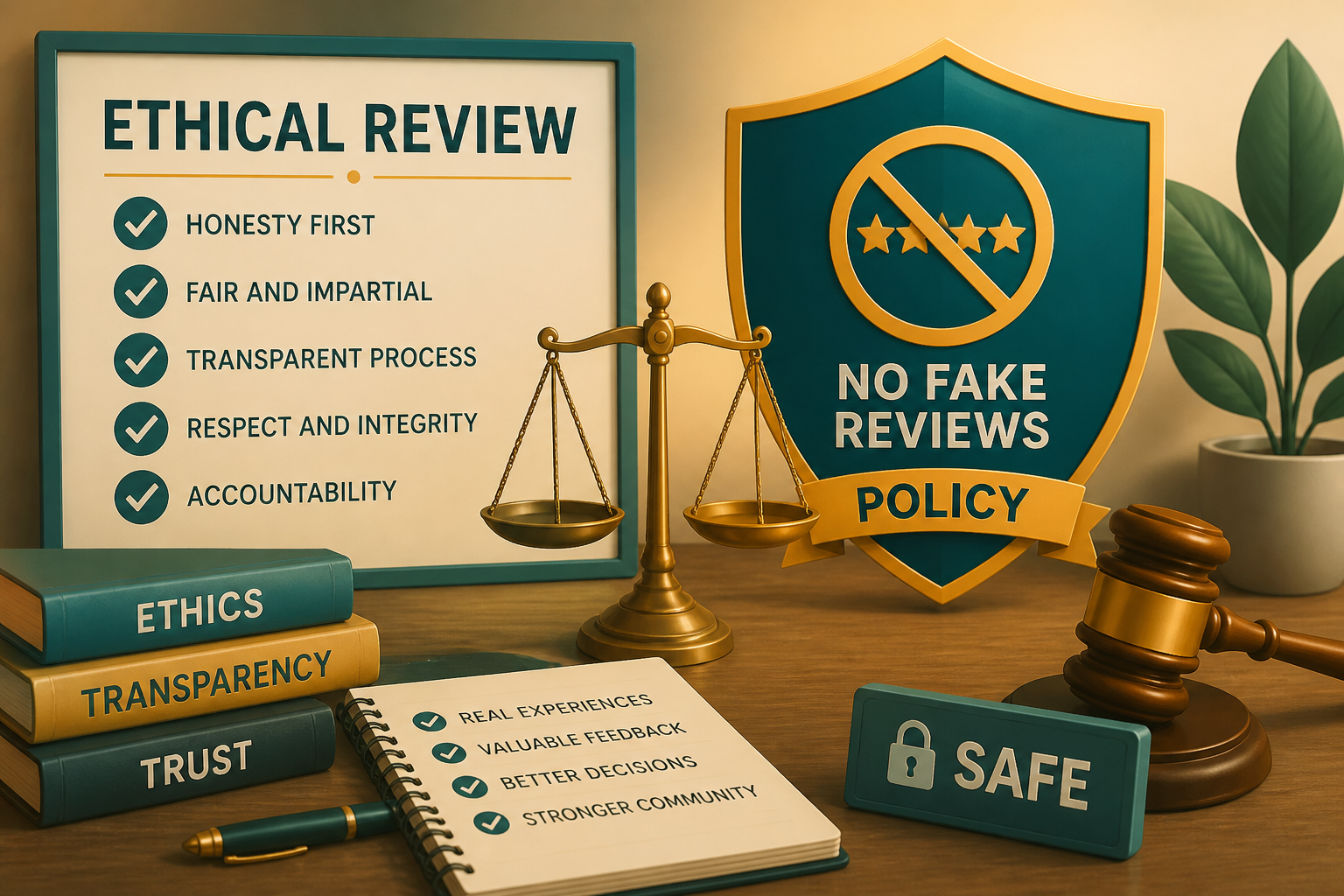
Google's guidelines are clear that businesses cannot offer money, discounts, or any other incentive in exchange for a review, and cannot selectively ask only customers they believe were satisfied while filtering out others — a practice sometimes called review gating, which is against Google's policies regardless of how it is dressed up. What is fully allowed, and genuinely effective, is simply asking every customer, making the process easy, and explaining briefly why the review matters to a small business without attaching any reward to the outcome.
It is also worth training staff to ask in a natural, non-scripted way rather than reciting an identical line to every customer, since Google's systems and human reviewers alike can spot patterns of suspiciously similar review language that suggest coaching or incentivization. Encouraging customers to mention what specifically they had done — the service, the product, the staff member who helped them — produces both more useful reviews for future customers and content that reads as authentic rather than templated.
Handling Negative Reviews Without Making Them Worse
Respond calmly, briefly, and without defensiveness
A negative review responded to with a defensive, argumentative reply almost always does more damage than the original review itself, because future customers reading the exchange judge the business's response at least as much as the complaint. A short, calm acknowledgment, an offer to resolve the issue offline, and no public litigating of the details is almost always the better path, even when the reviewer's account feels unfair or exaggerated.
Do not attempt to buy, bribe, or pressure a review's removal
Offering a refund or discount explicitly conditioned on removing or editing a negative review violates Google's guidelines and, if reported, can put your entire profile at risk rather than just the one review. If a review contains clearly false claims, fake identity, or content that violates Google's actual content policies (hate speech, conflict of interest, and similar), the appropriate path is flagging it for policy review, not private pressure on the reviewer.
Look for patterns across negative reviews, not just individual complaints
A single negative review is a data point; three or four negative reviews mentioning the same specific issue over a few months are a pattern worth taking seriously as an operational signal rather than a reputation problem to manage away. Track recurring themes — a specific service, a particular time of day, a specific location in a multi-site business — and treat repeated complaints as an early warning system that something in the actual operation needs attention, not just the online response.
Choosing Where to Focus Your Review Efforts Beyond Google
Google is not the only review platform that matters, but it is almost always the right place to concentrate the bulk of a general review request effort, since it is the platform most directly tied to local search visibility and the one most customers check first when researching a nearby business. That said, certain industries have a secondary platform worth cultivating deliberately rather than leaving entirely to chance.
Google remains the priority for most local businesses
For the overwhelming majority of local service and retail businesses, a Google Business Profile review carries more practical weight than a review on any other platform, simply because it appears directly in the search results and map pack where most local discovery happens. Splitting review request effort evenly across many platforms usually dilutes results everywhere rather than building meaningful depth anywhere, so most businesses are better served concentrating on Google first and treating other platforms as a secondary, lower-effort addition.
Industry-specific platforms can be worth a light, separate effort
Restaurants often benefit from a presence on dedicated dining platforms, healthcare providers from medical-specific review sites, and home service businesses from platforms trade customers specifically consult before hiring. These are worth a modest, separate request flow rather than folding into the same ask as your Google review request, since customers can find it confusing to be pointed toward multiple platforms in a single message, and a focused, single-platform ask tends to convert better than a scattered one.
Final Takeaway
A strong review profile is built the same way a strong reputation is built in any other context: consistently, honestly, and over time, not through a single incentivized push or a clever workaround. Ask every customer at the right moment, make it effortless, respond to what comes back — good and bad — with the same even tone, and let the real relationship between reviews and rankings do its slow, compounding work. Combined with the rest of a solid Google Business Profile setup, a genuine review system is one of the highest-leverage things a local business can build.
Frequently Asked Questions
How many reviews do I need before I start seeing an impact?
There is no fixed threshold; what matters more is a steady, ongoing flow of recent, detailed reviews rather than hitting one specific number.
Can I offer a discount in exchange for a review?
No, offering any incentive in exchange for a review violates Google's guidelines regardless of how the offer is worded. Treat “Frequently Asked Questions” as an operating checklist—not a one-time edit—so rankings compound instead of resetting every month.
Should I only ask customers I am confident were satisfied?
No, selectively asking only likely-satisfied customers (review gating) is against Google's policies; every customer should be given the same opportunity to leave feedback.
What is the best way to respond to a negative review?
A short, calm, non-defensive acknowledgment with an offer to resolve the issue offline, without publicly arguing the details of the complaint.
Can I get a fake or clearly false negative review removed?
You can flag it for policy review if it violates Google's actual content policies, but there is no guarantee of removal, and private pressure on the reviewer is not an appropriate path.
Does responding to reviews actually matter?
Yes, consistent responses to both positive and negative reviews signal an engaged, accountable business to future customers reading the profile.