Search "Google Maps ranking secrets" and you will find a lot of content promising some hidden trick that the top-ranking businesses supposedly know and everyone else does not. The honest truth is less exciting: there are no real secrets, only a handful of fundamentals that most businesses genuinely overlook, not because they are hidden, but because they are unglamorous and easy to postpone indefinitely.
This guide runs through the specific, overlooked items that repeatedly show up as gaps during real profile audits — not because they are exotic, but precisely because they are simple enough to skip without anyone noticing the cost until months later.

There Are No Real Secrets, Only Overlooked Fundamentals
Every ranking factor Google has confirmed or strongly implied publicly is, in some form, already documented across countless guides, including our own 2026 local SEO strategy guide . Nothing here is a secret in the sense of being undocumented; it is simply the specific subset of fundamentals that gets skipped most often during a typical setup, because they take slightly more effort than the obvious fields like business name and hours.
That gap between "documented" and "actually done" is exactly where the opportunity lives. A business willing to spend a genuinely thorough afternoon working through the items below is often doing more real optimization than several competitors combined, not because it discovered anything new, but because it actually finished the work everyone else left half-done.
| Item | How often it gets skipped | Real cost of skipping it |
|---|---|---|
| Q&A section | Very often — rarely proactively managed | Unanswered questions look neglected and lose potential customers |
| Attributes | Often — filled minimally during setup and never revisited | Missed relevance matches for attribute-specific searches |
| Messaging and booking responsiveness | Often — enabled but not actively monitored | Slow responses lose inquiries before they ever become customers |
| Holiday hours | Very often — only updated after a customer complaint | Frustrated customers arrive to a closed business unexpectedly |
Five Overlooked Fundamentals Worth Fixing This Week
Proactively seed and answer your own Q&A section
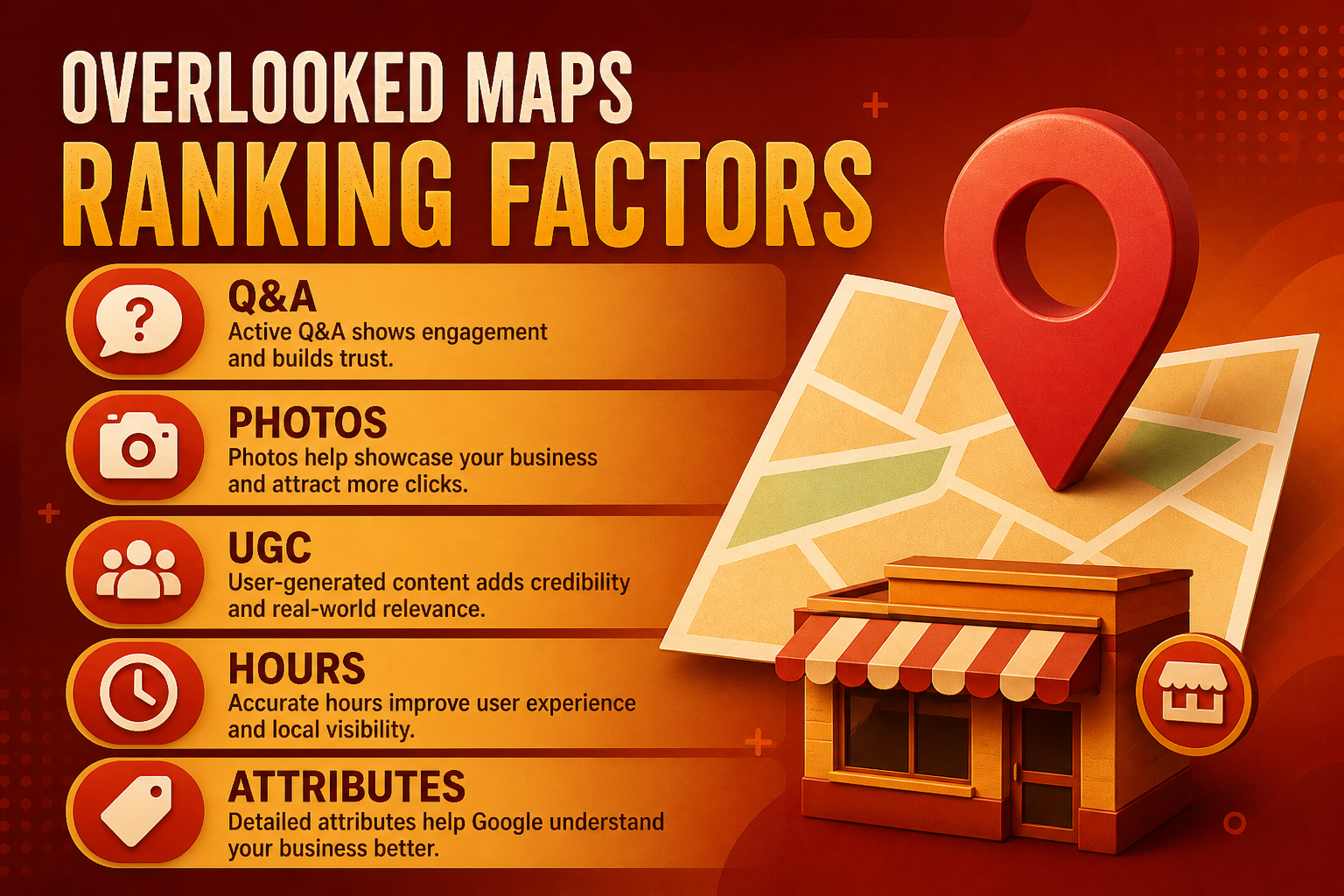
Most businesses treat the Q&A section as something to react to when a stranger happens to post a question, rather than something to actively manage. Seed it yourself with the five or six questions customers most commonly ask before booking or visiting — parking, appointment policy, accepted payment methods — and answer them clearly. This turns an often-empty or neglected-looking section into a genuinely useful resource that also reinforces the specific relevance signals covered in other parts of this series.
Fill in every genuinely applicable attribute
Attributes like accessibility features, payment options, or service specifics are frequently left at their defaults during initial setup and never revisited. Every accurate attribute filled in is one more precise match point for a searcher with a specific need, and it costs nothing beyond a few minutes of attention to a section that most competitors are quietly ignoring.
Treat messaging and booking responsiveness as a real customer channel
A messaging or booking feature that is technically enabled but rarely checked creates a worse impression than not offering it at all, since a customer who reaches out and gets no response for days assumes the business is unreliable or has closed. If you cannot commit to checking a channel regularly, disable it rather than leaving it as a quiet source of lost, frustrated inquiries.
Set holiday hours a full year in advance
Regular hours get set once during initial setup and rarely revisited, but holiday hours are worse: many profiles simply never have them set at all, meaning the default hours show even on days the business is closed. A customer who drives out on a holiday expecting a business to be open, based entirely on what the profile told them, has a genuinely bad experience that has nothing to do with the quality of your actual service. Blocking out an hour once a year to set every major holiday in advance removes this entirely preventable failure point for the next twelve months at once.
Keep photo uploads spread out instead of dumped all at once
A burst of forty photos uploaded in one sitting, followed by silence for a year, sends a weaker activity signal than the same forty photos spread out at a steady pace of three or four a month. Batch-editing photos ahead of time is fine, but consider scheduling their actual upload across several weeks instead of publishing the entire batch at once, so the profile shows continuous, believable activity rather than one isolated spike followed by apparent abandonment.
Why These Fundamentals Get Ignored — and Why That Is
These items get skipped for a simple, human reason: they do not feel urgent the way a wrong phone number or a bad review does. Nothing visibly breaks when the Q&A section sits empty or an attribute goes unfilled, so it never rises to the top of a busy owner's priority list. That is exactly why a business willing to do this unglamorous work consistently gains a real, durable edge over competitors who are all fighting over the same obvious, already-optimized fields.
| Task | Time required | Priority |
|---|---|---|
| Seed and answer 5-6 Q&A entries | 20 minutes | High |
| Review and complete all applicable attributes | 15 minutes | High |
| Test your own messaging or booking flow as a customer would | 10 minutes | Medium |
| Set holiday hours for the next 12 months in advance | 15 minutes | Medium |
Two More Overlooked Items Worth the Extra Effort
The "from the business" description most owners write once and never revisit
The business description field is filled in once during setup, usually in a rush, and then left untouched indefinitely even as the business genuinely changes. A description written years ago may still describe services no longer offered or omit a specialty that now drives significant revenue. Because this field is one of the more visible, narrative parts of the profile, letting it drift out of date has an outsized cost relative to the small amount of time required to rewrite it accurately once a year.
Products or menu sections left completely empty
Where the platform offers a dedicated products or menu section, leaving it entirely empty is surprisingly common, even among businesses that would clearly benefit from it. A retail business, restaurant, or service provider with tangible offerings loses a genuine opportunity to add specific, browsable detail that both helps searchers evaluate the business before contacting it and adds another layer of relevance signal beyond the services list alone. This section takes real time to fill in properly, which is exactly why so many profiles skip it entirely.
Building a Habit Instead of a One-Time Cleanup
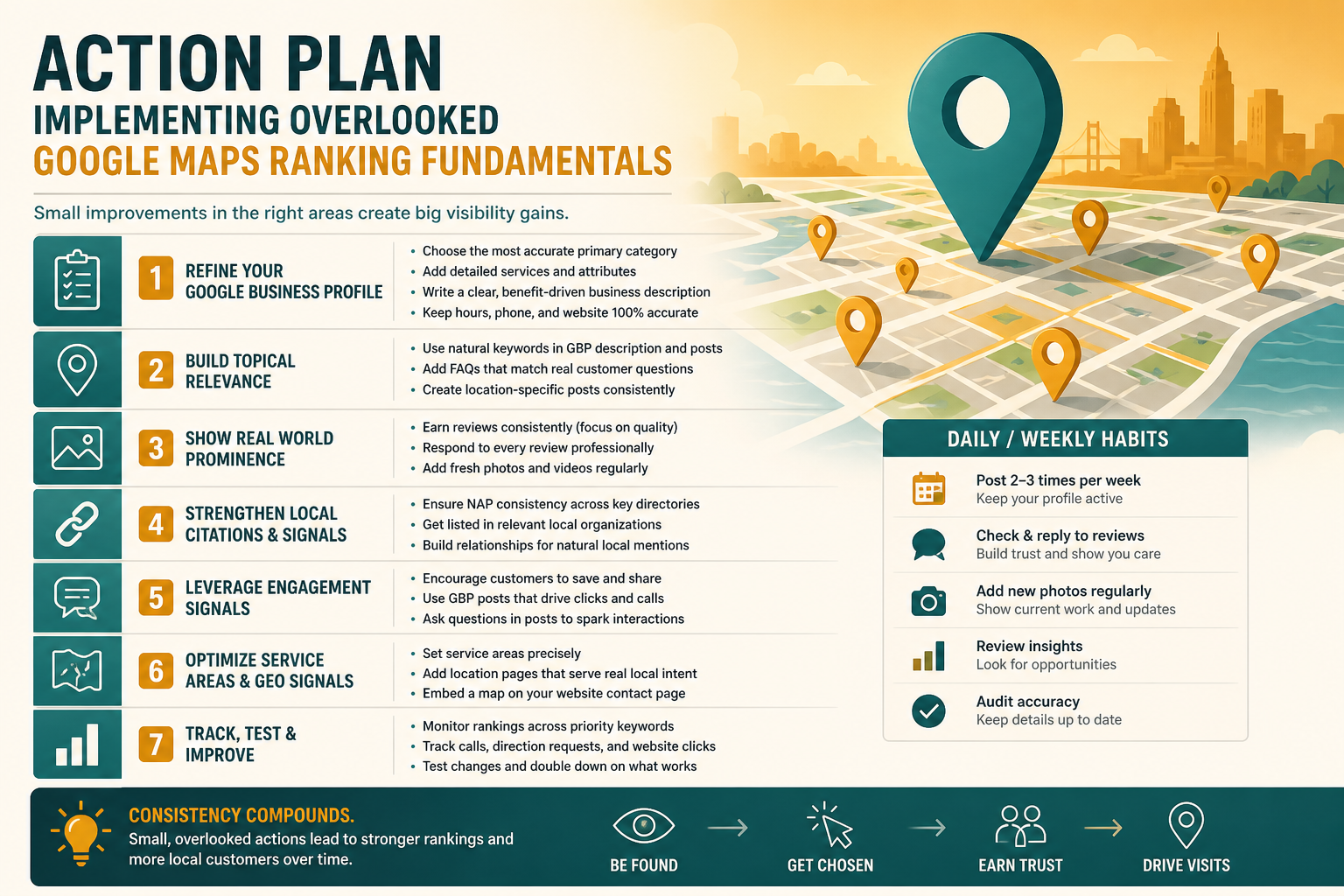
The items in this guide share a common trait: none of them are one-time fixes in the truest sense, because they all drift back out of date if left unattended. A Q&A section seeded once still needs new questions answered as they arrive. Attributes filled in accurately today may need updating as the business changes. The description written carefully this quarter will eventually need a refresh as offerings evolve. Treating this list as a recurring quarterly habit rather than a single afternoon project is what actually sustains the advantage over the months and years that follow.
A simple way to build this habit is to attach it to something you already do regularly — a monthly team meeting, a quarterly business review, or even a recurring calendar reminder tied to the start of each season. The specific trigger matters less than having one at all, since the businesses that maintain these fundamentals consistently are, almost by definition, the ones who built a system rather than relying on remembering to do it eventually. That system, more than any individual fix on this list, is the real differentiator over a full year of accumulated effort, and it is available to any business willing to build it, regardless of size or budget.
Most ignored Maps gains are operational, not mystical. Assign an owner for photo uploads, Q&A monitoring, holiday hours, and review replies the same way you assign opening duties. Run a monthly competitor screenshot of the pack for your top three keywords, note what they changed, and ship one improvement the next week. Small consistent actions compound faster than occasional big SEO projects that never get finished.
Final Takeaway
There is no secret formula behind the businesses that consistently rank well in Google Maps — just a willingness to finish the unglamorous, fully documented fundamentals that most competitors leave half-done. Run through the items in this guide, pair them with a full Google Business Profile audit and the broader work covered in our GMB optimization guide and local SEO playbook , and you will likely find more real opportunity in an afternoon of catching up than in chasing any actual secret ever could have offered.
Frequently Asked Questions
Is there really no secret trick to ranking higher on Google Maps?
No verified secret trick exists. What consistently works is thoroughly completing the documented fundamentals that most competitors leave partially finished.
How much difference can filling in attributes actually make?
It is unlikely to cause a dramatic ranking jump on its own, but it improves relevance matching for attribute-specific searches and costs very little time to complete.
Should I disable messaging if I cannot respond quickly?
Yes, an unmonitored messaging channel creates a worse impression than not having one, since unanswered messages suggest the business is unresponsive or inactive.
How far in advance should I set holiday hours?
Setting them for the entire upcoming year in one sitting is the most reliable approach, since it removes the risk of forgetting a specific holiday closer to the date.
Is seeding my own Q&A section against Google's guidelines?
No, business owners are permitted to add and answer questions on their own profile, and doing so with genuinely useful content is a legitimate, recommended practice.
Do these overlooked fundamentals matter more for new profiles or established ones?
Both benefit, but new profiles in particular can use these fundamentals to compete more effectively against established competitors who have not kept every field current.
How often should I revisit these specific fundamentals?
A quarterly check is reasonable for Q&A and attributes, alongside an annual pass to confirm the next year's holiday hours are set correctly in advance.