If there is one field on a Google Business Profile that carries more ranking weight than most owners realize, it is the category selector. It looks like a simple dropdown, easy to fill in during initial setup and easy to forget about afterward. In practice, category selection is one of the most direct relevance signals Google has, and getting it even slightly wrong can quietly cap visibility for searches that should otherwise be easy wins.
This guide explains what primary and secondary categories actually do, why the choice matters as much as it does, and a practical method for finding the right one rather than guessing from an alphabetical list that was clearly not designed with search strategy in mind.
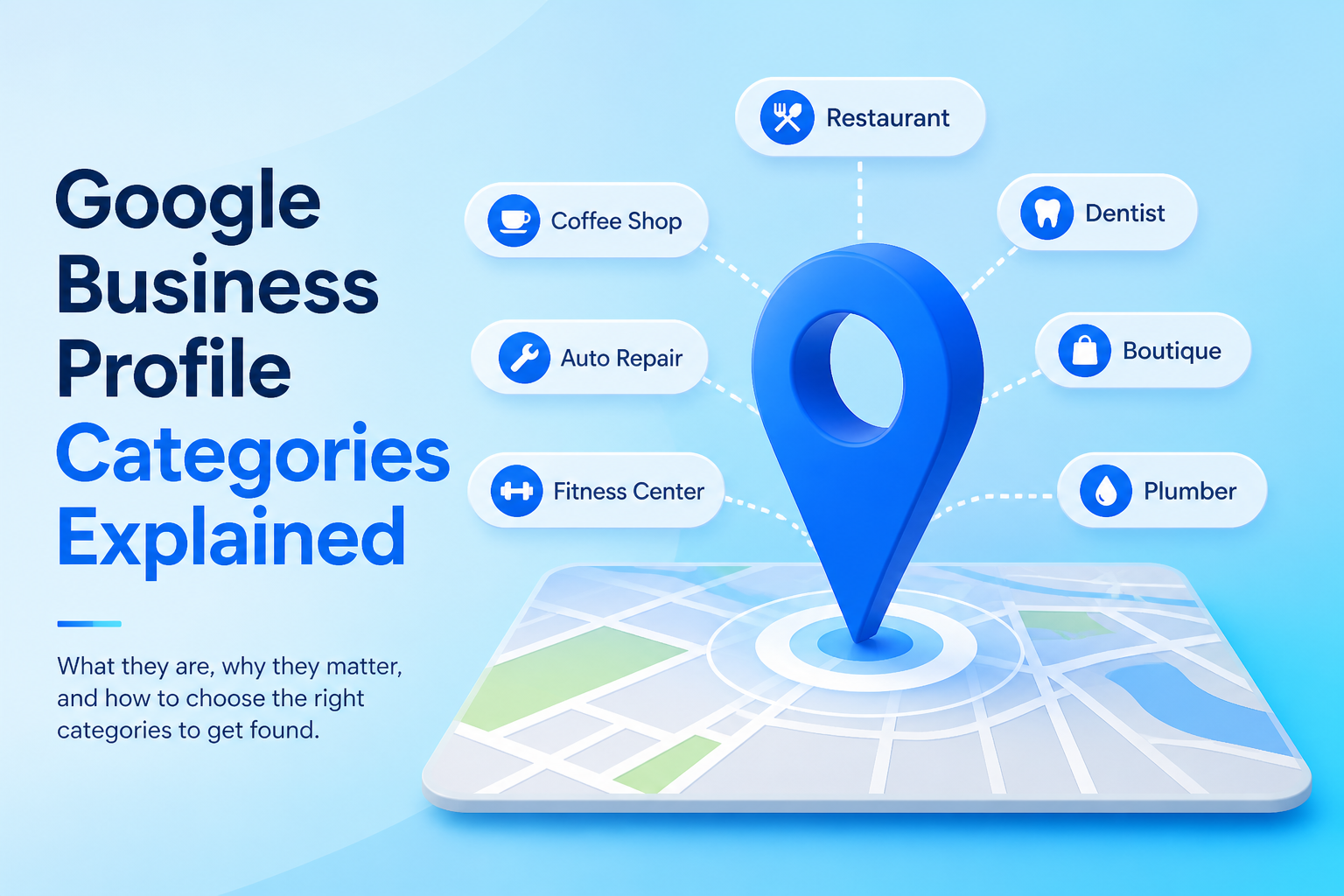
What GBP Categories Actually Are: Primary vs Secondary
Your primary category is the single most important classification of your business, and it carries the heaviest relevance weight of any category field. It should describe your core business — the thing that generates most of your revenue and the thing most customers are looking for when they find you. Secondary categories describe additional, genuinely offered aspects of your business, adding relevance for related searches without diluting the primary signal.
Google allows a limited number of secondary categories, and it is tempting to fill every available slot to maximize visibility. Resist that temptation. A category list padded with services you do not genuinely provide dilutes relevance rather than expanding it, and it can create the same kind of mismatch problem covered in our guide on GBP services best practices , where accuracy consistently outperforms sheer volume.
| Field | Purpose | How many to use |
|---|---|---|
| Primary category | Describes your single core business | Exactly one, chosen with care |
| Secondary categories | Adds relevance for genuinely offered related services | As many as genuinely apply, not the maximum allowed |
Why Category Choice Has Outsized Ranking Impact
It is one of the clearest, most direct relevance signals available
Unlike a business description, which Google's systems have to interpret through natural language processing, a category is a structured, unambiguous data point. That structure makes it a particularly reliable relevance signal, which is exactly why getting it wrong tends to have an outsized negative effect compared to a similarly small mistake in an unstructured field like the description.
It can unlock or restrict specific profile features
Certain categories unlock specific features — booking buttons, menu links, or particular attribute sets relevant to that business type — that simply are not available under a different, less precise category. Choosing an overly broad category to "cover more searches" can quietly cost you access to features that would have meaningfully improved both relevance and conversion under a more accurate, specific choice.
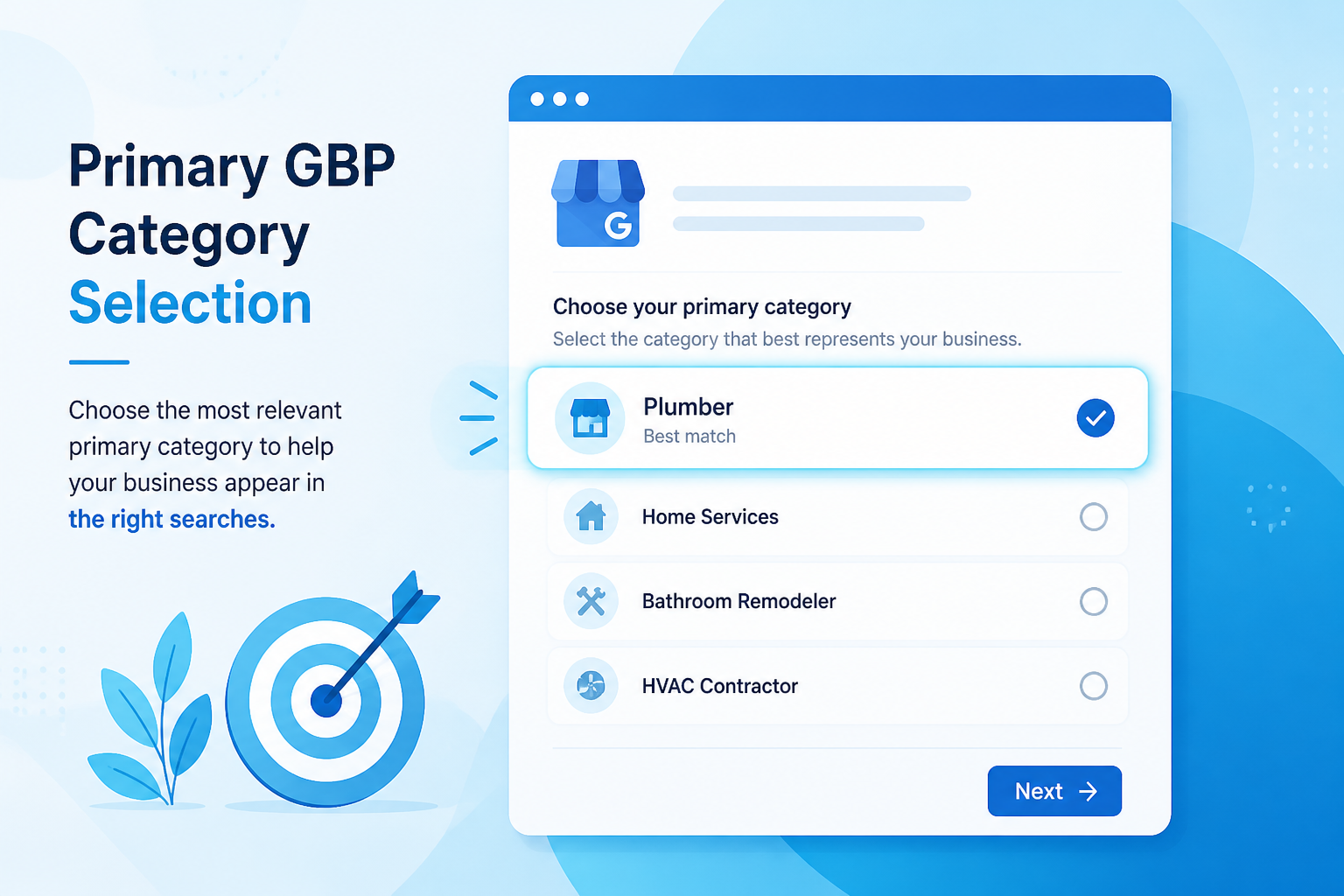
A Practical Method for Finding the Right Category
Start by writing down, in plain language, what your business actually does and what percentage of revenue each activity represents. The activity generating the largest share is almost always the correct basis for your primary category, even if a different category sounds more prestigious or broadly appealing. Then search Google's category list for exact or close matches to that core activity rather than settling for the first vaguely related option that appears.
Our detailed walkthrough on how to choose the right GBP categories covers the full selection process step by step, including how to compare close alternatives when several categories seem plausible. As a general rule, when two categories seem equally applicable, the more specific one usually serves relevance better than the broader one, since specificity is exactly what differentiates your profile from more generically categorized competitors.
Secondary Categories: How Many and When to Add Them
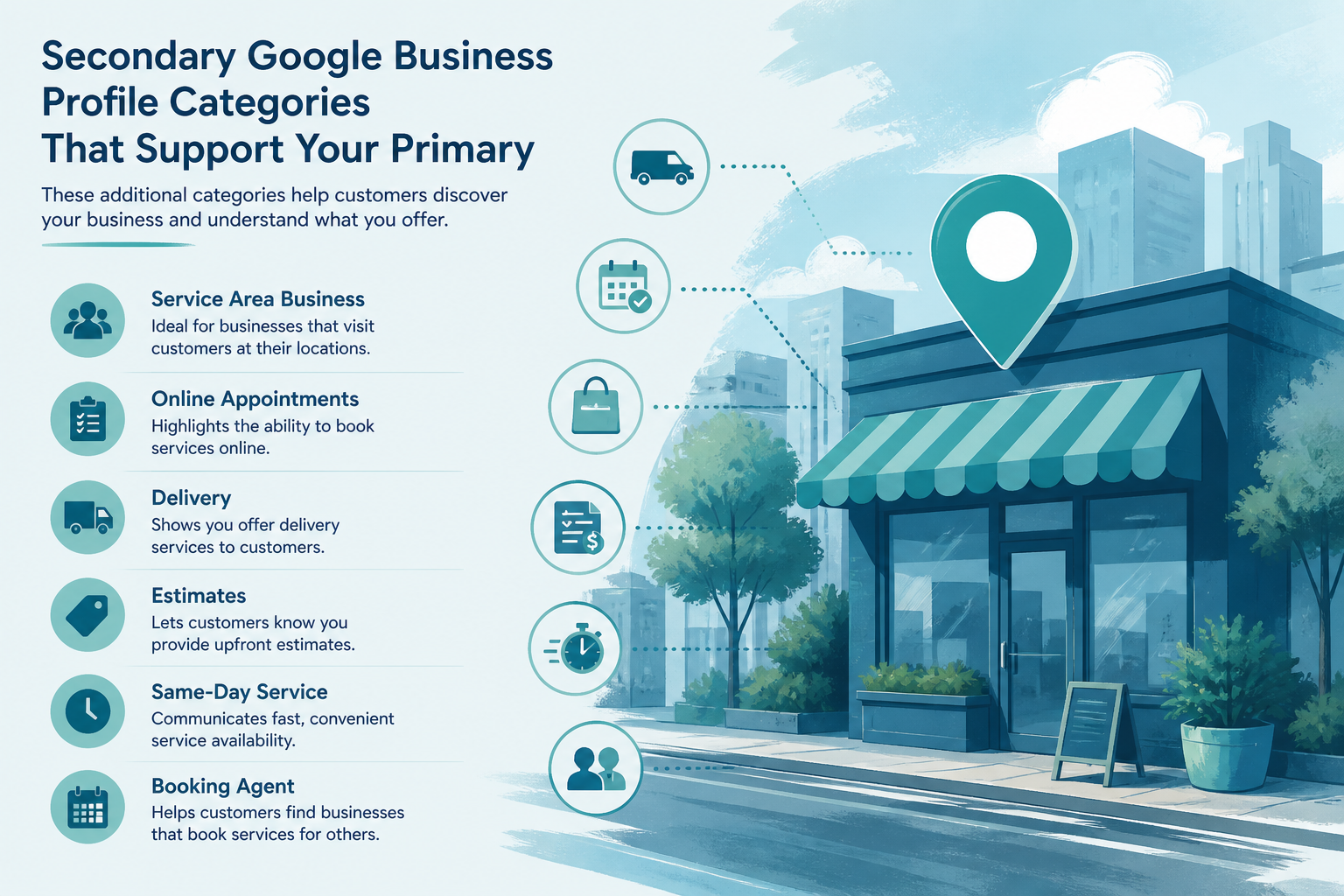
Add a secondary category only when it reflects a genuine, meaningfully sized part of your business — not every minor task you occasionally perform. A general contractor who occasionally handles a roofing job does not necessarily need a roofing secondary category if that work represents a tiny, irregular fraction of the business; adding it anyway risks pulling in mismatched inquiries with little corresponding benefit. Review your secondary categories alongside your services list periodically, since both should tell a consistent, honest story about what your business actually does.
A useful way to decide is to ask whether a customer searching specifically for that secondary category would leave satisfied with the experience you actually provide. If a bakery adds "wedding planner" as a secondary category simply because it occasionally supplies wedding cakes, customers searching specifically for full wedding planning services will be disappointed, and that mismatch is exactly the kind of relevance dilution that outweighs whatever small visibility gain the extra category might have provided.
Common Category Mistakes
Choosing a category based on what sounds impressive rather than what customers actually search for is a common early mistake, often made during initial setup before the owner understood how much weight the field would carry. Leaving the primary category unchanged after a genuine shift in the business's core focus is another — a business that pivoted from general retail to a specific specialty product line but never updated its primary category is quietly ranking for the wrong searches. Reviewing category accuracy alongside your broader GBP optimization and local SEO work at least once a year catches both problems before they cost months of avoidable underperformance.
| Mistake | Why it hurts | Better approach |
|---|---|---|
| Choosing the most prestigious-sounding category | Rarely matches actual customer search language | Pick the category matching your primary revenue activity |
| Never updating category after a business pivot | Profile keeps ranking for outdated, irrelevant searches | Review category alongside services at least annually |
| Adding every available secondary category | Dilutes relevance and can attract mismatched inquiries | Add only categories reflecting a genuine, sizable part of the business |
| Copying a competitor's category without verifying fit | What works for their business model may not match yours | Base the choice on your own revenue and customer intent |
How Category Choice Interacts With Distance and Prominence
It is worth remembering that category accuracy is only one of three pillars behind local ranking, alongside distance and prominence. A perfectly chosen category cannot compensate for being genuinely far from most searchers, and it cannot substitute for a healthy, active review profile either. Getting the category right removes one specific source of ranking friction, but it works best as part of the same coordinated effort covered throughout this series rather than as a standalone fix expected to carry the whole burden on its own.
How Categories Interact With Services and Attributes
Categories do not operate in isolation. They set the broad context that your services list then fills in with specific detail, and they often determine which attribute options become available at all. A restaurant category unlocks menu and dining-option attributes that a retail category never would, for instance. When these three fields — category, services, and attributes — all tell a consistent, accurate story, the combined relevance signal is considerably stronger than any single field could produce alone.
This is why a category review should never happen in isolation from a broader profile review. Changing a primary category without also revisiting the services list and available attributes often leaves a profile in an inconsistent state that undersells the change you just made. Treat the three fields as one connected system rather than three separate boxes to check off during setup and then forget.
When to Get a Second Opinion on Category Choice
Some businesses genuinely sit at the boundary between two or three plausible categories, and no amount of solo research fully resolves the ambiguity. In these cases, it is worth checking how well-established, well-reviewed competitors in your specific niche have categorized themselves, not to copy them blindly, but to see which interpretation the market and Google's own system seem to have converged on for businesses genuinely similar to yours. A second opinion from someone unfamiliar with your business, asked simply "what would you call this business," can also surface the intuitive category a customer would expect, which is sometimes more useful than an internal debate about technical precision. When in doubt, lean toward the more specific, narrower option rather than the broader umbrella term, since specificity has consistently proven to serve relevance better across the profiles reviewed for this guide.
Final Takeaway
Category selection is one of the highest-leverage, lowest-effort fields on a Google Business Profile, precisely because it functions as a clean, structured relevance signal rather than something Google has to interpret from loose text. Choose your primary category based on your actual core revenue driver, add secondary categories only where they genuinely apply, and revisit both whenever your business meaningfully changes. It takes minutes to review and can quietly determine whether you are even in the running for the searches that matter most, which makes it one of the best returns on a small amount of time anywhere on the profile.
Frequently Asked Questions
How many secondary categories should I add?
Add only as many as genuinely reflect a meaningful part of your business. There is no target number to hit — accuracy matters far more than using every available slot.
Can changing my primary category hurt my existing ranking?
It can cause a temporary adjustment period as Google's systems reassess relevance, but if the new category is genuinely more accurate, the long-term effect is typically positive.
What if no category matches my business exactly?
Choose the closest reasonably accurate option rather than an unrelated one chosen for its perceived prestige, and use your services list and description to add the specific detail the category cannot capture.
Does my primary category need to match my website's main service page?
It should be consistent in substance — both should reflect the same core business — though the exact wording naturally differs between a structured category field and a full website page.
How often should I review my category selection?
At least once a year, or immediately after any meaningful shift in what your business primarily does, since categories are easy to forget once initially set.
Can I have multiple primary categories?
No, Google allows exactly one primary category per listing. Additional relevant business activities should be captured through secondary categories instead.
Does choosing a broader category help me appear in more searches?
Not usually. A broader category often reduces relevance for the specific searches that matter most, and can restrict access to features tied to more precise category choices.