Common Google Business Profile is one of the highest-leverage local search topics in 2026. Most Google Business Profile problems are not mysterious algorithm punishments; they are self-inflicted, avoidable mistakes that quietly cap a listing's potential for months before anyone notices. The frustrating part is that many of these mistakes look harmless or even helpful at first glance — a keyword added to the business name, a category chosen because it sounds more impressive, a review request script that crosses a policy line without anyone realizing it.
This guide covers the mistakes that show up most often across real profiles, ranked roughly by how much damage they typically cause, along with the honest fix for each. None of these require expensive tools to correct — just attention and a willingness to undo a shortcut that seemed reasonable at the time.

Mistakes That Directly Hurt Relevance and Distance
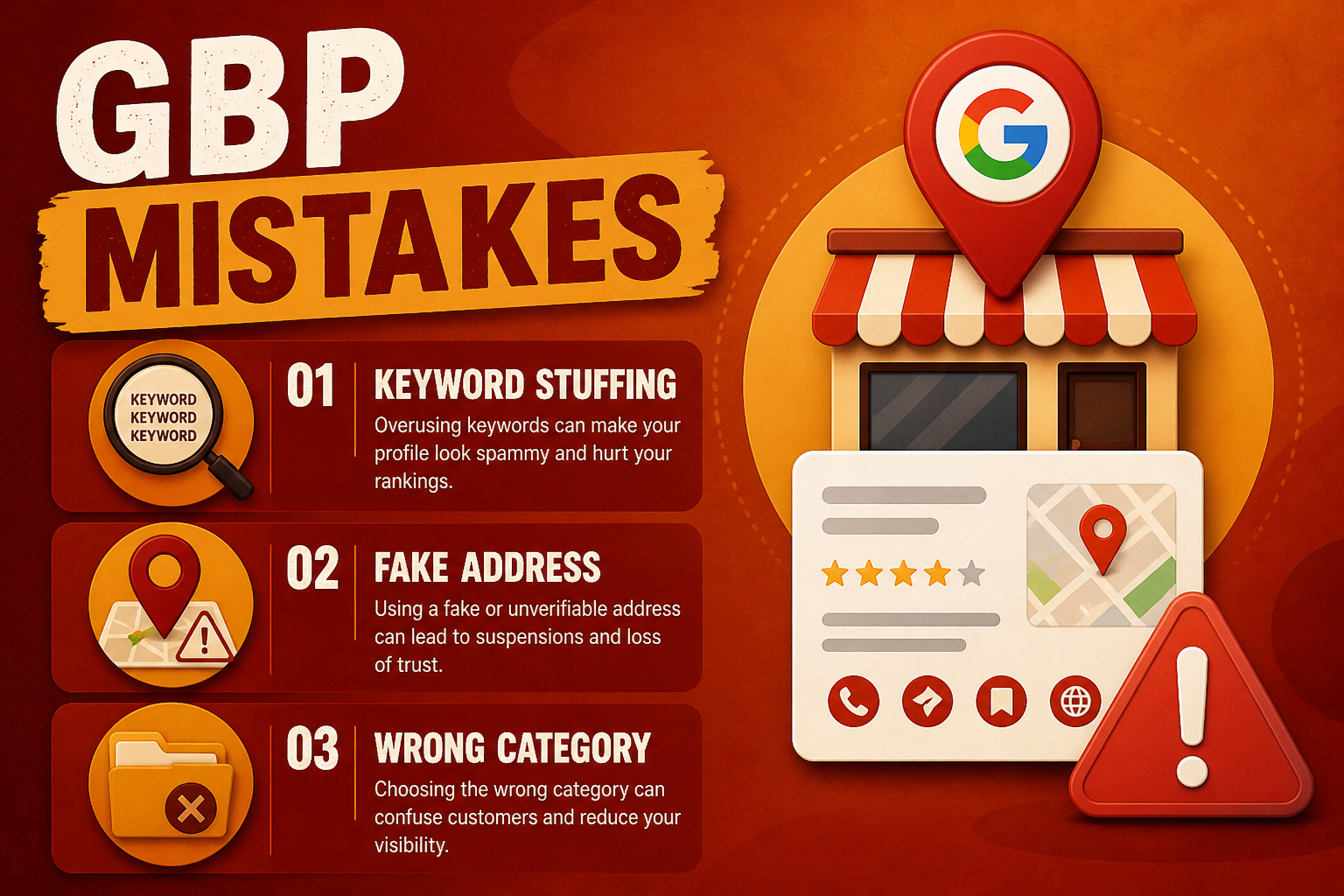
Stuffing keywords into the business name — "Smith Plumbing | Emergency Plumber Brooklyn 24/7" — is one of the most common and most clearly prohibited mistakes. It occasionally produces a short-term relevance bump before Google's systems catch it, and the correction can involve a suspension or forced name revert that costs far more visibility than the temporary gain. Choosing the wrong primary category because it sounds more prestigious than the accurate option — a general contractor listing as "Construction company" instead of the more specific, more frequently searched category customers actually use — quietly suppresses relevance for the exact searches that would convert best.
For service-area businesses, showing a public address that no customer ever visits creates both a guideline violation and genuine confusion about your actual coverage, discussed in depth in our address and rankings guide . These are foundational mistakes, and fixing them tends to produce the most noticeable improvement of anything on this list.
| Mistake | Why it hurts rankings | Fix |
|---|---|---|
| Keyword-stuffed business name | Guideline violation, suspension risk | Revert to exact legal/DBA name |
| Wrong or overly broad primary category | Weakens relevance for actual search intent | Research and correct to the specific accurate category |
| Public address for a pure service-area business | Guideline violation, distance confusion | Hide address, list honest service areas |
| Duplicate listings for the same location | Splits reviews, signals spam | Report and merge duplicates |
Mistakes That Quietly Damage Trust and Prominence
Ignoring negative reviews instead of replying
An unanswered negative review sitting for months signals inactive management to every future customer who reads it. A calm, specific, professional reply — even to an unfair review — shows active ownership and often matters more to prospective customers than the original complaint itself.
Buying reviews or running review-gating schemes
Filtering unhappy customers away from public review links or purchasing reviews outright are clear policy violations that carry real suspension risk. A suspension during a busy season erases far more value than the artificial review boost ever provided.
Letting photos go stale for years
A profile whose most recent photo is several years old looks abandoned next to an actively managed competitor. Photos do not need to be professional, but they do need to be current and genuinely represent the business today.
Inconsistent business information across the web
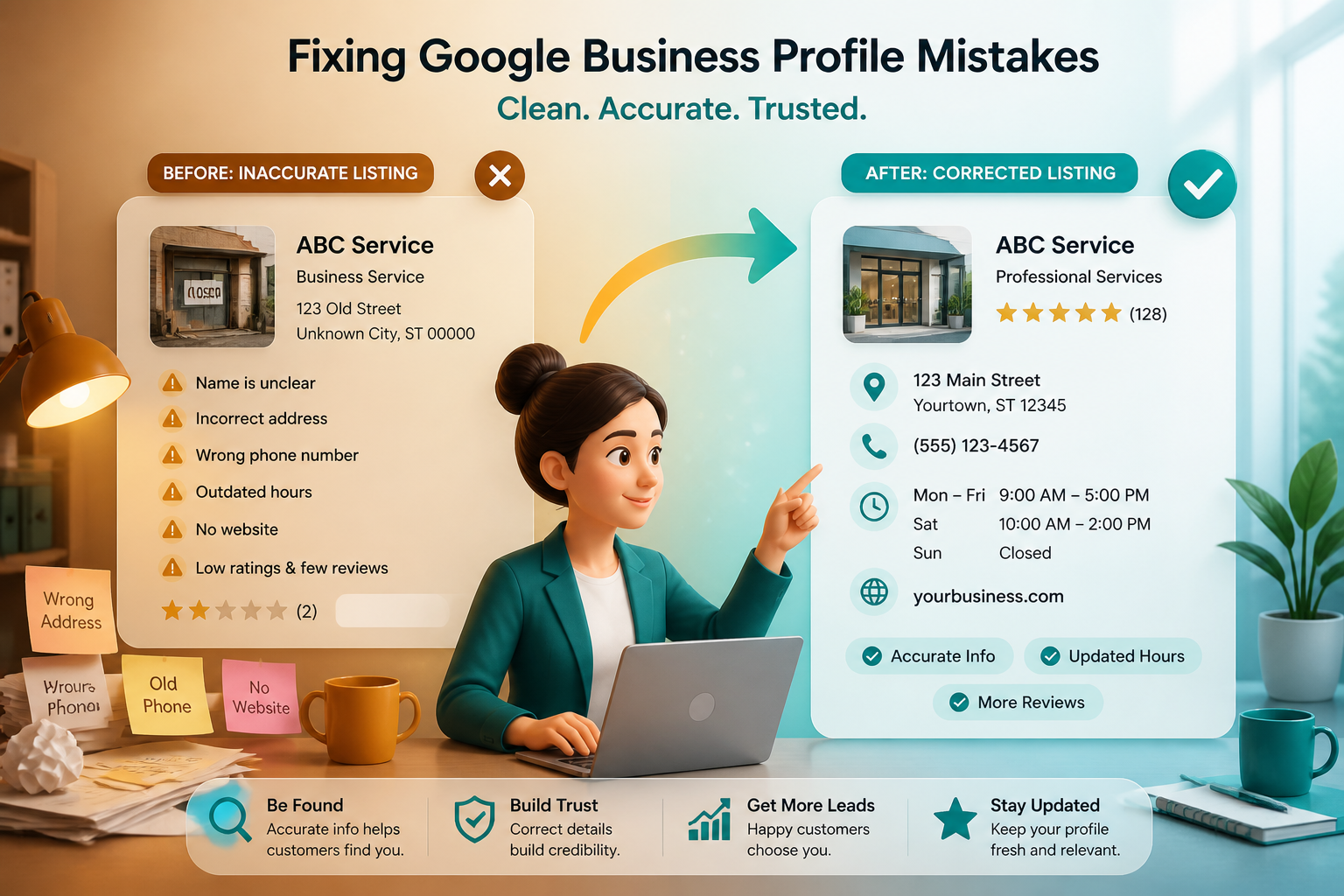
A phone number or address that differs between your website, GBP, and directory listings creates confusion for both customers and Google's trust systems. Periodic citation audits catch this drift before it compounds.
Process Mistakes That Cause Slower, Harder-to-Diagnose Damage
Making several profile edits at once — new category, new hours, new description — makes it nearly impossible to know which change caused a subsequent ranking shift if one occurs. Change one meaningful thing at a time when possible, especially for anything touching category, name, or address, so cause and effect stay traceable. Ignoring GBP Insights entirely is another quiet mistake; without checking calls, direction requests, and search trends periodically, declining performance can go unnoticed for months.
Treating the profile as a one-time setup task rather than an ongoing responsibility is perhaps the broadest mistake underlying all the others. Businesses that revisit their profile monthly catch drift, stale information, and emerging duplicate listings early. Businesses that set it up once and forget it are the ones most often surprised by a mistake that has been quietly hurting them for half a year. Our local SEO playbook and the truth about GBP reviews both cover the review-management side of this in more depth.
| Mistake | Recovery timeline once fixed | What speeds recovery |
|---|---|---|
| Keyword-stuffed name reverted | 1-3 weeks | Avoid re-adding keywords after correction |
| Wrong category corrected | 2-6 weeks | Pair with accurate services list update |
| Duplicate listing merged | 2-4 weeks | Prompt reporting, consistent NAP across remaining listing |
| Review-gating stopped | Ongoing improvement over months | Switch to open, honest review requests immediately |
How to Audit Your Own Profile for These Mistakes Today
Open your live profile exactly as a customer would see it and compare the name against your actual signage or invoices, checking for any added keywords. Confirm your primary category by searching for it directly and seeing whether the businesses that appear match what you actually do. Scroll through your reviews and note how many from the last three months remain unanswered.
Search your business name broadly to check for duplicate or outdated listings you may have forgotten about. None of this takes more than thirty minutes, and most profiles have at least one mistake from this list sitting unnoticed — finding and fixing even one is often worth more than an hour spent on advanced tactics layered on top of a broken foundation.
Mistakes That Are More About Judgment Than Rules
Chasing every new tactic instead of finishing the basics
A common pattern is jumping to an advanced tactic mentioned in a forum thread — a specific attribute combination, a clever posting hack — while foundational items like category accuracy or reply consistency remain unfinished. Advanced tactics amplify a healthy foundation; they rarely compensate for a broken one, and chasing them first wastes effort that would have produced more reliable results if spent on fundamentals.
Treating every competitor tactic as worth copying
Not every visible competitor behavior is actually helping them, and not every tactic that works for one business transfers cleanly to another with a different category, market, or customer base. Evaluate any tactic against your own data and situation rather than assuming it must be effective simply because a competitor is doing it.
Underestimating how visible small inconsistencies are
A slightly different phone number on one directory, a description that no longer matches current services, or hours that have not been updated for a holiday schedule all seem minor individually. Collectively, they signal a business that is not paying close attention, which subtly undermines trust even when no single item looks like an obvious problem on its own.
Mistakes Specific to Multi-Location and Franchise Listings
Copying the same description across every location
Using an identical business description word-for-word across dozens of locations misses the chance to mention genuinely local details and can look templated rather than authentic to both customers and Google's systems. Each location deserves at least a few unique, accurate sentences reflecting its specific team, neighborhood, or service nuances.
Letting one location's problems drag down brand-wide trust
A single poorly managed location with ignored reviews and stale photos can shape a searcher's impression of the whole brand, especially when comparing search results across nearby franchise locations. Brand-wide standards for reply time and photo freshness protect the reputation of every location, not just the struggling one.
Inconsistent category selection across branches
Franchise locations sometimes end up with slightly different primary categories chosen by different local managers over time, which fragments how consistently the brand appears across searches. A centralized category standard, adapted only where a specific location genuinely offers a different service mix, keeps brand-wide relevance signals aligned.
Auditing a multi-location brand for these mistakes takes longer than auditing a single listing, but the same principles apply at scale: pick a handful of locations to review deeply each month rather than attempting a simultaneous audit of every branch at once, which usually produces a shallow pass that misses exactly the kind of small inconsistencies discussed throughout this guide. A rotating audit schedule across quarters ensures every location eventually gets the same careful attention without overwhelming a single review cycle or a single overstretched marketing team member.
Final Takeaway
The mistakes that hurt Google Business Profile rankings most are rarely exotic. They are keyword-stuffed names, wrong categories, ignored reviews, stale photos, and a profile treated as a one-time task instead of an ongoing responsibility. Fixing these does not guarantee a specific rank, but it removes self-inflicted ceilings that no amount of advanced tactics can compensate for while they remain in place.
Frequently Asked Questions
Can a keyword-stuffed business name actually help rankings short term?
It occasionally produces a brief relevance bump, but it violates Google's guidelines and carries real suspension risk that typically costs far more visibility than the temporary gain.
How do I know if my primary category is actually wrong?
Search for your chosen category directly and compare the businesses that appear to what you actually do. If they consistently differ, the category is likely misaligned with your services.
Is ignoring a negative review really that harmful?
An unanswered negative review signals inactive management to every future reader. A calm, specific reply usually matters more to prospective customers than the original complaint.
What should I do if I discover a duplicate listing I did not create?
Report it through Google's official duplicate-listing process as soon as possible, since duplicates split reviews and can confuse ranking signals for both listings involved.
How many mistakes from this list does the average business have?
Most profiles have at least one, often two or three, since these mistakes tend to accumulate gradually and are rarely caught without a deliberate audit.
Should I fix all these mistakes at once or one at a time?
Fix foundational issues like category and business name first, then address reviews and photos. Changing several major fields simultaneously makes it harder to trace which fix caused which result.
Can review-gating really get a listing suspended?
Yes, filtering unhappy customers away from public review links violates Google's policies and is treated as a serious violation that carries real suspension risk.