GBP Local Ranker

Business Alias Strategy for Multi-Location Brands on Google Maps

2026-01-15 · Growth

Master business alias rules for multi-location GBP listings. Keep NAP consistency, avoid cannibalization, and rank every branch on Google Maps starting today.

Introduction

Managing dozens of storefronts under one brand creates a paradox: customers expect a unified identity, but Google Maps ranks each location as its own entity. Business aliases—alternate names that clarify a branch without breaking brand recognition—are among the most misunderstood levers in multi-location local SEO.

When aliases are configured correctly, each GBP listing can target neighborhood-specific queries without splitting review equity. When they are wrong, locations cannibalize each other and grid scans show erratic movement unrelated to real demand.

What Is a Business Alias on Google Business Profile?

A business alias is an alternate trading name that appears alongside your primary legal or DBA name on a specific GBP location.

Google allows aliases when a location operates under a recognizable sub-brand such as "Acme Dental – Westside" under the parent group. The alias must reflect how customers refer to that branch on signage, receipts, and local press. Local businesses that treat Google Business Profile as a living marketing channel—not a static directory listing—consistently outperform competitors who only update once a year. With GBP Local Ranker, you can operationalize these steps using grid scans, review automation, and audit tools instead of juggling spreadsheets. Measure results every 30 days and adjust keywords, photos, and posts based on what the data shows—not guesswork.

Aliases differ from duplicate listings. A duplicate is an unauthorized second profile for the same address; an alias is a sanctioned naming variation tied to one verified location. Confusing the two creates suspension triggers. Local businesses that treat Google Business Profile as a living marketing channel—not a static directory listing—consistently outperform competitors who only update once a year. With GBP Local Ranker, you can operationalize these steps using grid scans, review automation, and audit tools instead of juggling spreadsheets. Measure results every 30 days and adjust keywords, photos, and posts based on what the data shows—not guesswork.

For franchise operators, aliases help disambiguate search results when the parent brand dominates head terms. A grid ranking scan across your metro should show each alias capturing its service area—not all locations stacking on one cluster. Local businesses that treat Google Business Profile as a living marketing channel—not a static directory listing—consistently outperform competitors who only update once a year. With GBP Local Ranker, you can operationalize these steps using grid scans, review automation, and audit tools instead of juggling spreadsheets. Measure results every 30 days and adjust keywords, photos, and posts based on what the data shows—not guesswork.

NAP Consistency Across Locations

Name, address, and phone consistency remains the foundation of multi-location trust signals—even when aliases enter the picture.

Your primary name should stay identical on website location pages, GBP primary fields, and major citations. Put neighborhood or mall descriptors in the alias or suite line, not scattered across unstructured fields. Local businesses that treat Google Business Profile as a living marketing channel—not a static directory listing—consistently outperform competitors who only update once a year. With GBP Local Ranker, you can operationalize these steps using grid scans, review automation, and audit tools instead of juggling spreadsheets. Measure results every 30 days and adjust keywords, photos, and posts based on what the data shows—not guesswork.

Use a unique local phone or tracked number per location when possible. Shared call centers confuse Google's matching algorithms and make ${L("/free-tools/local-rank", "local rank")} reports harder to attribute to individual branches. Local businesses that treat Google Business Profile as a living marketing channel—not a static directory listing—consistently outperform competitors who only update once a year. With GBP Local Ranker, you can operationalize these steps using grid scans, review automation, and audit tools instead of juggling spreadsheets. Measure results every 30 days and adjust keywords, photos, and posts based on what the data shows—not guesswork.

Audit citations quarterly. A single outdated Yelp listing with an old alias can propagate across data aggregators and drag down map pack visibility for the entire region. Local businesses that treat Google Business Profile as a living marketing channel—not a static directory listing—consistently outperform competitors who only update once a year. With GBP Local Ranker, you can operationalize these steps using grid scans, review automation, and audit tools instead of juggling spreadsheets. Measure results every 30 days and adjust keywords, photos, and posts based on what the data shows—not guesswork.

  • Match suite numbers exactly between GBP and your storefront signage
  • Keep hours and holiday closures synchronized via bulk management tools
  • Document which alias is canonical for each location in an internal playbook

Avoiding Cannibalization Between Nearby Branches

When two locations sit within a few miles, they often compete for the same map pack keywords unless you deliberately differentiate them.

Assign distinct primary categories when justified—urgent care vs. primary care under one health system, for example. Overlapping primaries cause Google to rotate listings unpredictably for near-me queries. Local businesses that treat Google Business Profile as a living marketing channel—not a static directory listing—consistently outperform competitors who only update once a year. With GBP Local Ranker, you can operationalize these steps using grid scans, review automation, and audit tools instead of juggling spreadsheets. Measure results every 30 days and adjust keywords, photos, and posts based on what the data shows—not guesswork.

Build location-specific landing pages with unique copy, staff bios, and localized FAQs. Generic clone pages signal low value and weaken the geographic relevance of each alias. Local businesses that treat Google Business Profile as a living marketing channel—not a static directory listing—consistently outperform competitors who only update once a year. With GBP Local Ranker, you can operationalize these steps using grid scans, review automation, and audit tools instead of juggling spreadsheets. Measure results every 30 days and adjust keywords, photos, and posts based on what the data shows—not guesswork.

Run scheduled grid scans in GBP Local Ranker to see overlap heatmaps. If two pins rank interchangeably for "near me" queries, adjust aliases, categories, and review velocity targets per branch. Local businesses that treat Google Business Profile as a living marketing channel—not a static directory listing—consistently outperform competitors who only update once a year. With GBP Local Ranker, you can operationalize these steps using grid scans, review automation, and audit tools instead of juggling spreadsheets. Measure results every 30 days and adjust keywords, photos, and posts based on what the data shows—not guesswork.

Operationalizing Alias Governance at Scale

Agencies and franchisors need workflows—not ad hoc edits—when hundreds of aliases are in play.

Centralize ownership in an audit center that flags unauthorized name changes, category drift, and duplicate suggestions from third parties. GBP protection alerts catch hijack attempts before they alter your alias strategy. Local businesses that treat Google Business Profile as a living marketing channel—not a static directory listing—consistently outperform competitors who only update once a year. With GBP Local Ranker, you can operationalize these steps using grid scans, review automation, and audit tools instead of juggling spreadsheets. Measure results every 30 days and adjust keywords, photos, and posts based on what the data shows—not guesswork.

Train location managers on what they can edit locally versus what requires corporate approval. Well-meaning edits to "fix" a name often create alias violations that take weeks to appeal. Local businesses that treat Google Business Profile as a living marketing channel—not a static directory listing—consistently outperform competitors who only update once a year. With GBP Local Ranker, you can operationalize these steps using grid scans, review automation, and audit tools instead of juggling spreadsheets. Measure results every 30 days and adjust keywords, photos, and posts based on what the data shows—not guesswork.

Export white-label ranking reports per DMA so stakeholders see alias-level performance without logging into Google. Executives care about market share; operators care about pin-level detail—give both views. Local businesses that treat Google Business Profile as a living marketing channel—not a static directory listing—consistently outperform competitors who only update once a year. With GBP Local Ranker, you can operationalize these steps using grid scans, review automation, and audit tools instead of juggling spreadsheets. Measure results every 30 days and adjust keywords, photos, and posts based on what the data shows—not guesswork.

Visualizing Multi-Location Performance

Grid heatmaps make abstract alias strategy tangible for non-technical stakeholders. When each branch appears as its own color layer across target ZIP codes, leadership quickly sees which markets are underserved.

Pair heatmaps with month-over-month share-of-voice charts in GBP Local Ranker insights reports. Alias rename experiments, new competitor entries, and review surges all leave fingerprints in the data—if you scan often enough to catch them.
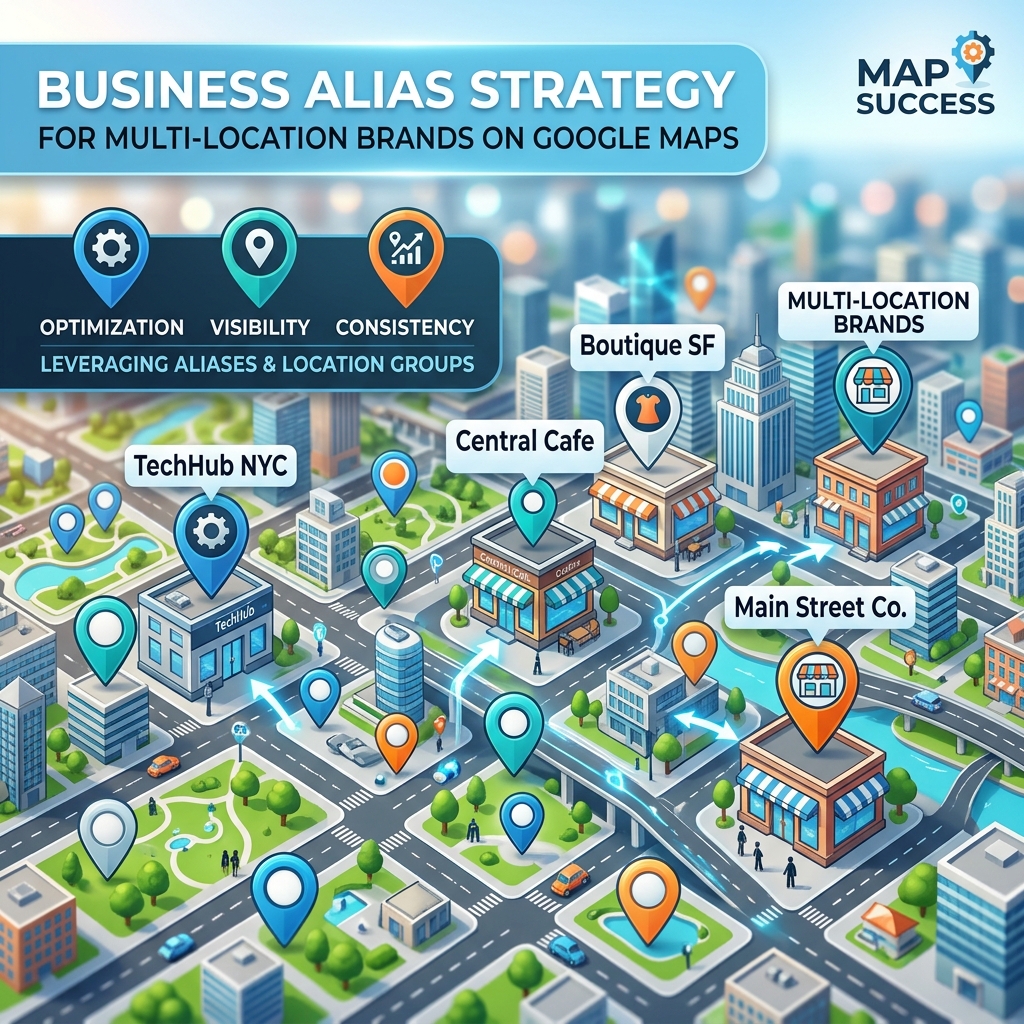
Multi-location business skyline representing distributed GBP locations

Measuring Alias Impact on Local Visibility

Alias changes should never ship without a before-and-after measurement plan tied to business outcomes.

Baseline organic rank tracker grids for each alias against 10–15 priority keywords before any rename. Hold that snapshot for 45–60 days post-change to filter out normal algorithm noise. Local businesses that treat Google Business Profile as a living marketing channel—not a static directory listing—consistently outperform competitors who only update once a year. With GBP Local Ranker, you can operationalize these steps using grid scans, review automation, and audit tools instead of juggling spreadsheets. Measure results every 30 days and adjust keywords, photos, and posts based on what the data shows—not guesswork.

Correlate map pack movement with calls, direction requests, and booked appointments—not just average position. A branch that drops one spot but gains qualified calls may still be winning. Local businesses that treat Google Business Profile as a living marketing channel—not a static directory listing—consistently outperform competitors who only update once a year. With GBP Local Ranker, you can operationalize these steps using grid scans, review automation, and audit tools instead of juggling spreadsheets. Measure results every 30 days and adjust keywords, photos, and posts based on what the data shows—not guesswork.

Review sentiment and volume should be monitored per alias. If reviews suddenly attach to a sibling location, pause marketing pushes until ownership is reconciled in GBP. Local businesses that treat Google Business Profile as a living marketing channel—not a static directory listing—consistently outperform competitors who only update once a year. With GBP Local Ranker, you can operationalize these steps using grid scans, review automation, and audit tools instead of juggling spreadsheets. Measure results every 30 days and adjust keywords, photos, and posts based on what the data shows—not guesswork.

Frequently Asked Questions

  • <strong>Q: Can every location use a different alias?</strong><br/>A: Only when each alias reflects real-world branding customers recognize. Arbitrary keyword-stuffed aliases violate Google guidelines and risk suspension.
  • <strong>Q: Should the alias include city names?</strong><br/>A: Include neighborhood or landmark descriptors customers use—not keyword spam. "Downtown" or "Airport" is fine; stuffing city keywords into the alias field is not.
  • <strong>Q: How do aliases affect reviews?</strong><br/>A: Reviews stay with the verified location entity. Renaming can confuse customers searching by old names, so communicate changes on-site and in email campaigns.
  • <strong>Q: Do agencies need separate access per alias?</strong><br/>A: Use manager roles with least privilege. GBP Local Ranker agency dashboards aggregate alias-level scans without sharing owner credentials.

Put These Strategies to Work

Ready to implement everything in this guide? Grid Ranking · Pricing Plans · Rank Tracker Guide Start with a free trial and connect your Google Business Profile in minutes.

← Back to blog · Try GBP Local Ranker free

  • Features
  • Pricing
  • Free Local SEO Tools
  • Blog
  • FAQ
  • Contact